
Translator’s Introduction
It is no surprise that the French group of revolutionary outlaws, Os Cangaceiros, would take an interest in millenarian revolt since their namesakes in Brazil fought side by side with millenarian rebels on more than one occasion. And such an interest is no mere whim. During the Middle Ages, revolt almost always expressed itself in millenarian language in the Western world, and such expressions continued, though increasingly less frequently, into modern times. Thus, those of us who are interested in understanding the ways in which the spirit of revolt develops in individuals and in larger groups of people could perhaps learn something from examining millenarianism in its various forms.
In Prophets and Outlaws of the Sertão, Georges Lapierre[1] tells the story of two movements of revolt in northeastern Brazil whose activities often intertwined. On the one hand, there were several millenarian movements involving dispossessed peasants, rural migrant workers, and urban poor. On the other hand, there were the cangaceiros, individuals whose acts of revenge against a very visible ruling class and its lackeys had driven them to live as outlaws and who joined together in bands called cangaços to wage their battle against a social order to which they were neither willing nor able to belong.
For me, the most interesting aspect of this historical tale lies in the comparisons and contrasts that can be made between these two very different ways of rebelling that manifested themselves in Brazil as the 19th century moved into the 20th century.
Though Georges Lapierre’s account mentions several millenarian movements in Brazil during that period, he only goes into any detail about two of them: the one that gathered around Antonio Conselheiro (Antonio the Counselor)[2] and the one that gathered around Father Cicero. In my opinion, the former is far more interesting, because it was truly a movement of millenarian revolt, whereas Father Cicero’s movement, regardless of any apocalyptic or millenarian language it may have used, was essentially just a movement of social reform[3]. The very fact that its leader was able to maintain a possession in the church hierarchy and gain a significant in the state hierarchy shows that neither revolt nor the bringing of the millennium had any real significance in his activities. He was merely seeking to bring his concept of a christian social morality into the existing social order.
Conselheiro, on the other hand, had a true hatred of the existing social order, and firmly believed that its end was at hand. Being a true believer, he was convinced that god was about to rain his wrath down upon the ruling order and bring a holy kingdom of real equality to the earth, one with neither state nor property, where the entire world would be equally accessible to all. Such a vision was bound to attract many of the dispossessed. Conselheiro’s vision was apocalyptic, but also a vision of action. If the movement that gathered around him ended up forming a “holy city” (Canudos), a commune in which to begin the new way of living, it was also prepared to fight the ruling powers. That battle, however, took a form quite typical of a particular sort of millenarianism. It was a defense of the holy city that was based on trust in a supernatural intervention.
The cangaceiros, on the other hand, were not religious. They were simply outlaws, driven to leave society behind after taking revenge on someone from the ruling class or one of its lackeys for some humiliation. Like the millenarian rebels, they were from the poor, dispossessed classes. But the path they chose for their revolt was different, reflecting a personal humiliation they pushed them to attack, rather than a more general humiliation. Lacking the faith of the millenarians, they built no utopian communal “cities”, choosing rather to roam the countryside, attacking the rich and raiding cities. When their raids on cities were successful, they often expressed a type of utopian vision as well, throwing huge drunken feasts with music and dancing, often giving away some of what they had stolen. But they sought no permanence and faded back into the countryside to wander.
I find the sympathy of the cangaceiros for the millenarian movements of their time interesting because their way of life in their world seems to parallel that of the Free Spirit movement of the middle ages. The Free Spirits are often described as millenarians, but their millenarianism was distinctly different from that of Conselheiro, Thomas Münzer, the Münster millenarians and most other millenarian movements. The distinction lies in the fact that the Free Spirits did not see the millennium as something that was going to come soon, but as something that already existed within them. Their perspective was not apocalyptic — aiming toward a future end of the world — but rather based in the immediate present. This is why the Free Spirit, while still using religious language, actually attacked the foundations of religion: dependence on an external supernatural power, hope in a heavenly future, faith in an external source of salvation. Quite rightly, the Free Spirits declared themselves to be greater than god, and apparently lived as vagabond outlaws… much like the cangaceiros. Their perspective left no room for passivity, because they had chosen to be the creators of their own lives.
The millenarians of Canudos and Münster, and the followers of Thomas Münzer certainly expressed a more active — and downright fierce — form of apocalyptism. They were ready to fight to the death for their future millenarian dream. But this willingness was based on the delusions of faith and hope — faith in a supernatural savior; hope in divine intervention. Thus, they are not so different from groups like the Branch Davidians in Texas — groups made up largely of the poor, waiting for the apocalypse and ready to defend themselves to the death if necessary. But the fact is that apocalyptism is far more often passive, precisely because it hopes in an external intervention. This is true whether or not it is religious in nature. We are currently living in a period in which apocalyptic thinking is rampant even among people with no religious belief. Whether it takes the form of paralyzing fears of massive plagues and disasters or idealized dreams of a collapse that will do away with the technological and bureaucratic horrors of the present, it doesn’t ever seem to lead to active revolt. The fears, when they manage to get past their paralysis, tend toward the desperate grasping at any action the might “give us more time”, and such desperation sees any sort of anarchist revolutionary and utopian practice — especially one that is live here and now — as a hindrance to this acceptance of any action that works — because such a practice rejects all litigation, all legislation, every form of working through the ruling order… And the apocalyptic hopes for a collapse have always tended to move people toward a mere survivalism, a “practice” that is nothing more than an accumulation of skills in the hopes of being the most fit to survive in the post-collapse world. In my opinion, a small and shabby vision.
Millenarian revolt is interesting mostly because when millenarian perspectives actually led to revolt, to one extent or another, those involved had begun to recognize that they themselves had to act to realize their own liberation. Its limits lie precisely in the continued reliance on a supernatural force to guarantee this. As long as this faith remained, millenarians tended to paint themselves into corners, creating small utopian settlements that they defended with courage and ferocity, but that ended up as their graveyards. But a few, like the Free Spirits, seem to have gotten beyond faith and hope, beyond dependence on a supernatural power to uphold them. And it is interesting that their practice becomes much more that of the outlaw who doesn’t settle down, but remains on the move, thecangaceiro, who may perhaps develop a revolutionary perspective, and thus learn to aim all the more clearly.
Prophets and Outlaws of the Sertão
Today in the sertão[4], there are still a few ephemeral groups gathered around beatos, rapidly being dispersed by the police. There are also a few isolated bandits, mere brigands dedicated above all to theft. On the other hand, the orders of hired killers called capangas continue to proliferate. They are in the service of the fazendeiro,[5] who has taken great care to prevent any vague desire to rebel among his day laborers, mainly through pure and simple murder. This private militia gets support for its task from a police force and an army whose current means — helicopters, napalm, machine guns, radios, special troops — make any sort of social movement impossible. The security of the state is now assured in this vast arid region of northeast Brazil, which was once the place where messianic movements of great breadth developed together with the epic deeds of the cangaceiros[6].
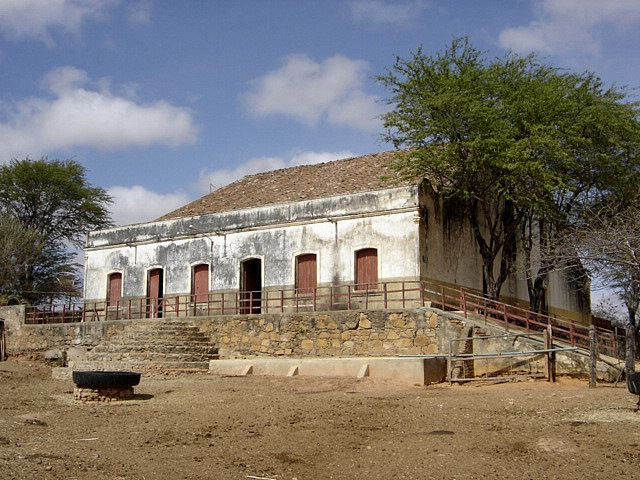
And yet, there in the northeast, there are still people who remember the cangaceiros, Antonio Silvino, Sinhô Pereira, Lampiao, Corisco, who they imagine as champions of a lost world; people who preserve a sort of nostalgia for the time of the Conselheiro — an era of happiness, abundance and freedom comparable to the legendary times of Charlemagne’s empire and other enchanted realms. There are still those who pass down the legend of Father Cicero who is supposed to return to guide people to perfect happiness. Further south, in the serrana region, they pass down the legend of the “sleeping” friar João Maria, departing to find refuge on the enchanted mountaintop of Tayó. “From time to time, new emissaries of Brother João Maria come to announce his return; the last attempt happened in 1954. But the authorities keep watch and always manage to disperse the small gatherings of the faithful. But the memory of Brother João Maria does not seem to be close to burning out, and the places where he sojourned are venerated by his followers.”[7]
Now law reigns in the sertão, but this wasn’t always the case.
“Let the faithful, then, abandon all their worldly possessions, anything that might defile them with the faintest trace of vanity. All fortunes stood on the brink of imminent catastrophe, and it was useless and foolhardy to endeavor to preserve them.”[8]
Around 1870, the popularity of Antonio Conselheiro, otherwise called “the Counselor” would grow little by little in the villages of the interior, in the province of Bahia.
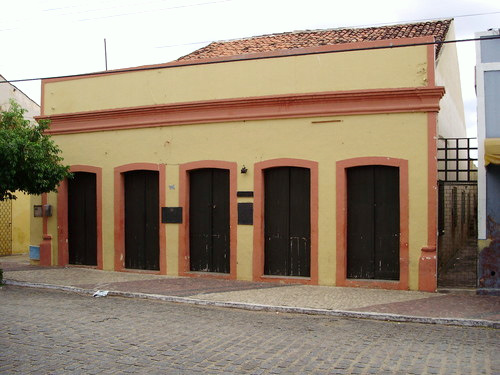
His true name was Antonio Vicente Mendes Maciel. He was originally from the state of Ceará, where a dark and bloody rivalry opposed his family to the Araújo family, the most powerful property owners of the region.
He appeared there announcing the end of the world, a cosmic catastrophe followed by the last judgment. He was sent by God and promised the faithful salvation and the delights of a Holy City in which peace and brotherhood would reign. It was Christ who prophesied his coming when “at the ninth hour, as he was resting on the Mount of Olives, one of his apostles saith unto him: Lord! what signs wilt thou give us for the end of this time? And he replied: many signs, in the Moon, in the Sun, and in the Stars. There shall appear an angel sent by my loving Father, preaching sermons at the gates, making towns in the desert, building churches and chapels, and giving his counsel.”[9]
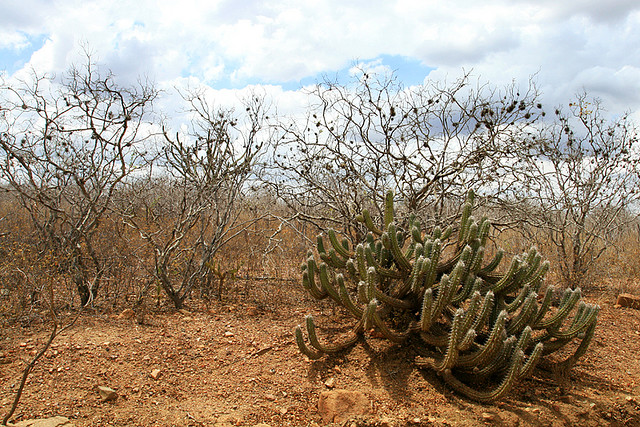
On mountains made of schist flakes sparkling with mica, on immense expanses covered with caatinga[10] — “it stretches out in front of him, for mile on mile, unchanging in its desolate aspect of leafless trees, of dried and twisted boughs, a turbulent maze of vegetation standing rigidly in space or spreading out sinuously along the ground, representing, as it would seem, the agonized struggles of a tortured writing flora.”[11] — , on the plain on which nature has fun playing with the most abrupt contrasts, frighteningly sterile, marvelously blooming, the sertão had found its prophet.
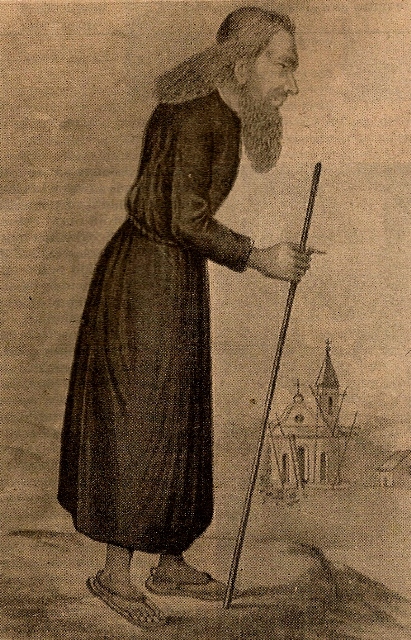
Thin, austere, ascetic, dressed in a monk’s robe and sandals, he went from village to village, distributing everything that was given to him to the poor. He was a beato[12]. Very soon he was called “Saint Anthony” or “Good Jesus” A rumor attributed miracles to him; he had saved a young girl bitten by a radical snake; mule drivers had spread the news. Little by little his prestige grew. When he came, everyone rushed to him to seek his counsel. He was accompanied in his peregrinations by a few faithful. Over the months, the group became more consistent.
With his followers, he repaired churches and built chapels. Wherever he passed, he preached forcefully against the outrages, extortions and injustices that infested the region, which was racked by political struggles transformed into vendettas, into insensitive and bloody quarrels
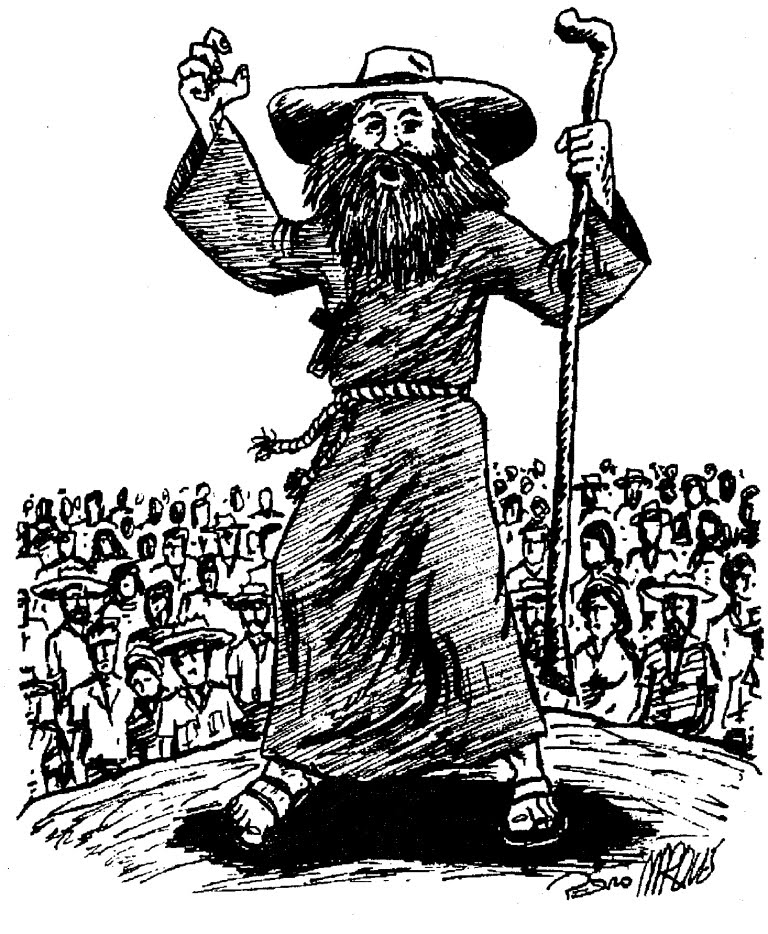
The Counselor’s influence had become impressive. In his harangues he spoke an apocalyptic language full of Latin quotations, a cryptic and inspired language that gave the impression that his message was from the beyond: “The end was surely coming and the great judge of all.”[13]
The prophet predicted strange things for the years to come, all announcing an imminent cosmic upheaval:
“In 1896, a thousand flocks shall run from the seacoast to the backlands; and then the backlands will turn into seacoast and the seacoast into backlands.
“In 1987, there will be much pasturage and few trails, one shepherd and one flock only.
“In 1898, there will be many hats and few heads.
“In 1899, the water shall turn to blood, and the planet will appear in the east, with the sun’s ray, the bough shall find itself on the earth, and the earth some place shall find itself in heaven.
“There shall be a great rain of stars, and that will be the end of the world. In 1900, the lights shall be put out. God says in the Gospel: I have a flock which is out of this sheepfold, and the flock must be united that there may be one shepherd and one flock only!”[14]
Only those who aided him and who followed him would be saved. He responded in this way to the deep aspirations of the poor to escape an underhanded fatality, a precarious and servile existence, oppression and desperation. His determination, his fieriness, his rage, his dynamic exhortations, had seduced them just as it had fascinated rebels, quilombolas (insurgent and escaped slaves living in hidden settlements called quilombos), unsubdued indians, all fugitives, mestizo or white, sought by village police.
Saint Sebastian had drawn his sword and when Conselheiro founded his first messianic community in 1873, in the area around Itapicurù in the province of Bahia, in many ways this recalled the cangaço[15] bands.
“There having arisen a misunderstanding between Antonio Conselheiro and his group, and the curate of Inhambupe, the former proceeded to draw up his forces as if for a pitched battle, and it is known that they were lying in wait for the curate, when he should go to a place known as Junco, in order that they might assassinate him. Those who pass that way are filled with fear at the sight of these miscreants equipped with clubs, daggers, hunting knives and blunderbusses; and woe to the one who is suspected of being hostile to Antonio Conselheiro”[16] — from a police report of the time.
The archbishop himself turned to the president of the province of Bahia, asking for reinforcements to contain “the individual Antonio Vicente Maciel, by preaching subversive doctrines who causes much harm to religion and to the state distracting people from carrying their obligations that they may follow him…”.[17]

However, as the submissive university student, Euclydes da Cunha wrote with a certain objectivity, but in the offensive jargon of his masters: “He drew the people of the backlands after him, not because he dominated them, but because their aberrations (sic!) dominated him.”[18]
Of course, he announced Christ’s thousand year kingdom on earth after the end of the world, but around him, under his stimulus,jagunços[19], rebels, insurgents, organized themselves, occupied land, shared labor and goods, received gifts, not always voluntary.
The constituted order could not remain indifferent much longer to the expansion of a community that gave so little consideration to the idea of property, that so proudly ignored the foundations of authority, religion and the state, as the apostolic archbishop said. Therefore, in 1889, the advent of the Republic, this democracy of property owners, acted to speed up the conflict by making hostilities emerge. The millenarians considered the Republic precisely for what it meant: more state. It was mortal sin, the power of selfishness, of cupidity, the supreme heresy that indicated the ephemeral triumph of the antichrist.
“There are unlucky beings
Who don’t know how to do good
They degrade God’s law
And represent the jackal’s law
Protected by laws
You are so, people of nothing
We have God’s law
You have the jackal’s law”[20]
Conselheiro preached insurrection against the Republic and began to burn government decrees posted in the villages:
“In truth, I say unto you, when nation falls out with nation, Brazil with Brazil, England with England, Prussia with Prussia, then shall Dom Sabastião[21] with all his army arise from the waves of the sea.
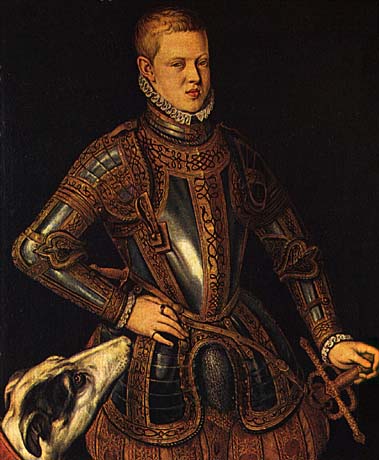
“From the beginning of the world a spell was laid upon him and his army, and restitution shall be made in war.
“And when the spell was laid upon him, then did he stick his sword in the rock, up to the hilt, saying: Farewell, world!
“For a thousand and many, for two thousand, thou shalt not come.
“And on that day, when he and his army shall arise, then shall he with the edge of the sword free all from the yoke of this Republic.
“The end of this war shall take place in the Holy House of Rome, and the blood shalt flow even in the great assembly.”[22]
As the university student Euclydes da Cunha remarked with a valet’s conceit: “your jagunço is quite as inapt at understanding the republican form of government as he is the constitutional monarchy. Both to him are abstractions, beyond the reach of his intelligence. He is instinctively opposed to both of them… there was very little political significance to be found… such as might have lent itself to the messianic tendencies revealed. If the rebel attacked the established order, it was because he believed that the promised kingdom of bliss was near at hand.”[23]
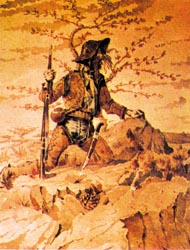
Up to now, the order established by monarchists or republicans has never led to the reign of delights for the poor, quite the contrary. Rather, we could witness with the Republic a clear-cut worsening of the fate reserved to those who do not possess anything. What the Conselheiro and his followers fight against was the progressive arrangement of a new order. They don’t rebel in the name of an old order, but for the idea they have of a human society. Their eye is not turned toward the past, but toward the future. They are carriers of a social project. Rising up against the constituted order, or the one that was beginning to be constituted, they rise up against the essence of a world that created private property, forced labor, the wage worker, police, money; they rise up against a social practice and its essence. For them the future is not a return to the past, but rather the end of a world, an overturning of society from top to bottom, a revolution for which the humanity that was there from the start finally returns as realized humanity.
The autonomy of the villages having been decreed, the local councils of the interior of Bahia had tacked up edicts meant to raise taxes on notice boards, traditional boards that took the place of the press.
When the news spread, Conselheiro was at Bom Conselho. The taxes enraged him, and he immediately organized a protest. On market day, the population assembled and set fire to the notice boards amid seditious shouts and firecracker explosions. After this auto-da-fé that the authorities could not prevent, he raised his voice and, wise and cool-headed as always, openly incited rebellion against the laws. Aware of the danger that threatened him and his own, he left the city and headed north on the road of Monte-Santo, toward a remote, abandoned region surrounded by steep mountains and insurmountable caatinga, a temporary refuge for bandits.
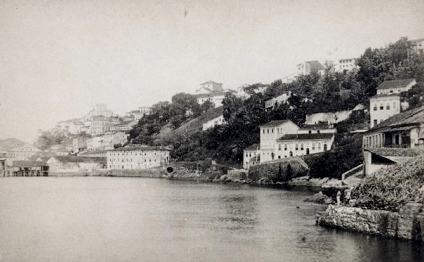
The events had a certain echo in the capital, city of Salvador, from which a police force departed to stop the rebels, at the time, no more than two hundred people. The squad tracked them down to Massète, a bare, sterile place between Tucano and Cumbe. The thirty well-armed police attacked them violently, certain they’d be victorious in the first assault. But they were facing bold jagunços. The police were beaten and had to hastily get out of there on foot. The commander was the first to give the fine example.
After accomplishing this endeavor, the millenarians were back on the road, accompanying the prophet’s Hegira. No longer looking for populous places, they headed toward the desert. Passing through mountain chains, bare plateaus and sterile plains, they reached Canudos.
It was an old fazenda, a holding situated on the temporary Vaza-Barris river. By 1890, it was abandoned and was used as a resting place. It included about fifty huts made of clay rock and straw.
In 1893, when the apostle arrived, Canudos was in total decay. Everywhere there were abandoned shelters and empty cabins. And at the summit of the spur of Mount Favella, the old residence of the owner was sighted, without a roof and with the walls reduced to ruins.
The community occupied the wastelands, rapidly making them bear fruit. The village developed at an accelerated pace while the disciples coming from the most widespread places settled there in order to live. In the eyes of the inhabitants, it was a sacred place, surrounded by mountains, untarnished by the operations government. Canudos came to know a dizzying growth. Here is what one witness said: “Certain places in this district and others round about, as far away even as the state of Sergipe, became depopulated, so great was the influx of families to Canudos, the site selected by Antonio Conselheiro as the center of his operations. As a result, there was seen offered for sale at the fairs an extraordinary number of horses, cattle, goats, etc., as well as other things such as plots of ground, houses and the like, all to be had for next to nothing, the one burning desire being to sell and lay hold of a little money, and then go share it with the Counselor.”[24]
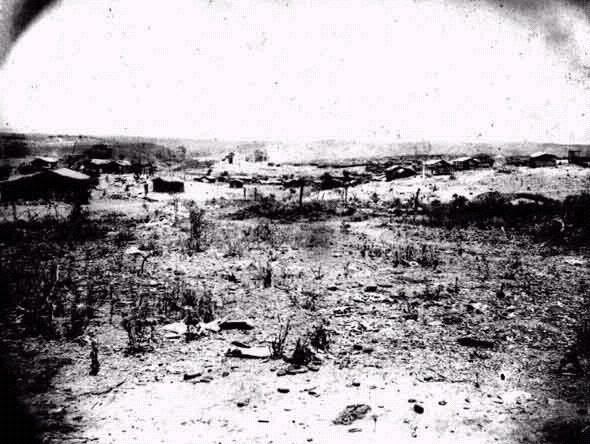
The land completely covered the hills, the absence of streets and plazas, apart from that of the church, and the great mass of hovels, made a single dwelling place out of it. The village was invisible at a certain distance and, surrounded by the windings of Vaza-Barris, was confused with the terrain itself.
From close-up, one caught sight of an extraordinary labyrinth of narrow passages that poorly divided the chaotic heap of huts from the clay roof.
The dwellings made of straw and stone were composed of three tiny parts: a small waiting room, a room used as a kitchen and dining room and a side alcove hidden by a low, narrow door. There was some furniture: a bench, two or three small stools, cedar chests, hammocks. And there were a few accessories: the bogo or borracha, a leather bag for carrying water; the aió, a bag for carrying game made from carúa[25] fibers. On the floor of the main room, there was a coarse prayer rug. Finally, there were old weapons: the large jacaré[26] knife with a broad sturdy blade, the parna-hyba knife of the look-outs with blades as long as swords, the three-meter goad with the iron point, the hollow club filled with lead, bows, guns — the musket of thin reed loaded with gravel, the larger musket loaded with buckshot, the heavy harquebus capable of shooting stones and horns, the blunderbuss flared like a bell.
Everything was here; the inhabitants of Canudos had no need for anything else.
“The wandering jagunços were here pitching their tents for the last time, on that miraculous heaven-bound pilgrimage of theirs.”[27]
But each of those cabins were at the same time a home and a fortified nook. Canudos was to become the Münster of the sertão and its inhabitants “terrible baptists capable of loading deadly daffodils with rosary beads”.
Canudos generously opened its pantries, filled with gifts and the fruit of common labor, to those in need. Social activity was not directed by anyone; it was self-organized. Only brandy had been prohibited by common agreement. Some were busy with cultivation or tended the flocks of goats, while others kept watch over the surrounding areas. Groups were formed to travel far carrying out expeditions. But all the activity seemed to converge toward the construction of a new church, drawing its meaning from this; this was the common work around which the endeavors were organized. This society, which camped in the desert, was devoted to a sacred mission, considering itself a community, a society that was religious in its essence that gave body to its spirit by building its church stone by stone. The new church was erected at the tip of the plaza in front of the old one. Its greater, massive walls recalled the great walls of fortresses. The rectangular body would have been transfigured by two very high towers, with the audacity of a rough Gothic structure. “The truth is, this admirable temple of the jagunços was possessed of that silent architectural eloquence of which Bossuet speaks.” [28]
A great amount of livestock arrived from Geremoabo, Bom Conselho and Simão Dias. Bands went out from Canudos, going to attack the surrounding territories and sometimes conquering cities. In Bom Conselho, one of these bands took possession of the place, placed it in a state of siege and sent the authorities away, starting with the justice of the peace. Such warlike expeditions alarmed the constituted powers.
The provincial government, and then the federal government, denounced the holy city. It gave an example that was a threat to the state, so much the more so as its notoriety grew. There was a risk that the experiment would spread. It became urgent to wipe the city off the map, to make it disappear in fire and blood, to extirpate it.
Four increasingly impotent expeditions were undertaken against Canudos between 1896 and 1897.
“The cangaceiros would make incursions to the south, the jagunços would make forays to the north, and they would confront each other without uniting forces, being separated by the steep barrier of Paulo Afonso. It was the insurrection in the Monte Santo district which united them; and the Canudos Campaign served to bring together, spontaneously, all these aberrant forces which were hidden away in the backlands.”[29]
Infamous bandits revealed themselves to be formidable strategists. The inhabitants of Canudos made the armies waver.
In October 1896, the first magistrate of Joazeiro telegraphed the governor of Bahia, solicited his intervention with the aim of taking measures to protect the population, so he said, from an attack by the jagunços of Antonio Conselheiro.
On November 4, the governor sent an armed force made up of one hundred soldiers and a doctor under the command of Lieutenant Manuel da Silva Pires Ferreira. On the 19th, they reached Uaúa, a small village on the Vaza-Barris river between Juazeiro and Canudos. At dawn on the 21st, the jagunços brutally attacked them, practically fighting with cold steel against soldiers armed with modern repeating rifles. The rebels lost one hundred and fifty men. The troops counted ten dead and sixteen wounded. The doctor went mad. The troops arranged to retreat to Juazeiro.
the basis for the Brazilian military in time of conflict. – http://www.filmesraros.com
On November 25, an armed force (five hundred forty-three soldiers, fourteen officers, three doctors) with two Krupp cannons and two machine guns, under the command of Commander Febrônio de Brito, left Bahia at the time of the Queimadas. It reached Monte Santo on December 29. On January 12, 1897, it left for Canudos, taking the Cambaio path. On the 18th and 19th, the first battles took place in sight of Canudos as the army crossed the gorge, little blunderbusses against repeating rifles and machine guns. The jagunços attacked suddenly, disappearing to reappear a bit further away. They left many dead on the ground, but inflicted a harsh and unexpected defeat on the army that had to beat a hasty retreat to Monte Santo.
When the government became aware of the disaster that happened during the crossing of the Cambaio, it understood the seriousness of the war in the sertões, all the more so because the fame of Canudos spread throughout the sertão as a consequence of this enterprise.
On February 13, 1897, Colonel Moreira César, well-known throughout the nation, commanded the first regular expedition that embarked from Rio heading for Bahia. On the eighth day, the expedition reached Queimadas with thirteen hundred men and all the necessary equipment. At Monte Santo, they skirted the mountain from the east to arrive at Angico and on the peak of Favela the afternoon of March 2.
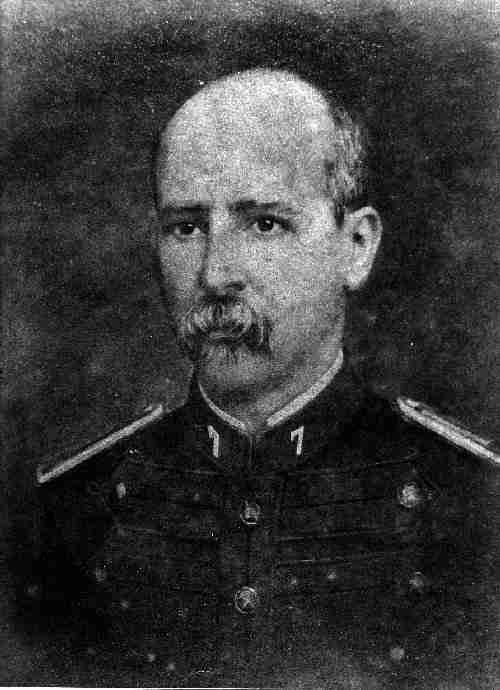
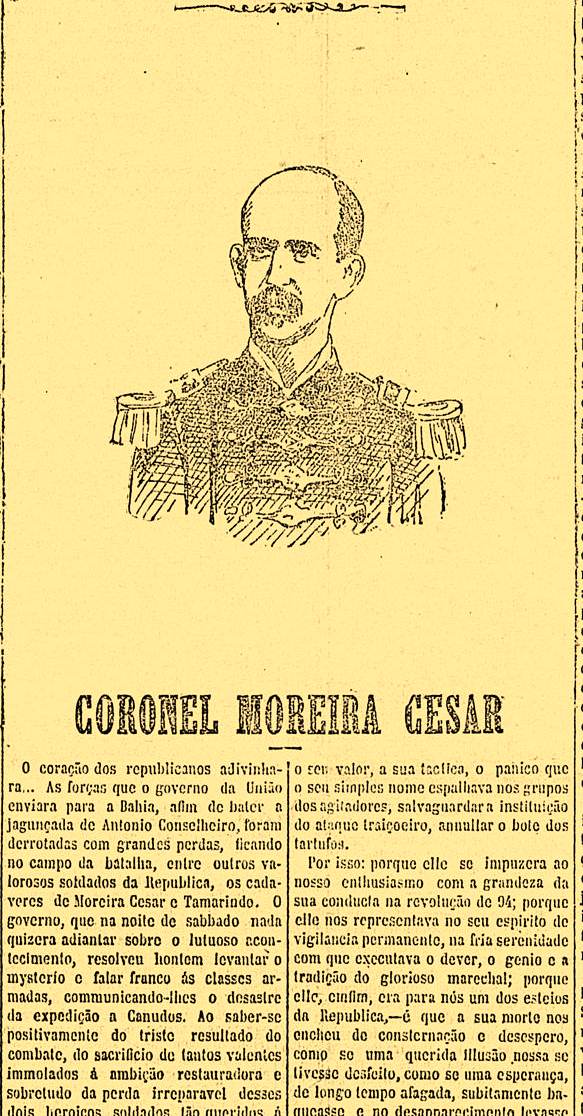
Sure of his task, Moreira César launched an assault against the village after a brief bombardment. It was a catastrophe for him and his men. Like a trap, like an immense spider web, like a fish net, the village closed around the army. Every path, every dead end, every turn, every house hid determined people armed with large knives, pikes and blunderbusses. The army was quickly caught in a tragic hand-to-hand battle. It was a disaster that quickly turned into a panic. The famous Colonel Moreira César was fatally wounded. Colonel Tamarindo, who had replaced him, was killed.
“In the meanwhile, the sertanejos were gathering up the spoils. Along the road and in nearby spots weapons and munitions lie strewn, together with pieces of uniforms, military capes and crimson striped trousers, which, standing out against the grey of the caatingas, would have made their wearers too conspicuous as they fled. From which it may be seen that the major portion of the troops not only had thrown away their weapons but had stripped themselves of their clothing as well.
“Thus it was that, midway between ‘Rosario’ and Canudos, the jagunços came to assemble a helter-skelter open-air arsenal; they now had enough and more than enough in the way of arms to satisfy their needs. The Moreira Cesar expedition appeared to have achieved this one objective: that of supplying the enemy with all this equipment, making him a present of all these modern weapons and munitions.
“The jagunços took the four Krupps back to the settlement, their front-line fighters now equipped with formidable Mannlichers and Comblains[30] in place of the ancient, slow-loading muskets. As for the uniforms, belts and military bonnets, anything that had touched the bodies of the cursed soldiery, they would have defiled the epidermis of these consecrated warriors, and so the latter disposed of them in a manner that was both cruel and gruesome…
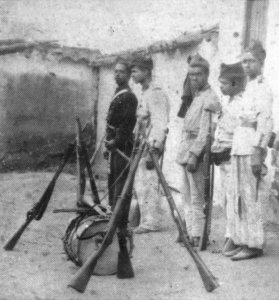
“…the jagunços then collected all the corpses that were lying here and there, decapitated them, and burned the bodies; after which they lined the heads up along both sides of the highway, at regular intervals, with the faces turned toward the road., as if keeping guard. Above these, from the tallest shrubbery, they suspended the remains of the uniforms and equipment, the trousers and multicolored dolmans, the saddles, belts, red-striped kepis, the capes, blankets, canteens, and knapsacks.
“The barren, withered caatinga now blossomed forth with an extravagant-colored flora: the bright red of officers’ stripes, the pale blue of dolmans, set off by the brilliant gleam of shoulder straps and swaying stirrups.
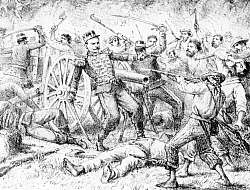
“There is one painful detail that must be added to complete this cruel picture: at one side of the road, impaled on a dried angico[31] bough, loomed the body of Colonel Tamarindo.
“It was a horrible sight. Like a terribly macabre manikin, the drooping corpse, arms and legs swaying in the wind as it hung from the flexible, bending branch, in these desert regions took on the appearance of some demoniac vision. It remained there for a long time
“And when, three months later, a fresh expeditionary force set out for Canudos, this was the scene that greeted their eyes: rows of skulls bleaching along the roadside, with the shreds of one-time uniforms stuck up on the tree branches round about, while over at one side — mute protagonist of a formidable drama — was the dangling specter of the old colonel.”[32]
While in the sertão the epic deeds of Canudos were sung in poems where the undertakings became legendary, in the capital the government was not able to figure it out: Canudos was an impoverished village, not even on the map, and yet it had managed to be a match for entire regiments, putting them in check. The state resorted to inventing tales of political conspiracies, but began to seriously worry. It feared that little known sertão from which men armed for revenge emerged from every province converging on Canudos to join the fight. The university student Euclydes da Cunha wrote about this: “the jagunço… could do only what he did do — that is, combat and combat in a terrible fashion, the nation which, having cast him off for three centuries almost, suddenly sought to raise him to our own state of enlightenment at the point of the bayonet, revealing to him the brilliancy of our civilization in the blinding flash of cannons.”[33]
The resolute men of the sertão had found the place for their struggle: a village of huts with the appearance of a citadel. The state was forced to face the mute and tenacious hostility of those who knew quite well what the nation demanded of them: submission and resignation. Being neither submissive nor resigned, they would not allow themselves to be dominated.
In social war, the principle of war that postulates the annihilation of the enemy knows its most complete application, its conclusion, if you will. What is at stake in wars between nations is complex. It is essentially political, as is the stake in wars of national liberation. It doesn’t necessarily require the annihilation of the enemy. Rather it aims to impose a political will on one’s adversary and to thus create through the tools of war the conditions for negotiating with him. In this case, war is the continuation of politics by other means, as Carl von Klauswitz noted. In the other case, it demands the total and definitive destruction of the enemy. What is at stake is social: the suppression or the maintenance of servitude. There is no middle course.
For the insurgent, it is a matter of putting an end to his slavery and there is no compromise possible on such an essential matter. For the master, it is a matter of safeguarding his social position, his privileges, and his status. No consideration external to the war itself is thus able to impede and moderate its violence. It is war in the pure, original state; it is what it originally was, pure negativity.
In a dangerous situation like social war, errors due to hesitation, vacillation and kind-heartedness are precisely the worst of things. Every consideration external to the purpose of the war, the total defeat of the enemy, would be fatal.
Since the use of physical force in one’s interests does not, in fact, exclude the cooperation of intelligence, those who ruthlessly avail themselves of this force without backing away in the face of any bloodshed, any moral restriction will have an advantage over their enemy, if the latter does not act on the same basis.
Violence, or rather physical violence (since moral violence does not exist outside of the concept of the State and Law, whose violence is that of the victor that imposes its will) thus forms the means. The end is overthrowing the enemy.
Social war is absolute brutality that does not tolerate weakness. Ignoring this element because of the repugnance it inspires would be a waste of energy, not to mention a mistake. Showing indecision at a certain point in relation to the predetermined aim means leaving the initiative to the enemy, a mistake for which one will pay quite dearly.
There can be no negotiation. Peace is either the return to slavery or the end of slavery. Whichever it is, it is the destruction of one of two possibilities.
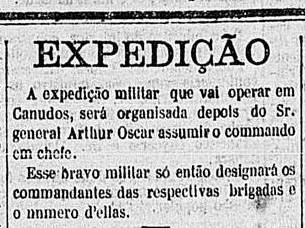
On April 5, 1897, General Arthur Oscar organized the forces for the fourth expedition: six brigades in two columns. Battalions were conscripted from throughout the land, for national unity, the sacred union against the internal enemy.
The two columns were supposed to converge on Canudos. The one commanded by Arthur Oscar would go by the Monte-Santo road, while the other, under the command of Savaget, would pass through Jeremoabo, coming together to launch the attack at the end of June. But as they neared Canudos, both encountered some difficulties. Savaget’s column was attacked twice between Cocorobó and Canudos. The losses were heavy, and the general was wounded. “As always, the sertanejos were taking the edge off victory by unaccountably rising up again from the havoc of a lost battle. Beaten, they did not permit themselves to be dislodged. Dislodged at all points, they found shelter elsewhere, at once conquered and menacing, fleeing and slaying as they fled in the manner of the Parthians[34].”[35]
Things got even more serious for General Arthur Oscar, who had reached the peak of Favela that overlooked the village. After a rapid victory to conquer the position, he found himself a prisoner, besieged by those he had just beaten. He had to request aid from the Savaget column. On July 1, the jagunços attacked the encampments, and some tried to reach the “Killer”, the siege cannon (a Witworth 32) that bombed Canudos. They didn’t manage to do this.
The army found itself in a critical situation. Cut off from its supplies, it could neither advance nor retreat. “At the same time the rifle fire all around made it plain to all that this was in truth a siege to which they were being subjected, even though the enemies’ lines in the form of numerous trenches were spread out laxly, in an undefined radius, over the slopes of the hill… The bold and unvarying tactics of the jagunços were nowhere more clearly revealed than in the resistance which he offered even while retreating, as he sought every means of shelter which the terrain afforded… On the one hand were men equipped for war by all the resources of modern industry, materially strong and brutal, as from the mouths of their cannons they hurled tons of steel on the rebels; and on the other hand, were these rude warriors who opposed to all this the masterly stratagems of the backwoodsman. The latter willingly gave their antagonists his meaningless victories, which served merely as a lure; but even as the ‘victor’, after having paved with lead the soil of the caatingas, was unfurling his banners and awakening the desert echoes with his drumbeats, they, not possessing these refinements of civilization, kept time to triumphal hymns with the whines of bullets from their shotguns.”[36]
Two weeks later, supplies managed to arrive and the troops launched an attack on the village. They were defeated with considerable losses. In the army and the government, there was dismay.
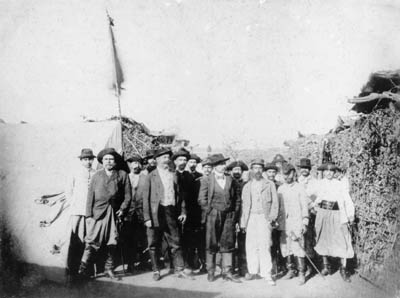
A new brigade, the Girard brigade, was hastily formed in Queimadas, consisting of one thousand forty-two soldiers and sixty-eight officers. It set off on August 3 to supply Arthur Oscar’s army with men and provisions. On the 15th it was attacked and lost ninety-one blockheads, for which it earned the mocking epithet, the nice brigade.
The government now understood that it was no longer a question of making an assault against a village, but of organizing a genuine military campaign of several weeks, if not several months, with the aim of completely surrounding it. It understood that the war would be long and hard and that it needed to supply itself with the necessary tools.
Marshall Bittencourt was put in charge of the campaign. Two supplementary brigades arrived from Bahia and formed a division. A regular convoy service for Monte-Santo was organized. The army no longer risked being cut off from its rear and could thus be installed in a trench war. The long strangulation of Canudos had begun.
On September 7, Calumby road was opened, allowing the siege to come together.
On September 22, Antonio Conselheiro died.
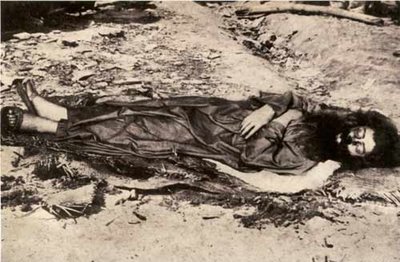
The fighting resumed more fiercely around Canudos. The inhabitants discovered the spirit of initiative. With an astonishing outflanking maneuver, the skirmishes reached all the enemy’s positions, striking the entire front line, trench by trench.
At a single stroke, they unexpectedly got past every point of the front. They were beaten and driven back. Then they launched themselves against the nearest trenches. Again beaten and pushed back, they directed themselves against those that followed and went on this way. Even though unsuccessful, their assaults were unremitting, forming an immense ring-around-the-rosy dance before the troops.
“Those who, only the day before, had looked with disdain upon this adversary burrowing in his mud huts, were now filled with astonishment, and as in the evil days of old, but still more intensely now, they felt the sudden strangling grip of fear. No more displays of foolhardy courage. An order was issued that the bugles should no longer be sounded, the only feasible call to arms being that which the foe himself so eloquently gave….
“In short, the situation had suddenly become unnatural….
“The battle was feverishly approaching a decisive climax, one that was to put an end to the conflict. Yet this stupendous show of resistance on the part of the enemy made cowards of the victors.”[37]
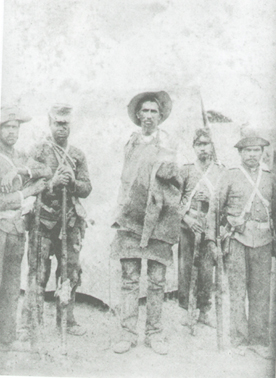
The troops tried to reinforce the encirclement penetrating step by step into the interior of the village, but they met with a fierce resistance that thwarted their advance. Furthermore, the jagunços fell back, but did not run away. They remained nearby, a few steps away, in the next room of the same house, separated from their enemies by a few centimeters of pressed earth. There wasn’t much space in the village. This caused those who wanted to preserve themselves and who put up an increasing resistance to the soldiers by crowding them to gather in the hovels. Though they gave up on some things, they reserved quite different surprises for the victors. The cunning of the sertanejo made itself felt. Even in their most tragic moment, they would never accept defeat. Far from being satisfied with resisting to the death, they would challenge the enemy by taking the offensive.
On the night of September 26, the jagunços violently attacked four times. On the 27th, eighteen times. The next day, they didn’t respond to morning and afternoon bombings, but attacked from six o’clock in the evening until five the next morning.
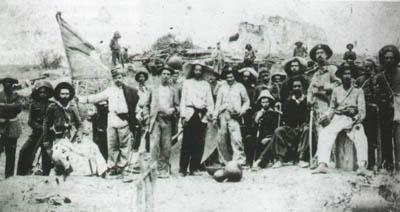
On October 1, 1897, an intensive bombing of the last hotbed of resistance began. A decisively cleaned-up terrain was needed for the assault. The assault had to happen at in a single strike, at the charge, with only one concern, the ruins.
No projectile was wasted. The last bit of Canudos was inexorably turned inside out, house by house, from one end to the other. Everything was completely devastated by the heavy artillery fire. The last jagunços suffered the ceaseless bombardment in all its destructive violence.
But no one was seen fleeing; there wasn’t the least agitation.
And when the final strike was shot, the inexplicable quiet of the destroyed countryside could have made one think that it was deserted, as if the population had miraculously escaped during the night.
The attack began. The battalions took off from three points to converge at the new church. They didn’t get far. The jagunços followed their attackers step by step and suddenly came back to life in a surprising and victorious way like always.
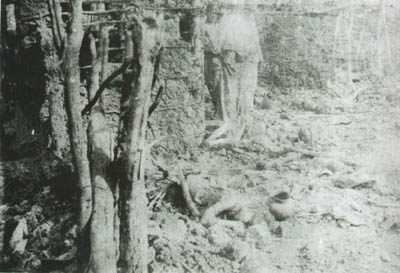
All the pre-established tactical movements were changed, and instead of converging on the church, the brigades were stopped, fragmented and dispersed among the ruins. The sertanejos remained invisible. Not a single one appeared or tried to pass through the plaza.
This failure resembled a rout, since the attackers were stopped and found themselves facing unexpected resistance. They took shelter in the trenches and finally got out of the fix by limiting themselves to a merely defensive strategy. Then the jagunços came out of the smoking huts and unleashed an attack in their turn, swooping down on the soldiers.
There was an urgent need to expand the original attack. Ninety dynamite bombs were launched against those who remained in Canudos. The vibrations produced fissures that crisscrossed over the ground like seismic waves. Walls collapsed. Many roofs fell to pieces. A vast accumulation of black powder made the air unbreathable. It seemed as though everything had vanished. In fact, it was the complete dismantling of what was left of the “sacred city”.
The battalions waited for the cyclone of flames to die down before launching the final attack.
But it wasn’t to be. On the contrary, a sudden withdrawal took place. No one knows how, but from the flaming ruins, gunfire poured out, and the attackers ran for shelter on all sides, mostly withdrawing back behind their trenches.
Without trying to hide, jumping over fires and those roofs that remained standing, the last defenders of Canudos leapt out. They launched an assault of wild audacity, going to kill the enemy in their trenches. These enemies felt their lack. They lost courage. Unity of command and unity of action dissolved. Their losses were now heavy.

In the end, at about two o’clock in the afternoon, the soldiers fell back in defense, tasting defeat.
But the sertanejos’ situation had gotten worse, since they were blockaded in such a reduced space.
Nonetheless, at dawn on October 2, the weary “victors” saw the day emerging under a heavy burst of gunfire that seemed like a challenge.
In the course of the day, taking advantage of a truce, three hundred people asked to surrender, but much to the chagrin of the military authorities they were just exhausted women, very young or wounded children and sick old people, all those who could no longer hold a weapon. They were slaughtered the following night (“And words being what they are, what comment should we make on the fact that, from the morning of the third on, nothing more was to be seen of the able-bodied prisoners who had been rounded up the day before…”[38]).
To tell the truth, there were no prisoners. All the wounded jagunços who fell into the soldiers’ clutches were finished off a bit later with cold steel.
“There is no need of relating what happened on October 3 and 4. From day to day the struggle had been losing its military character, and it ended by degenerating completely…. One thing only they knew, and that was that the jagunços would not be able to hold out for many hours. Some soldiers had gone up to the edge of the enemy’s last stronghold and there had taken in the situation at a glance. It was incredible. In as quadrangle trench of a little more than a yard in depth, alongside the new church, a score of fighting men, weak from hunger and frightful to behold, were preparing themselves for a dreadful form of suicide… a dozen dying men, their fingers clenched on the trigger for one last time, were destined to fight an army.
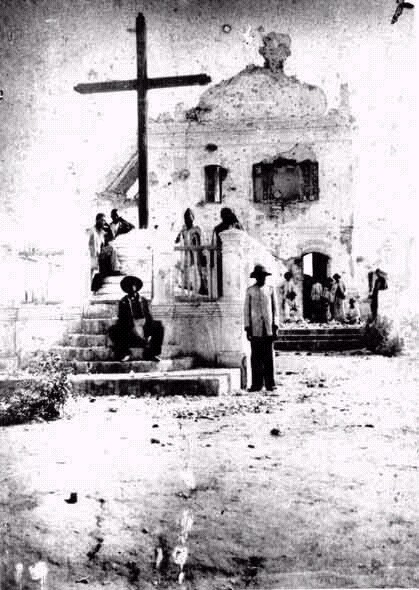
“And fight they did, with the advantage relatively on their side still. At least they succeed in halting their adversaries. Any of the latter who came too near remained there to help fill that sinister trench with bloody mangled bodies…
“Let us bring this book to a close.
“Canudos did not surrender. The only case of its kind in history, it held out to the last man. Conquered inch by inch, in the literal meaning of the words, it fell on October 5, toward dusk — when its last defenders fell, dying, every man of them. There were only four of them left: an old man, two other full-grown men, and a child, facing a furiously raging army of five thousand soldiers…
“The settlement fell on the fifth. On the sixth they completed the work of destroying and dismantling the houses — 5,200 of them by careful count.”[39]
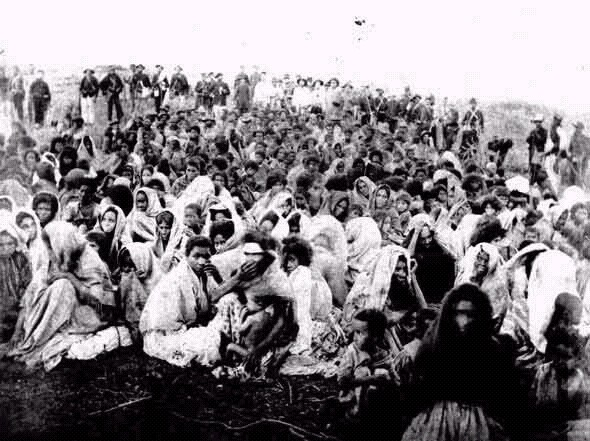
Once again the law of the Republic ruled over the sertão. Thus, the heroic epic of Canudos came to an end. An adventure full of humanity that perished in sound and fury. Canudos, the empire of Belo Monte, was not defeated; it vanished together with the last one killed. It was annihilated.
In those days, in the province of Ceara, a vast, religiously inspired social reform movement developed under the guidance of Father Cicero. This movement experienced a less tragic end, because Father Cicero knew how to navigate his way with authority among the political components of the region, with full respect for the state and property, a compromise before power that assured him not only impunity, but a position recognized and respected by all.
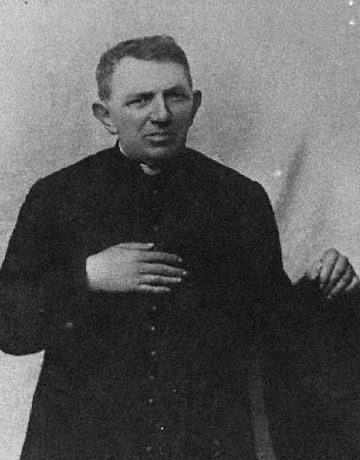
This movement was of a more priestly rather than blatantly messianic inspiration. The spirit of Catholicism in both its political and social sense animated the movement more than the spirit of millenarianism, which is purely social and has nothing to do with politics. It intended to rediscover the pattern of the primitive Church: devoting political means to a social mission.
Padre Cicero had exceptional prestige. He was the only Brazilian messiah to belong to the clergy. All the others were lay people who were carried into divine service by vocation, but never took holy orders. He was sent into the hamlet of Juazeiro in 1870, in the early days of his ministry, and traveled throughout the region preaching. After this period of Franciscan poverty, he started to animate social activity around Juazeiro with an ideal of peace according to which the interests of all were supposed to prevail over particular interests, the source of quarrels and conflicts. He had managed to convince small property owners and peasants to stop living on their land and instead move to the village, near to him. In the morning they went to work in the fields, and in the evening they came back.
A traffic of pilgrims began in Juazeiro. They came to ask the blessing and counsel of Padre Cicero.
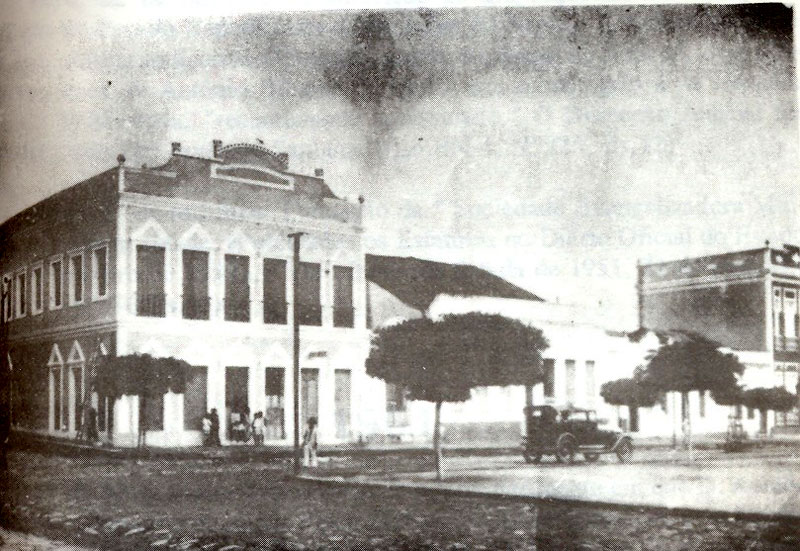
In 1889, when the Republic was proclaimed, Padre Cicero reacted in his way by carrying out his first miracles, which consolidated his position and prestige. The republican state didn’t dare to provoke hostilities and tolerated this movement that criticized the bourgeois spirit without criticizing the state. Pilgrims became increasingly numerous. Many settled in the holy city of Juazeiro where they found protection with the “little father”. The Church was disturbed by this and tried to put an end to the turbulence which it considered dangerous. It ordered Padre Cicero not to say mass or preach anymore, but it could not force him to leave Juazeiro. It was afraid that his followers would mobilize to defend him, something that must be avoided at all costs.
Padre Cicero had allies among local political leaders. His prestige, his influence, the progressive electoral force he had available to him, pushed him to strengthen his growing political authority by getting himself elected as municipal prefect.
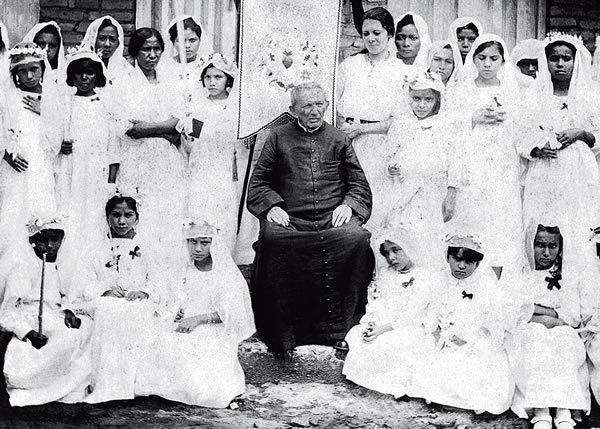
In 1914, the victory of enemies made his relations with the provincial government difficult. The “little father” then called his followers to holy war against the provincial government that represented the Antichrist. God wanted it to be overthrown so that perfect happiness without shadow could reign on earth. These incitements to struggle caused troops to be sent against the New Jerusalem. But unlike the Counselor, Father Cicero enjoyed important political support in the capital of Brazil; and besides, above all, this insurrection was limited to political goals and didn’t have the ambition of overthrowing the constituted order. The prophet’s followers, with federal complicity, triumphed over the forces deployed against them and placed the provincial capital under siege, putting the governor to flight. The victorious Padre Cicero officially became the vice-governor of the state of Ceara.
In a world shattered by the continuous warfare that raged among the great families and for which the poor unfailingly paid the price, Father Cicero could institute a more peaceful society, thus improving the tragic situation of those who had nothing. He was able to do so, because he spoke in the name of the highest authority, divine authority. In this way, he put himself above the fray, beyond the local quarrels, the only way to be heard by all. In a world increasingly dominated by selfish interests, only religion could unite, at least in appearance, what was separated in deed. In sermons, Father Cicero reproached the “small” and the “great”, because they did not live according to the divine laws of charity, mutual aid and the forgiveness of offenses. He was thus able to put an end, at least temporarily, to the hostilities between families, to blot out discord, to renew alliances, to become the arbitrator of disputes, the indisputable and undisputed master of the region, the “little father”.
His movement had a conscious function of social reform. The followers made donations to the messiah that served to form a common fund to provide for the needs of the sick, widows and orphans, to buy land, to finance enterprises (Juazeiro, a small hamlet in 1870, would become the second city of the province under the stimulus of the prophet, with 70,000 in habitants). But it also had a guardian ship function for the existing system: the ideal of fraternity and equality was rigorously understood as fraternity and equality in faith and before god.
When Canudos defended its freedom with arms in 1896–1897, some men left Juazeiro to go to the aid of the commune of Monte-Santo, but the entire city didn’t rise up. And yet, at that time, an insurrection in Juazeiro would have absolutely meant the greatest danger for the Republic, which furthermore was very careful not to challenge it. The state would have found itself forced to conduct a war on two fronts. Considering the tremendous difficulty that it encountered in getting the best of the rebels of Canudos, one could legitimately ask what it would have been able to do in the face of an insurrection of the entire northeast, a thing that would certainly have happened if the movement in Juazeiro had committed itself to that struggle.
In the final analysis, in a period disturbed by increasingly bitter rivalry between particular interests, Father Cicero brought social peace. This allowed the poor of the region, along with those who came from the coast, to breathe, to relax and to rediscover with him, if not the hope of a new life, at least that of a better life.
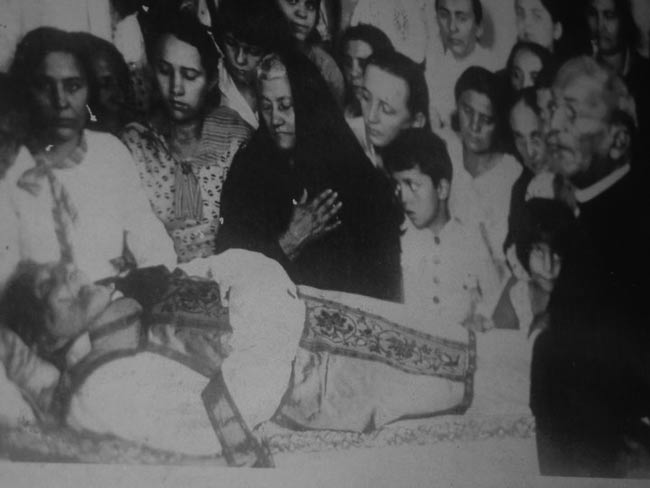
After his death in 1934, various messianic movements developed in the sertão. Most of them were immediately stopped by the action of the local authorities, unless they learned to follow the example of Father Cicero and come to terms with the politicians of the region. This was the case of Pedro Batista de Silva’s movement in Bahia. He succeeded in making the Santa Brígida precinct, where he established his messianic community and over which he ruled with uncontested authority, rise in the ranks of city hall.
This was not the case of the blessed Lourenço’s movement, which lasted from 1934 to 1938 and ended tragically.
In the image of the “warrior saint” Antonio Conselheiro, the blessed Lourenço founded a colony similar to Canudos in the plain of Araripe, also fully within the sertão. Here again, the poor who no longer wanted to submit to being slaves occupied the land, establishing a kind of primitive communism, a phalanstery. Everything produced was held in common. This scandalous practice that openly challenged the big property owners by violating or, worse, ignoring the laws of private property (sacred laws that established the social authority of the possessors) would rouse the almost immediate reaction of the united forces of the constituted order. The sertanejos took up arms, scythes against cannons as in Canudos, resisting to the death. They were all slaughtered after a fierce and relentless battle, but it was too unequal. After a short time, the law of the Republic again ruled over the sertão.
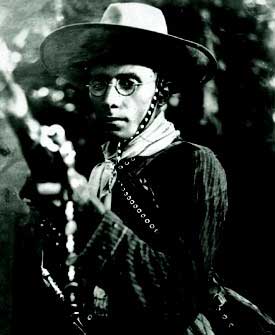
In 1938, the blessed Lourenço’s movement ended in a bloodbath. It was the last revolutionary messianic movement. On July 28 of the same year, Lampião was killed with some compadres at Angico. His death would be the death-blow inflicted on cangaceirismo. The police would easily manage to get the better of the last scattered, unsettled little groups that lacked protection or complicity. The slaughter would be brutal.
The cangaceiro was the social bandit of the northeast of Brazil and the cangaço was his band. The cangaceiro avenged himself for a humiliation, an injustice, for the blackmail imposed by a “colonel” or the police, for the murder of a relative. He then decided to exclude himself from society and go into hiding by uniting with an already existing band, a band that would allow him to survive through organized theft and escape the police forces that were hunting for him.
An avenger more than a righter of wrongs, the cangaceiro embodied generalized rebellion against the whole social order.
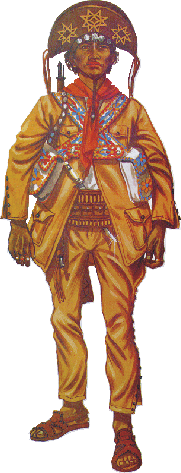
The cangaceiro bands that traveled around the northeast at the end of the 19th and the beginning of the 20th century stood side by side with the millenarian movements. In both equally, we find the same contempt for property and thus for the law, the same taste for wealth, the same generosity, the same challenge launched against the state and its cops, the same fierce determination, the same fighting spirit, the same fury. The boundary between the two was faint when not non-existent, and the passage in either direction was easy. We know of famous bandits, seduced by the prophecies of the Conselheiro, who participated in the founding of Canudos or rushed to defend it, bringing their skills and experience. Lampião thought so highly of Father Cicero’s movement that he always avoided the province of Ceará in the course of the raids.
In both cases, the same people were involved.
“From a very early age,” the university student Euclydes da Cunha wrote, “the inhabitant of the sertão regarded life from his turbulent viewpoint and understood that he was destined for a struggle without respite that urgently demanded the convergence of all his energies… always ready for a conflict where he wouldn’t be victorious, but he wouldn’t be conquered.” It probably wasn’t the nature of the northeast that molded the fierce character of these people; but they were truly indomitable people who preferred death to slavery. They were always quick to defend their freedom, the idea they had of man, a certain vision of wealth, with the greatest vigor and boldness. They stood against the entire world; and from all sides, they were destined to a struggle without respite that urgently demanded the convergence of all their energies, to a war in which they would not allow themselves to be conquered.

Millenarians or cangaceiros, they were cowhands, sharecroppers, mule drivers. They were part of the rural society that was continually threatened in its existence and substantially in its freedom. They had been produced by it. They not only found a real complicity in this society, but they also expressed its deepest aspirations.
All in all, very little differentiates the two groups. The millenarians were carriers of a positive social project, but it had a religious essence, while the cangaceiros were carriers of a purely negative social project that was not religious in its essence.
United around a prophet through faith in the imminent arrival of the Millennium, through the same aspiration for a new life, the Brazilian millenarians formed a spiritual community that intended to organize itself in expectation of the final event, preparing for it. This messianic community did not have the ambition of realizing the Millennium itself, but it did already oppose the spirit of the existing world in a radical way by recognizing itself in the community of a future world. It carried within itself a positive social project that essentially remained religious; it formed the idea of a society not yet realized and whose realization did not belong to it. It was the premonition of this new society.
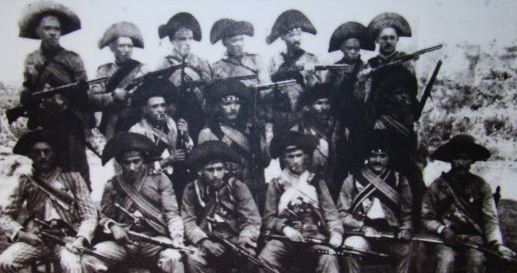
The cangaceiros recognized themselves in a simple idea, revenge, the realization of which touched them directly. They formed a warrior community whose social project (revenge is, indeed, a social project) was absolutely negative and for the most part completely personal. Each one had his revenge to carry out. It belonged to her and related to a given person or, more generally, a given family. And he intended to bring it to a good end, if he had not already done so. The entire constituted order was opposed to her revenge. By carrying it out, the cangaceiro challenged the entire society.
The cangaceiro did not criticize the society in which she lived, but the goal she pursued made him a rebel. The millenarians didn’t seek to avenge themselves or, more precisely, the hour of vengeance did not belong to them, since it was up to God or a supernatural being like king Dom Sebastião, but they criticized society. Thus, it was almost inevitable that they would meet, as they did, in fact, in Canudos. The state arranged to transform a spiritual community into a warrior community and an individual in search of revenge into a social bandit.
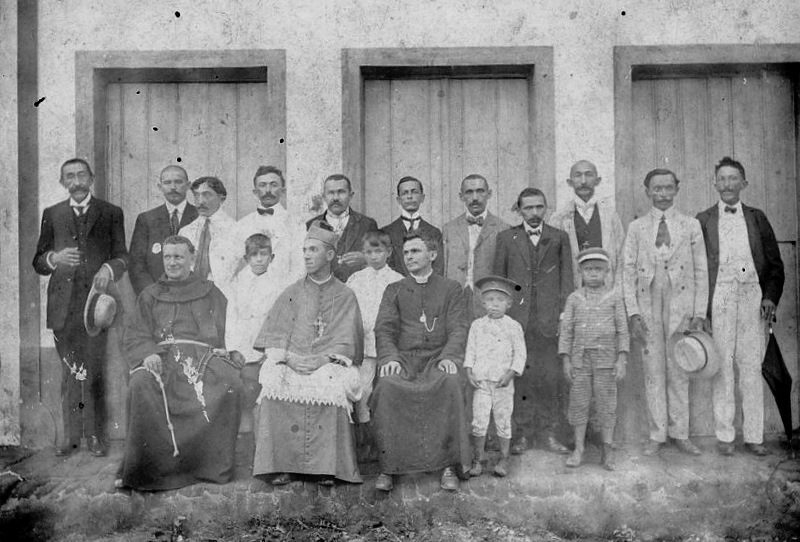
The insult that the cangaceiro had to erase came both from an individual and from the society that supported that individual, that was his accomplice. The offense didn’t come from an isolated individual, from one’s likes — in those days, settling such an insult would not have been a problem — but from a social authority. It could be an insult from a “colonel” or someone in his circle, which amounts to the same thing. The offense came from a fazendeiro who was invested with both a social authority as a large property holder and a political authority as a representative of the state in the region. The vengeance of the cangaceiro, in fact, was a social vengeance. Carrying it out didn’t just mean confronting an individual, but also the state that stood behind him.
The cangaceiro made his own justice toward and against the state, which always stood on the side of the one who offended him. His inalienable and universal right as a free individual came into conflict with the objective Right of the state, the substance of which is revealed precisely in forcing the individual to alienate her universal and immediate right to freedom.
“It is enough that the I as free being am alive in the flesh, because it is prohibited to degrade this living existence to the rank of pack animal. While I live, my mind (which is concept and also freedom) and body are not separate; this constitutes the existence of freedom, and it is in this that I experience it. It is a sophistic concept without idea that makes the distinction according to which the thing in itself, the mind — and even the idea of it — , is not struck when the body is abused and when the existence of the person is subjugated to another’s power.”[40]
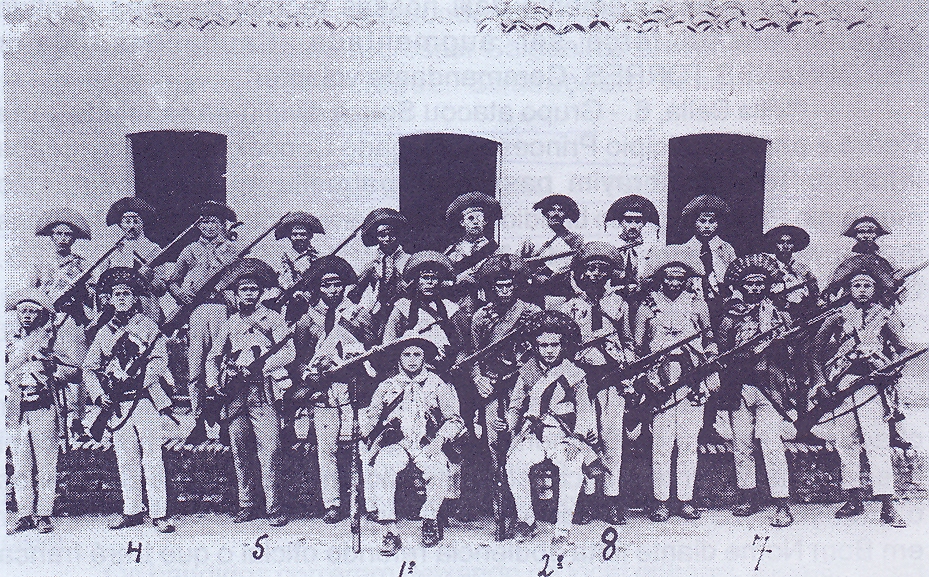
By avenging himself, the sertanejo realized his idea that all human beings were equal in their humanity; he became effectively free, for himself and for others. For him, this passage of the idea into concreteness corresponded to the passage into clandestinity. He abandoned an abstract civil existence that suddenly appeared for what it was, a servile existence. Thus, he became a cangaceiro.
Freedom is a risk to take. Suffering an insult without reacting means submitting to the power of another, falling into slavery. This corresponds to a person’s social death, to which she can respond only with the master’s death.
Faced with an essentially human reaction, the academics of our times, like Josué de Castro[41], go so far as to even speak of a nutritional deficiency to explain the rebellion of the cangaceiros or the millenarians, and talk of flight when they should confront the state and the world. Who knows, maybe in referring to these academics, one could have spoken of a chronic deficiency of the most elementary intelligence of human practices.
The sertanejos possessed this intelligence, recognizing themselves in the cangaceiros and appreciating them as courageous human beings who preferred to put their lives at stake than to die as slaves. The fact is that from one moment to the next any sertanejo might have been forced to go into hiding for similar reasons. These people were on the verge of slavery. Their existence as free human beings ceaselessly threatened to collapse into submission, to fall or return into slavery. They were always ones who lived and reacted in haste.

The cangaceiro showed through his actions that even the poor could become terrifying. Feared and admired, a cruel hero and a bandit with a big heart, he quickly became a mythical figure of the sertão.
In the cangaceiros’ heroic deeds, it is difficult to distinguish legend from reality. The testimonies, the depositions, the poetry, the stories and the news articles accumulated and contradicted each other. Reality itself, in which shameful self-interest, betrayal and complicity, boldness and deceit were mixed, was not only complex and contradictory, but already legendary. With the cangaceiros, reality had been pierced by an idea. It belonged to an epic poem.
In the 19th century, starting from Brazil’s independence, social banditry spread within the country, reaching its peak at the proclamation of the Republic. Then it took on the traits of modern cangaceirismo, which would reach its culmination in Lampião in the 1930s.
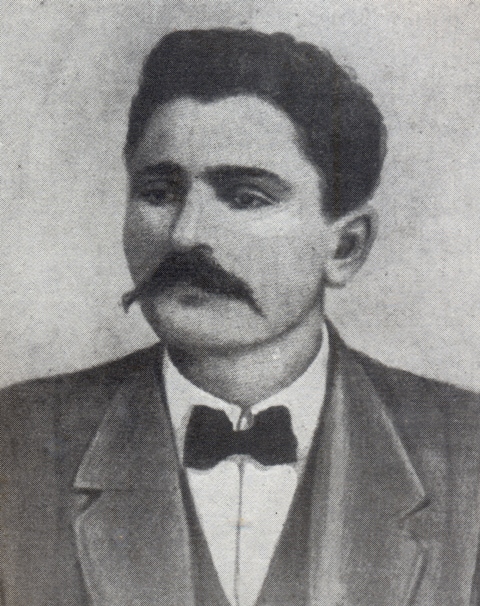
At the beginning of the 20th century, two figures stood out: Antonio Silvino and Sebastião (Sinhô) Pereira, with whom Virgulino Ferreira, the future Lampião, took his first steps. Legend has presented them to us as especially good and generous, in the style of social bandits like Robin Hood. Antonio Silvino was captured in 1914 and sentenced to thirty years in prison. He was released after twenty years. Sinhô Pereira withdrew into “public life”.
Virgulino (Lampião) was born in 1897 in a small village in the province of Pernambuco, where his father was a sharecropper on a small plot of land and also a mule driver. One day, a detachment of the police, whose commander was linked to a hostile family, slaughtered the old man and the mother.
Virgulino and his brothers burned the mourning clothes in the barnyard and swore that from that moment on they would no longer carry on mourning, but would rather carry the gun. The sisters were entrusted to the youngest of them while the others went into hiding. But finding themselves in an extremely precarious and uncertain situation, after a few victorious conflicts with the military police, they united with Sinhô Pereira’s cangaço.
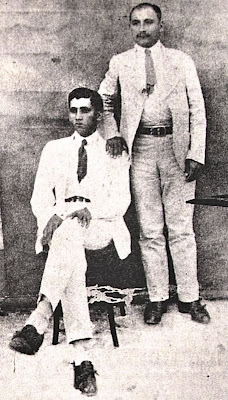
One of Lampião’s first endeavors was the murder of “colonel” Gonzaga, director of the Belmonte police in the state of Pernambuco. The man was killed with his entire family, and even the goats and chickens in the barnyard were slaughtered. In the end, Lampião removed the wedding ring from the corpse, put it on his finger and didn’t take it off again until his final day.
When Sinhô Pereira retired in 1922 (this could happen when one could count on the implicit blessing of Father Cicero), Virgulino became the indisputable leader of the band. Though he went on to become the most celebrated of the cangaceiros, he would also be the last. Lampião wrote the final chapter of a history.
His nickname, Lampião (lamp, lantern), came to him from one of his early battles. In the course of a nocturnal ambush, he had taken to firing so quickly that it lit up the night.
For nearly twenty years, throughout the sertão, Lampião would wander from one province to another over an immense landscape, appearing in an unpredictable manner, scrambling his trails, always turning conflicts with the police to his own advantage.
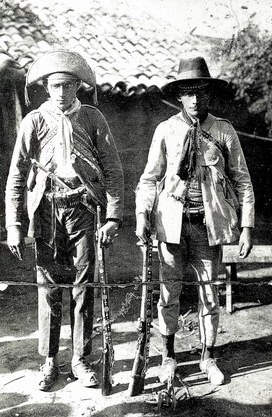
“Let’s leave civilians in peace. Against police and traitors: FIRE!”
The blows were frequently struck by small groups commanded by the best men, while the leader controlled everything. Sometimes the entire band took part in genuine war expeditions. Lampião studied routes, sought to discover where there were concentrations of money, followed the movements of the “flying squads”. He was considered a “modern” bandit and used strategy and tactics most skillfully.
The band stayed hidden for long periods in a safe place, a forest, an inaccessible mountain chain, a desert oasis or the fazenda of a friend. The people only moved in small groups to resupply ammunition, a very difficult enterprise, to deliver messages demanding money and to buy food and other things. They moved in a limited radius, just a dozen people with a guide, if need be; the round lasted a week at the longest. At times, if the situation became too hot, the band literally disappeared without leaving a trace, deliberately spreading news and signals that confused the trails and making the police and beaters go crazy. Then the cangaceiros rested and recovered from the fatigue of their latest endeavors, preparing the next ones with high spirits.[42]
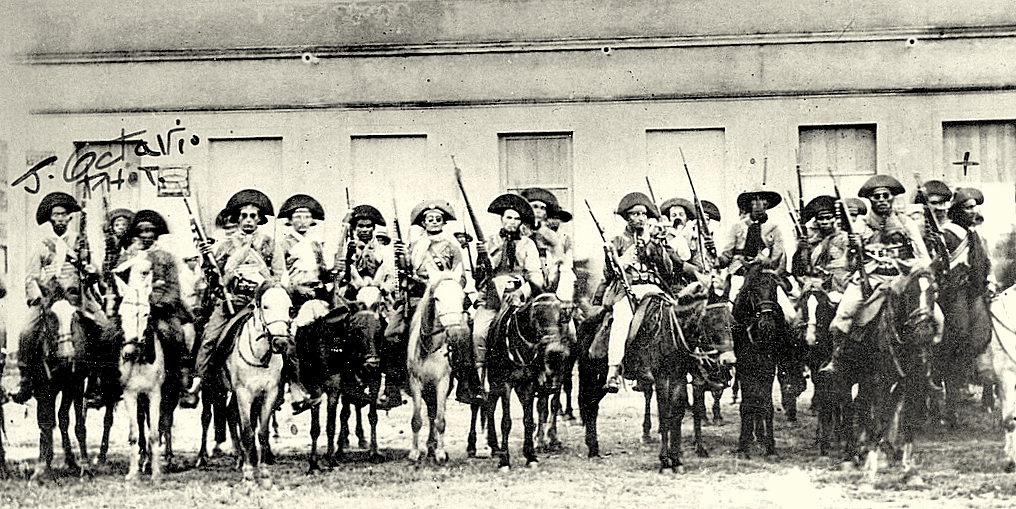
Expeditions lasted several months and could cover several northeastern provinces. Lampião extorted money from the rich property owners, villages and sometimes cities of a certain significance. He presented himself with his band, receiving the money collected from the rich, merchants and property owners directly from the local authorities. In some cases, he visited the school while the men sat in the plaza of the church, then usually everything ended with a banquet followed by dancing. The feast started with great binges of overflowing glasses of a brandy called “a testarda” (“the stubborn woman”). Poetic challenges were launched where the best bards confronted each other, while encounters came together and dissolved… In the night, the troop took off singing their story to the tune of “Mulher Rendeira”.
Olé, mulher rendeira
Olé, mulher renda
Tu me ensina a fazer renda,
Eu te ensino a namorar!
Sometimes things went badly. For example, during the attack on Inharéma (sic) in Paraíba. The cangaceiros did not succeed in taking the center of the town. That time, mad with rage, they retreated, destroying, looting and burning everything that they found in their path.
“Upon returning to the state of Pernambuco at the end of 1925, Lampião occupied the city of Custódia, but in the most peaceful manner in the world. The bandits spent the day passing through the streets. Everyone paid for his purchases. All around the area sentries kept watch. Lampião extorted a few rich bastards, bought provisions, medicine and ammunition. The tailor made clothing for him, finishing it the same day, as promised, and was paid handsomely for it. Lampião sent a telegram to the state’s governor, telling of all the colors, but he didn’t pay for this on the pretext that the telegraph was a ‘public’ service. The police detachment, having disappeared at the first alarm, gave no signs of life.”
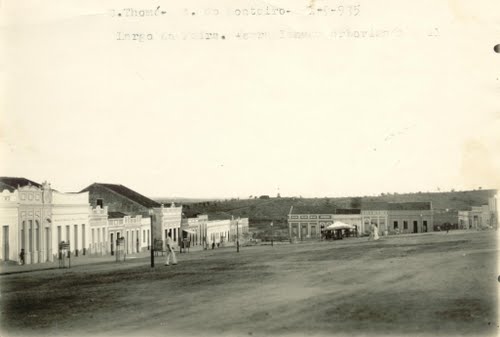
At Carnaíba de Flores, he surrounded the city and delivered a threatening message: if the sum requested was not handed over, he would set fire to the village and slaughter everyone. The sum was considerable, but not excessive, and so the village notables immediately began to make a collection. But suddenly a very large, unexpected “flying squad” brigade appeared, and the cangaceiros, warned by their sentries, prudently withdrew. Afterwards, the band presented themselves again without warning, took the dialogue that had been interrupted a few months earlier back up and obtained satisfaction.
An episode that was well-known and widely talked about due to the rank of the victim was the attack against the fazenda of a very rich aristocrat, the baroness of Água Branca. Though he didn’t touch the jewelry the lady wore, Lampião plundered the rest, pins, rings, bracelets, necklaces, precious stones and other objects of gold, among which was a golden chain that he later gave to his partner Maria Bonita. She wore it until her death, after which it ended up in the pocket of some soldier or officer.
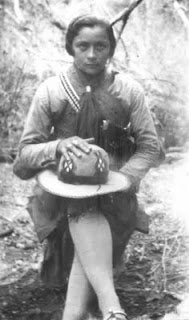
Thus, Lampião unfailingly walked his road, devouring mile after mile of the sertão.[43]
In 1926, he met Father Cicero in the holy city of Juazeiro. Along with the title of captain, he received modern armaments and ammunition from the government. He was supposed to go fight the Prestes column (Luís Carlos Prestes would later become the secretary general of the Brazilian Communist Party) that had been formed following the failed coup d’etat of the democratic officers and that had undertaken a long march through Brazil. Lampião accepted the priest’s blessing, the title of captain and the arms, but took care not to attack the Prestes column, since he didn’t consider it his affair.
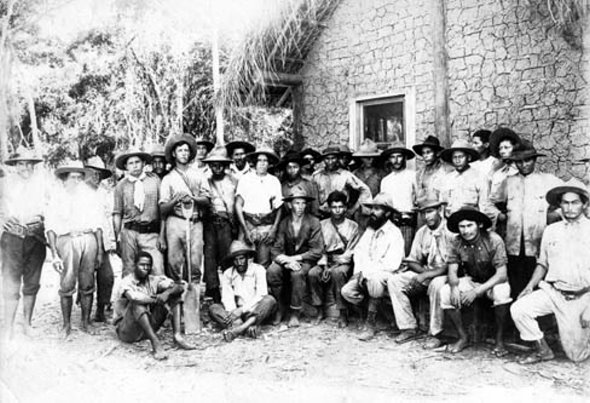
In June 1927, Lampião set a course for an important city, Mossoró, which was even richer than the others, in the state of Rio Grande do Norte. He communicated that he demanded a high ransom. As his whole response, the prefect sent him a package containing one rifle shell. The “captain” was enraged. In one village, the cangaceiros threw a merchant onto the pavement, distributing his pieces of cloth to the poor. In others, they pulverized all that came within range. It was a technique of terror.
In the end, the cangaceiros divided into four groups and attacked the city. But Mossoró and its police expected them. Lampião underestimated the enemy and found himself at a disadvantage. Always a realist, he sounded the retreat and the one hundred fifty bandits fell back in perfect order. The loss was minor. The cangaceiros made neighboring cities pay dearly for the defeat. Lootings multiplied. But they didn’t linger in Rio Grande do Norte, which had a terrain that was hostile to them (extensive plains without mountains or forest). Furthermore, that adventure had at least brought them a large amount of loot. Therefore, Lampião coined a maxim: if there is more than one church in a city, it is best to leave it in peace.
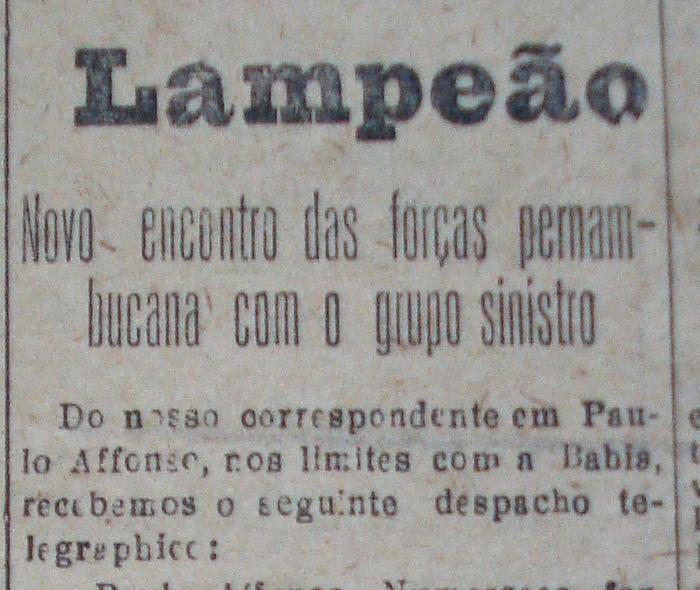
During the return journey to the state of Pernambuco, his most violent conflict with the police occurred; ninety-six cangaceiros against more than two hundred fifty macacos. Lampião, sure of his chances, launched himself furiously into a struggle that to all appearances should have been fatal to him. The men were divided into three groups, and the battle ended with the defeat of the state troops who, despite their machine gun, left more than twenty dead on the ground and carried away about thirty wounded. The losses on the side of the cangaceiros were minimal. Sometimes an act identical to a thousand others becomes a legend, but a witness has reported that he saw it with his own eyes.
So one passes from one year into another, from one state into another, recalling an adventure, a name, an anecdote or even a mere gesture.[44]
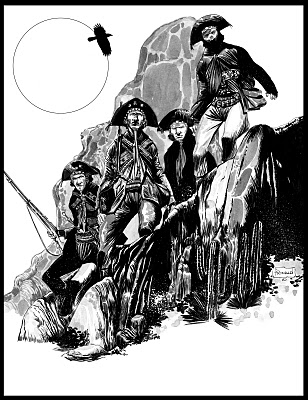
Terrifying and magnificent with their leather hats shaped like half moons and decorated with a profusion of medals, silver and gold coins, collar buttons, jewels, rings, in a barbaric and prestigious luxury.
The bandolier of the rifle also overflowed with an infinity of buttons and medals. Pistols and revolvers had holsters of worked and decorated leather, like the belts. Even their saddlebags were richly embellished. The unfailing sharp dagger, about twenty-five to thirty inches long, that was the accessory of the true cangaceiro was slid into its inlaid sheath. They were the incarnation of the mythical warrior, the Avenger.
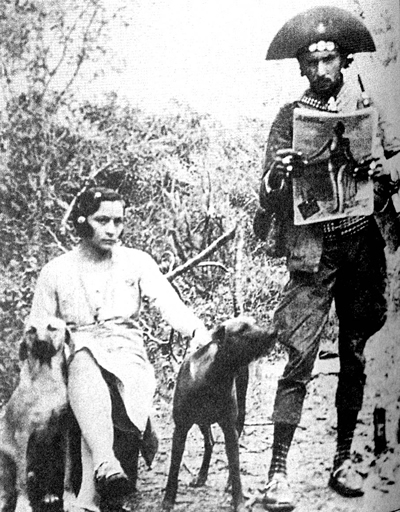
They arrived suddenly. They emerged from the desert, there where they were no longer expected, to vanish as if by magic into the endless expanse of the sertão. In the villages they passed through, they opened the doors of the prisons and the strongboxes of the rich. They seemed to possess the gift of ubiquity. Omnipresent, they escaped police forces as if by magic, the body impermeable to bullets, death and misfortune.
“He takes from the rich to give to the poor” — so it was said of the cangaceiro. In fact, the cangaceiros lived abundantly: always ready for battle, but dissipating the fruits of their robbery in feasts, richly decorated clothes, thousands of acts of generosity that they dispensed around themselves. With their behavior in the face of wealth, they were the exact opposite of the great local property owners. The wealth that the latter had accumulated, the cangaceiros distributed anew. The big landowners conceived of wealth only as private goods, which excluded others, impoverishing them. The cangaceiros, by consuming what they had taken, made everyone participants in the luxury.
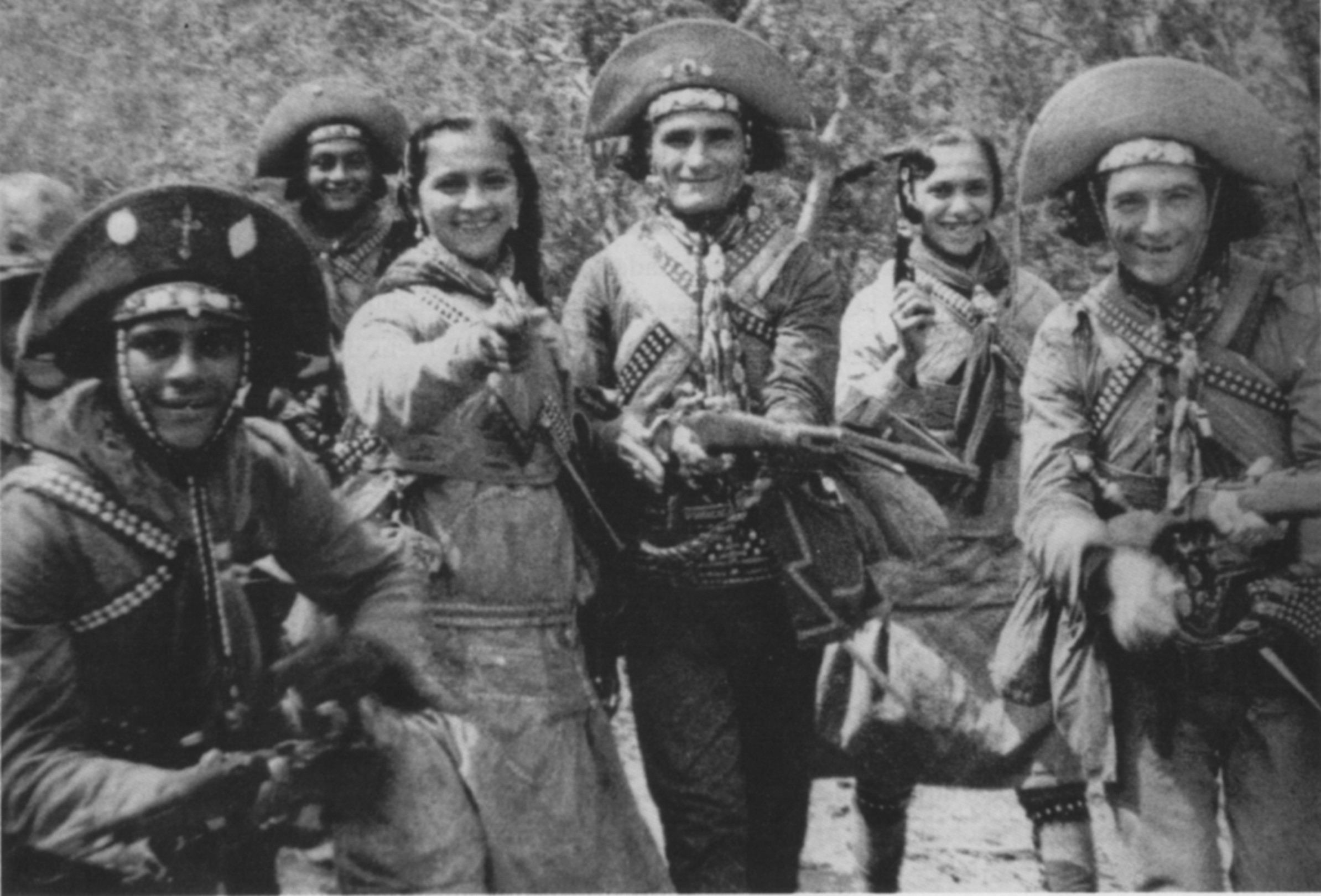
Whereas in the ancient “feudal system”, power came from conquest, now it is increasingly based on money. The cangaceiros represented the power that despises money. Expending their dough in purchases paid for without haggling, in banquets and in gifts was a question of honor for them.
If the state guaranteed the power of the “colonels” and the right to property, actually the right to exploit other people’s labor, the cangaceiros seemed to revive the tradition of the bandeirantes, whose great and tireless warrior caravans followed one another in the conquest of the northeast. “Far from the coast, where metropolitan decadence was found, the bandeirantes, profiting from extreme territories such as Pernambuco in Amazônia, seemed to belong to a different race due to their reckless courage and resistance to adversity.”[45]
While the “prestige” of the fazendeiro was based exclusively on exploitation, the cangaceiro rekindled the spirit of conquest. He had gained the money that he dispensed so generously by risking his life, robbing the rich and powerful who were loathed but feared by all.
In the 1930s, the state felt the necessity to reinforce its control over the entire northeast and to completely pacify that vast region far from central power. The reorganization of the police, the institution of checkpoints, the use of radio and telephone, the introduction of more efficient instruments, the development of roads and means of transportation; a vast apparatus was put into action to liquidate banditry. Repression intensified.
Not by chance, during the last years, Lampião remained hidden most of the time. The ranks had diminished. Ammunition had become increasingly dear and almost unfindable. Toward the end, only fifty-five men remained, and when any action was carried out, it almost always occurred in small groups.
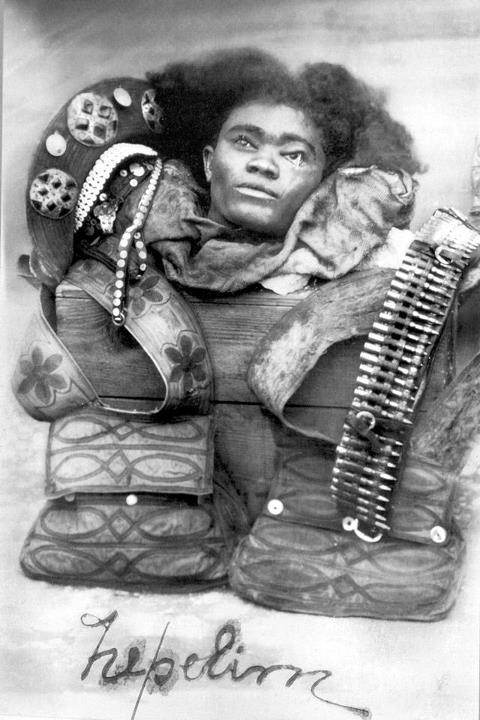
Specifically, a betrayal caused Lampião’s end.
On July 28, 1938, he was poisoned in Angico, in the state of Sergipe, with some men and his partner Maria Bonita. His “compadre” Corisco’s revenge was terrible. He massacred the entire family of the traitor, who was enrolled directly in the military police.
Corisco’s history was that of all his comrades: revenge and flight. He had been drafted into the army and then deserted. Also a victim of injustice and abuse, he was furthermore humiliated to the point of being trampled by a police deputy. He entered the cangaço. He quickly became the best cangaceiro after Lampião. He managed to find the police who had humiliated again, took the deputy by the feet, ran him through, and inflicted a number of cuts on him with the dagger, making him bleed slowly like a pig.

After Lampião’s death, Corisco continued to scour the countryside with his men for nearly two years. In March of 1940, in a small village of the caatinga of Bahia, surrounded together with his partner Dadá by the macacos (who also had a machine gun), he refused to surrender. He died almost an hour later.
That was the end.
The cangaceiro gave evidence in himself of the possibility of shaking off the yoke of oppression, which is neither invincible nor eternal. Judgment can always fall, unexpected, upon the rich and powerful. The cangaceiro only caused the pieces to be put back in play, also showing that the struggle is pitiless and that freedom must be conquered. The cangaceiro was energy directed toward a new form of life. All things considered, the cangaceiro was the revolution.
This epic poem has been sung at fairs and feasts where poems are improvised. This one tells of the Arrival of Lampião in Hell:
There was great damage
In hell that day.
All the money that Satan
Possessed was burned.
The registry of control and more than six hundred million cruzeiros
Of merchandise alone
Were burned.
Starting in 1940, the northeast territory was completely pacified. Order was maintained through terror. The northeast was under armed occupation, even if it wasn’t under ideological occupation.
It was not always this way. This omnipresence of the state generated the sleep of the Mind, a true nightmare for the poor. It prohibited any discussion about the world. The idea of the state was beyond any critique; the world had become a fatality.
The Brazilian messianic movements, on the other hand, had developed at a time when discussion was still possible. For nearly century in that distant region, the poor had debated about the world.
The historical or human dimension seem to be absent both in Vittorio Lanternari’s interpretation[46], which sees in them a reaction of oppressed people that “attempts to escape an oppressive situation that holds the entire society in subjection”, and in Pereira de Queiroz’s interpretation[47], that, contrarily, notes an aspiration to order in a society in which “a freedom that is much too great reigns, a freedom that degenerates into licentiousness.”
The historical conditions that controlled the development of these movements are comparable to those that we encountered at the end of the Middle Ages in the west: a social organization that has become archaic is decomposing while a new social order is progressively established. The world debates about the world: the mercantile spirit versus the feudal spirit. The poor participated in their own way in the debate. They didn’t want to hear about either one, especially not the mercantile spirit, of the world that will be. For them it wasn’t a question of choosing between the past and the future; they weren’t paid by the state like sociologists or historians. Much more simply, it’s a matter of implacably resisting the bourgeois spirit, not because this overturns their customs, but because it is completely opposed to the idea that they developed of a human society. This is an excellent reason! They really struggled against progress, progress in the world of capitalist thought.
Thus they initiated in practice a debate of ideas between their social project and the social project of capital; between the idea they have of a human social practice and money as social practice.
The millenarian movements of the medieval era were at the center of a historical mutation from feudal to mercantile society. This mutation was already completed almost everywhere in the world when the Brazilian movements appeared. It was as if they found themselves at the historical edge of the mutation, a situation that explains their purely messianic character. They were expecting a cosmic upheaval, the hour of god’s vengeance was supposed to arrive at any moment. For the most radical medieval millenarians, the hour had come to accomplish that upheaval; with god’s help, they participated actively in the earthly realization of the Millennium, whereas the Brazilian messianic movements could only prepare for it.

The millenarian insurrections of medieval Europe had to confront an old and new principle. They were immediately critical in the face of the Church and Money. The fact is that the Church was a historical tradition and Money was a historical novelty. The society of northeast Brazil was religious in essence, but the Church had few roots there. As to the bourgeoisie, they were nonexistent. The poor wouldn’t have entered into direct conflict with the Church or merchants. They would have risen up against a mentality that insinuated itself into society, transforming minds. When conflict broke out, it was immediately against the state.
The messianic movements developed in a region that still did not know modern conditions of exploitation; an arid, often desert-like region that didn’t interest either the big merchants or industrialists. The wageworker was practically unknown there. But this area was surrounded by the modern world and modern mentality. To the south, the capitalist point of view had been imposed since the beginning of the previous century with the great coffee plantations. This monoculture addressed itself solely to exportation; it was completely dependent on the laws of competition, from the international market and stock market speculation. It required a modern organization of work, an industrial discipline. It constituted this social control by itself. It was its essence, because it created the conditions of an absolute dependence on money in practice. To the east, the seacoast, which had been employed in mercantile exchange with the metropolis from the start, very quickly found itself in a process of modernization of this activity. The “senhores de engenho”, the masters of the primitive sugar refineries, could no longer bear foreign competition. Slavery itself, which cost much too much, had been abolished by the republic and replaced with a more rational form of exploitation, wage labor, that made the worker directly dependent on money. With the aid of foreign capital, new factories were built, leading to a growing demand for sugar cane. The masters launched themselves into the acquisition of land: a devouring eagerness, no problem of fertility, it was enough to plant more and more there. And where one could not plant, one raised livestock.
This is how the capitalist mentality penetrated bit by bit into the sertão, deeply disrupting customary relationship; it was necessary to make money, and as quickly as possible. Furthermore, the conditions of exploitation became draconian; many found themselves without land or work, in the darkest, most desperate misery. They fled in mass from the coast where it was impossible to survive, taking refuge in the interior. Since this disoriented population was not integrated in force into the system, they went to swell the ranks of those who followed the millenarian prophets. In the end the exchanges between the interior and the coast (leather for saddler-making or for packaging rolls of tobacco, oxen for sugar mills and plantations) that balanced social life in the sertão, was to be brutally compromised by capitalist industrialization. This rupture in the exchanges would have tragic consequences for small farmers, cowhands and sharecroppers; it would call the relationship that linked the cowhand or the sharecropper to the owners of the land back into question. All this was reflected in local disputes, exacerbating them.
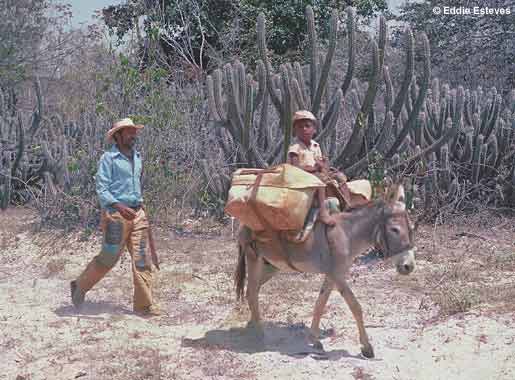
It is necessary to understand the origins of the millenarian movements. They developed in a region of relative freedom, where neither the state nor the church was omnipresent. But this region suffered the repercussions of the capitalist offensive from within this process due to the force of circumstance. Little by little, the traditional “client” relationships were replaced with indifferent, impersonal relationships, money relationships. From that moment on, betrayal was in the air. Respect for giving one’s word was replaced with the value of money that respects no one’s word. Deprived of all dignity by the allurements of profit, the large property holders betrayed customary rights without scruples and did their best to make the existence of the poor abominable. There was now something rotten in the sertão.
Once the animal breeders, property owners, cowhands and sharecroppers generally led the same life. The family formed the basic cell of society, not the conjugal family, but a great family, an “extended family”. The ties were formed from a familial nucleus (brothers and sisters, cousins, godchildren) and from one’s clientele (bastard branches, sharecroppers and old slaves). But these lineages had a leader. Within the family group, all those who had the same preeminent position received the title of colonel, but there was also a “colonel of colonels”.
An unspoken contract of exchange of services existed that insured the cohesion of the group and reinforced the position of the colonel, who had the duty of helping relatives and his faithful men: transfer of land, respect for sharecropping contracts (the cowhand possessed a part of the herd just like the sharecropper had a part of the harvest, a part fixed by custom), loans, guarantees of judiciary defense… this entailed a moral obligation that put those involved at the colonel’s service. Repayment in money was rare if not nonexistent.
Political power always formed the biggest stake in the struggles that opposed clans to each other in the interior of Brazil. The colonel was born to command; he had inherited the land and derived his power from this. The state only reinforced him with its safeguards, with its legal aid. The colonel was determined to jealously defend his social position. He enjoyed absolute impunity. It was said that the activity of a colonel who was respected was envisaged by every page of the penal code. He protected and conserved his power and prestige, by maintaining genuine bands of armed men, into which the men that depended upon his jurisdiction were conscripted during times of conflict between families. He was the real authority of the region.

No limits were imposed on the colonel, except respect of his word and tradition; all were at the mercy of his will. Greed could make him a terrible man. Thus, treachery was the immediate danger; everything was in danger of falling into the most arbitrary abuse. This led to a susceptibility to edginess capable of provoking, at the least sign, a series of conflicts within and among the clans.[48]
Millenarians and cangaceiros rose up in a society where relationships were still personal, where solidarity still had a meaning, but where latent unrest existed due to the progressive disintegration of these relationships. They originated in a crumbling society, undermined a bit at a time by capitalist ideology that made traditional relationships fall away. This ideology would aggravate society, exacerbate touchiness, arouse appetites. The large property owners would get involved in an implacable competition that would lead to the elimination of the weakest and the increase of the power of the strongest.
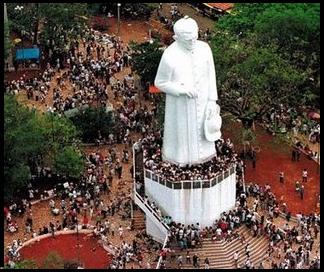
In general, Brazilian messiahs didn’t condemn the old organization so much as the eagerness for profit manifested more and more by the colonels, making them forget their obligations. Cowhands and sharecroppers fully suffered the consequences of this. They could historically situate the start of this degeneration of relationships and compare this new state of things to a not too distant past. The messianic movements expressed the desire moving toward solidarity at a time when all feelings of solidarity were tending to disappear.
Two directions could be perceived: taking tradition back up and reinforcing it with a higher principle, divine authority, the patronage of God — this is what Father Cicero’s movement did — ; or going beyond the old organization, which revealed itself to be unable to resist the capitalist mentality and the increase of selfishness, in order to again find the meaning of the original community.
They had recourse to religion as the objective spirit of community, in order to seal the pact of alliance. According to that spirit, catholic ritual consecrated the links that united them. Such rites constituted the solemn affirmation of the refusal of the old world that had become profane and the entry into a new world that only now presented a sacred character.
“Once the Holy City was founded, the messiah tried to identify it as much as possible with Holy Places. Particularly in the northeast, the landscape lends itself to surprising comparisons with that of Judea as it might be seen reproduced in the crude religious images on sale at the fairs of the sertão. Father Cicero had quite ably baptized the ruggedness of the terrain around Joazeiro with names drawn from the gospel: the Mount of Olives, the Garden of the Holy Sepulcher, Calvary. Decorated with small chapels and numerous crosses, these places attracted the curious, moved pilgrims and constituted new evidence of the holiness of the places.”[49]
These were not heretical movements in the true sense of the word, even though the church condemned them. They did not criticize the sacraments as the disciples of Amaury de Bêne, the Taborites or the Anabaptists had done in their times. They contented themselves with opposing authentic catholicism — their own — to the corrupted catholicism of the priests.
If religious sentiment was deeply rooted in society, the Church was not the citadel of thought that it had been in medieval times, and the efforts of some country curates to fight popular traditions were ridiculous. It did nothing but reinforce the feeling in the peasant that only the beatos, their messiahs, knew authentic catholicism.
Besides, it was rare to see the priests who chanced to live in those remote regions corresponding to the ideal the poor had of the christian life. The sertanejos criticized them especially for selling various rites. This is why they felt a strong resentment toward the official clergy who were accused of betraying their function in its most sacred aspect. The sermons of the messiahs reflected this opinion. Severino, one of Lourenço’s apostles, proclaimed: “God’s word is not sold at any price; God’s word is free.”
In the legends of the Iberian Peninsula, the Brazilian prophets always drew their inspiration from popular catholicism. Their way of life corresponded perfectly to the idea that peasants had about catholic saints. They were pilgrims, lived on handouts, distributed the gifts they received to the poor. The catholicism that is fed by legends, mysteries, superstition, familiarity and mysticism, was essentially millenarian.
“Time seems to have stopped for the uncouth population of the sertão. Having sidestepped the general movement of human development, it still breathes the moral atmosphere of the illuminated…”[50]
They expected God’s vengeance, but this expectation was dynamic. The poor started to organize themselves for concrete actions like the occupation of land and energetic defense of their conquests. It was an expectation that, far from preventing social activity, incited it. Canudos was the Tabor of the sertão where an intense activity reigned. The millenarians were animated by an enthusiasm that nothing could crush. They did not isolate themselves, and they were not isolated. They did not feel that they were the elect. They were sertanejos, jagunços. The spirit of their activity was simply changed.
This spirit, which inspired the disciples of Lourenço for example, resembled that which had inspired the diggers’ colony on Saint George hill in London two to three centuries earlier: “He who works for another, for payment or to pay a penalty, does not carry out just work; but he who is resolved to work and eat together with everyone else, in this way making the earth a common treasury, gives Christ a hand in liberating creation from slavery and cleansing everything of the original curse.” (Winstanley)
Like pastor Lee of England in 1650 (“A hedgerow in a field is as necessary in its way as authority in the Church or the State”), the Brazilian state deluded itself. The occupation of land, even though for religious purposes, was in itself a challenge to authority. It was not the intention of the Brazilian millenarians to enter into open war with the state. They were waiting for God’s vengeance, but in their waiting challenged the state.

But for them, this collective organization of work, this common activity, did not represent wealth. Perhaps the spirit was enriched by this experience, but it did not find its wealth in itself; it was formed from its beyond. The wealth that the messiahs promised to their faithful, an ever-recurring promise in their sermons, could not, in any case, be confused with prosperity and well-being, nor, above all, and this is the essential thing, could it be reduced to a limited common activity, however human it might be. It had to be the conclusion of social activity, the moment of infinite squandering, of the feast, and the moment hoped for was that of its universality.
An entire world stood opposed to its realization.
Chronology
1500
The Portuguese Pedro Alvares Cabral discovers Brazil
1530
Colonization advances towards the territory of the interior
1550
Beginning of the slave trade
1716
The colony becomes a viceroyalty
1817
Beginning of Sylvestre José dos Santos’ messianic movement
1822
Declaration of independence and proclamation of Empire
1835
João Ferreira’s messianic movement.
1871
Enactment of the law “of the free wind”, toward the abolition of slavery. Pilgrimages of the “Conselheiro” in the state of Bahia and of Father Cicero in the state of Ceara. Groups of cangaceiros multiply.
1888
Abolition of slavery throughout the country.
1889
Proclamation of the Republic. Father Cicero performs his first miracles. The Conselheiro preaches insurrection against the Republic.
1896–7
The Canudos campaign against Antonio Conselheiro. The cangaceiro Antonio Silvino begins to declare himself.
1913
Seditious movement of Father Cicero against the federal government.
1914
Arrest of cangaceiro leader Antonio Silvino
1920
Lampão joins Sinhô Pereira’s cangaço.
1922
Lampão is proclaimed gang leader.
1926
Lampão’s interview with Father Cicero.
1930
Getúlio Vargas’ presidency.
1934
Father Cicero’s death. Birth of Lourenço’s messianic movement.
1937
Getúlio Vargas’ dictatorship.
1938
Trap in Angico and death of Lampião. Lourenço’s movement slaughtered.
1940
Corisco dies, and with him cangaceirismo disappears.
##########################################################
[1] On of the individuals involved in the French group, Os Cangaceiros.
[2] Having found an English translation of the book that Georges Lapierre makes frequent reference to with regard to the movement around Conselheiro (Os Sertões by Euclides da Cunha, translated as Rebellion in the Backlands), several other interesting facts come out. The movement was a tri-racial group, involving indigenous people, those of African descent, those of European descent and every possible mixture thereof. In addition, individuals from all parts of the under classes were included — thieves and prostitutes alongside former cowhands and “holy women”. A significant part of the message that drew people to Canudos was a liberation from work, which was seen as worthless activity and detrimental to the spiritual needs of the moment. In addition, despite Conselheiros own extreme asceticism and personal refusal of sexual intercourse, he not only turned a blind eye to what Cunha calls “free love”, but even promoted it by saying that in these lasts days, there was no time to worry about such trivial matters as marriage vows.
[3] On this level, I tend to see Lampião’s relationship to Father Cicero as perhaps less respectful than Georges Lapierre portrays it. When Father Cicero gave Lampião a title, arms and ammunition in 1926, of course, Lampião gladly took them, but for his own purposes. Rather than doing what the good padre wanted, he simply went on his way, living his outlaw life, an indication to me that he recognized the limits of the priest’s activities.
[4] The backlands, particularly the backlands of northeast Brazil centering in Bahia. Sertoes is simple the plural form of sertão.
[5] Wealthy owner of a fazenda, a cattle ranch.
[6] Social bandits of northeast Brazil.
[7] Pereira de Queiroz: Réforme et Révolution dans les Société traditionnelles
[8] Euclydes da Cunha: Rebellion in the Backlands, p. 135 (University of Chicago Press, Chicago, 1944).
[9] Ibid., p. 135, taken from notebooks found in Canudos
[10] Scrub-forest land.
[11] Cunha, op. cit., p. 30
[12] Blessed one, the implication is that he is perceived as a living saint.
[13] Cunha, op. cit., p.135
[14] Ibid., taken from notebooks found in Canudos.
[15] Literally a reference to the bundles of weapons carried by these outlaws, the term was also used to refer to their bands.
[16] Cunha, op. cit., p. 138
[17] Ibid,, p. 138
[18] Ibid., p. 140
[19] Literally, ruffian, but Cunha tended to use it to refer to all sertanejos. Apparently the people who followed Antonio Conselheiro to Canudos took the name upon themselves with pride.
[20] Poetry found in Canudos written on little bits of paper.
[21] D. Sebastião: King of Portugal (1557–1578), died in the course of an expedition against the Moors. The populace did not want to believe in his death. He became a legendary and messianic figure comparable to that of the Emperor of the last days: he would be returned from the isle of Mists, having organized an army to free Jerusalem.
We find this Portuguese legend from the end of the 16th century to again be quite popular in Brazil. It formed the nucleus of two important messianic movements that manifested in the province of Pernambuco in 1817 an 1835: that of Sylvestre José dos Santo and that of Joao Ferreira.
[22] Cunha, op. cit., p. 136
[23] Ibid., pp. 160, 162
[24] Ibid., pp.143–144
[25] A small palm.
[26] Jacare literally means alligator, a reference to the strength of this knife.
[27] Cunha, op. cit., p.149
[28] .Ibid., p.154
[29] Ibid., p. 178
[30] Types of repeating rifles.
[31] A gum-bearing tree.
[32] Cunha, op.cit., pp. 274–276
[33] Ibid., p. 280
[34] This is a reference to the ancient Parthians who would continue shooting arrows at their enemies even as the retreated from a lost battle. This is the source of the English term “parting shot”, originally “Parthian shot”. — Translator’s note.
[35] Cunha, op. cit., p. 325
[36] Ibid., p 235–236
[37] Ibid., p. 436–437
[38] Ibid., p. 475
[39] Ibid., p. 475. Euclydes da Cunha’s book ends with a slander typical of the time: “… they took [Antonio Conselheiro’s head] to the seaboard, where it was greeted by delirious multitudes with carnival joy. Let science here have the last word. Standing out in bold relief from all the significant circumvolutions were the essential outlines of crime and madness.” (p. 476)
[40] Hegel, Principles of the Philosophy of the Right
[41] Josué de Castro, Une Zone Explosive. Le Nord-est du Brésil
[42] Cangaceiros: Ballads Tragique. Illustrations by Jô Oliveira, text by Mario Fiotani
[43] Cangaceiros: Ballade Tragique
[44] Cangaceiros: Ballad Tragique
[45] Euclydes da Cunhu, Les Terres de Canudos
[46] Vittorio Laternari Les Mouvements Religieux des Peuples Opprimés
[47] Pereira de Queiroz, Réforme et Révolution dans les sociétés traditionelles
[48] Needless to say, today arbitrary power is total and guaranteed.
[49] Pereira de Queiroz
[50] Euclydes de Cunha
Source of information – http://theanarchistlibrary.org/library/os-cangaceiros-millenarian-rebels-prophets-and-outlaws
Information about the author of the blog “Tok de Historia” – In this link you can find the full article, including attachments. Due to size, there were placed here. I took the liberty of adding photographs and correct names in Portuguese.

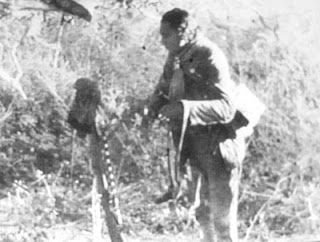

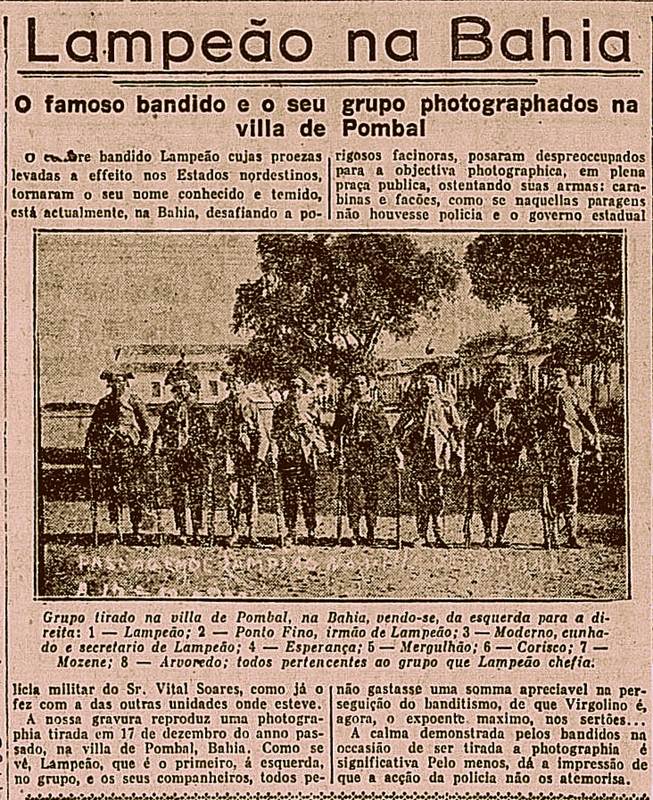



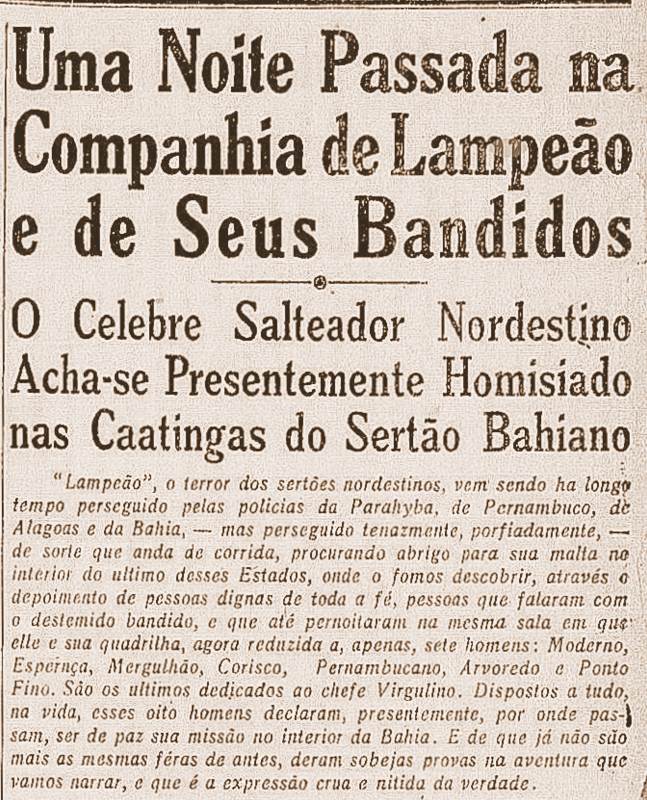


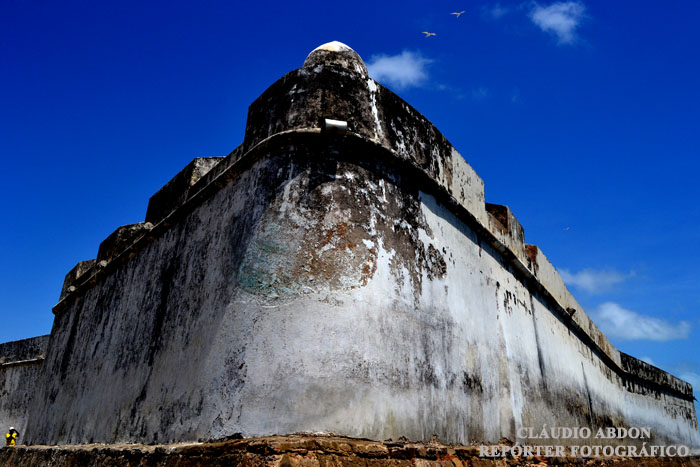




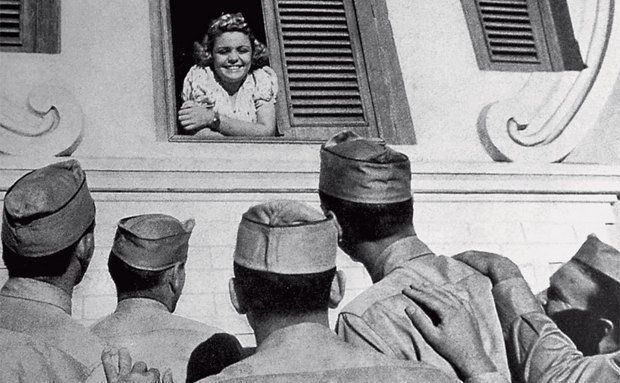


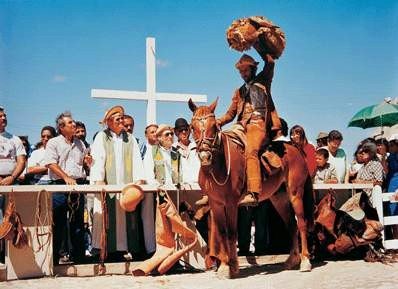
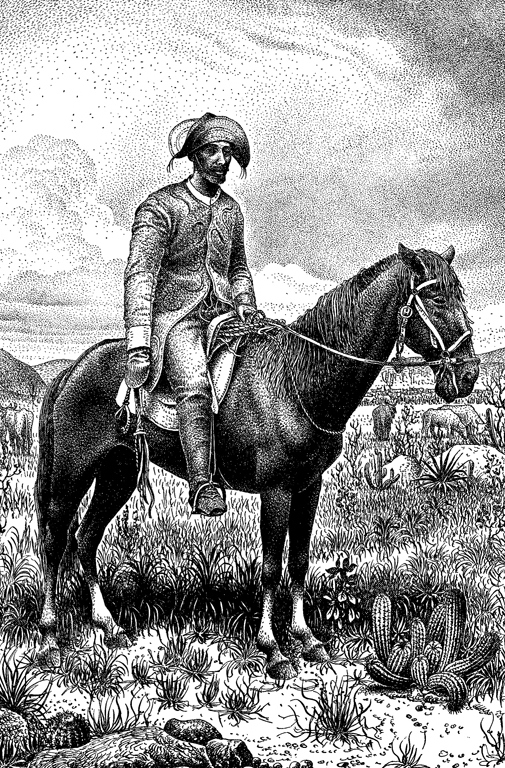
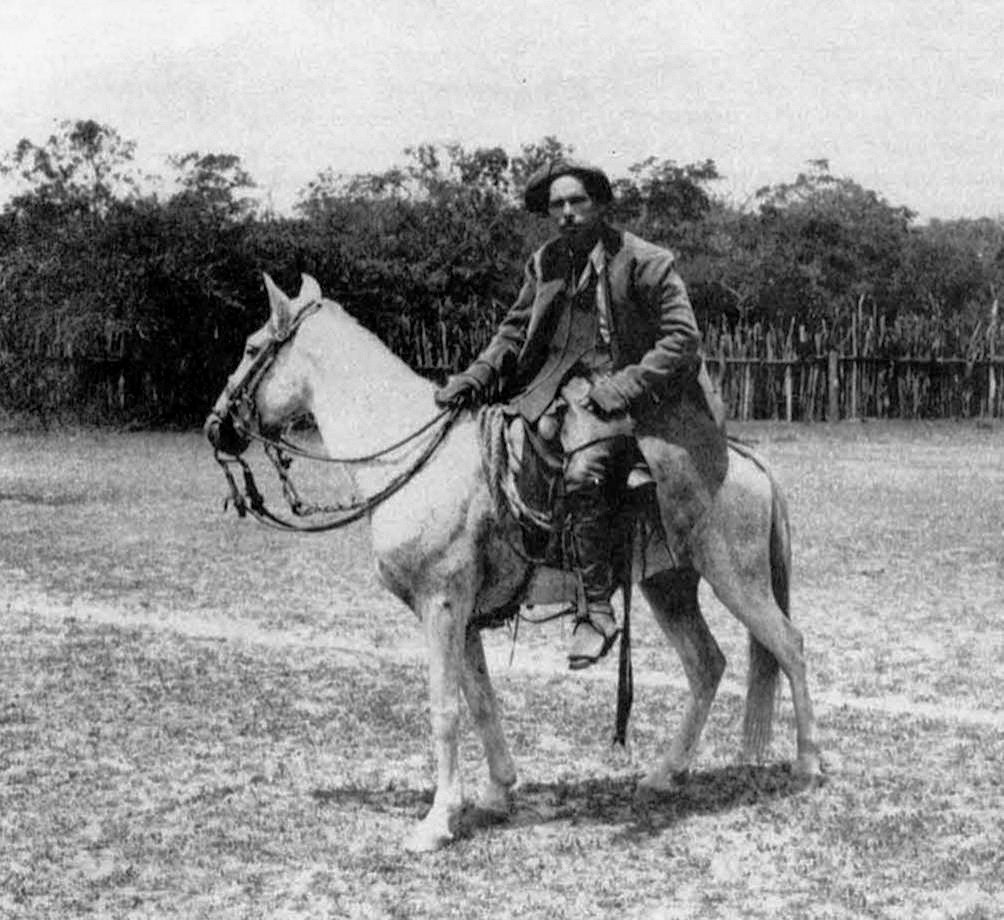

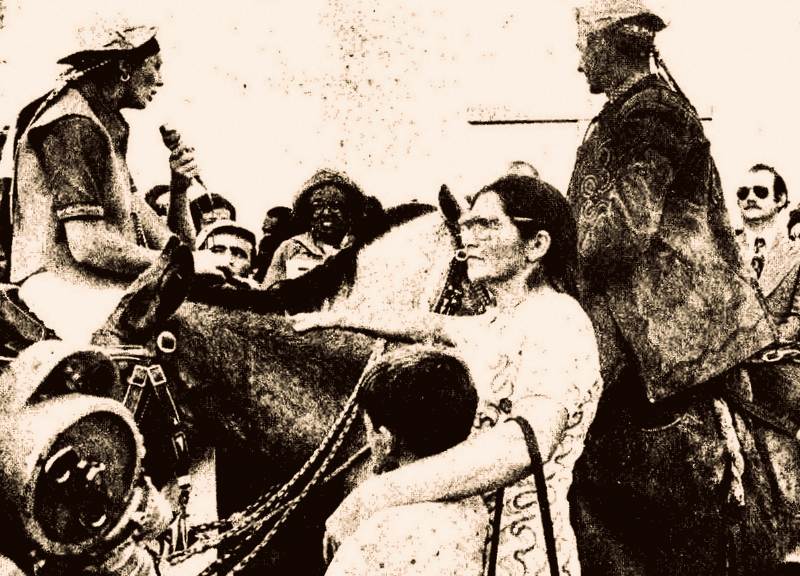
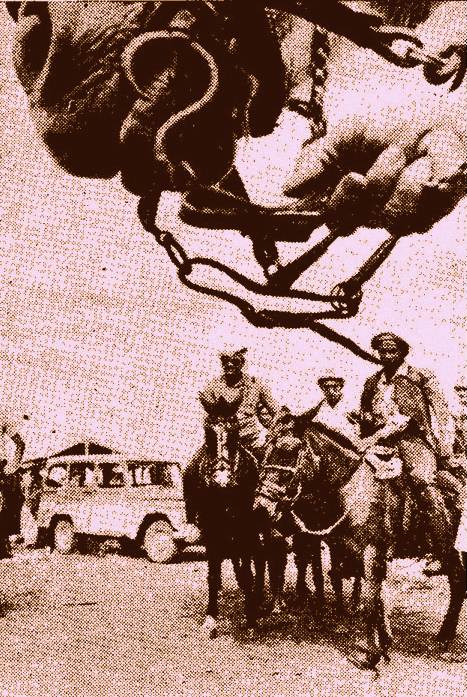

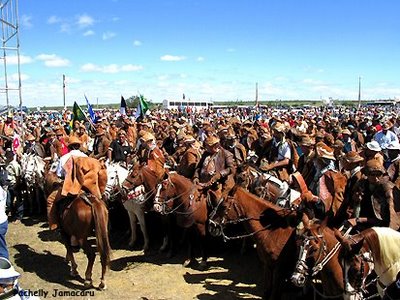


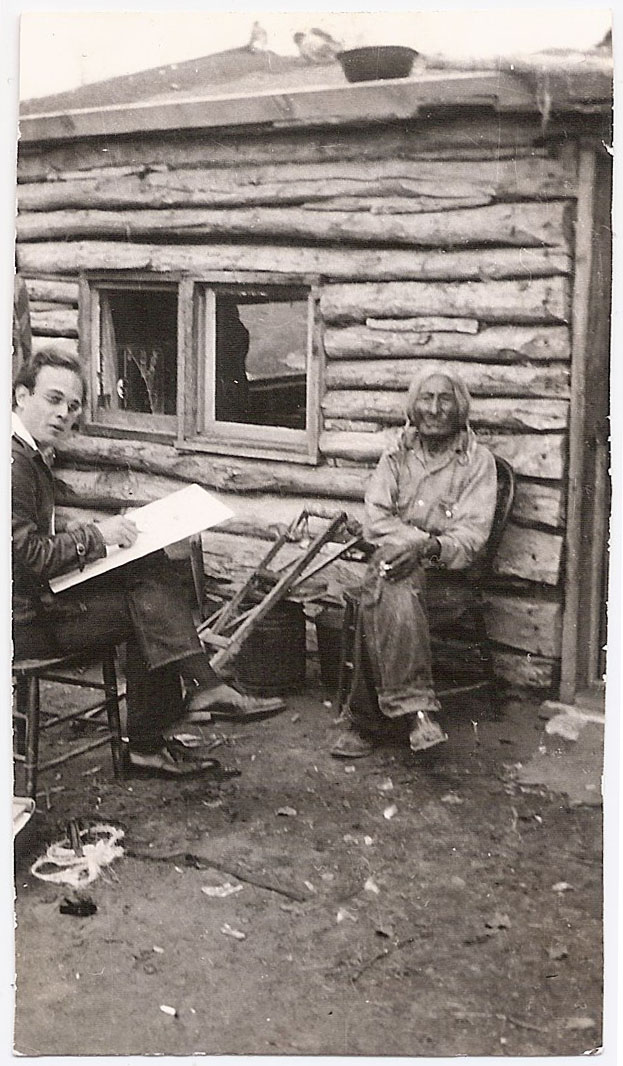
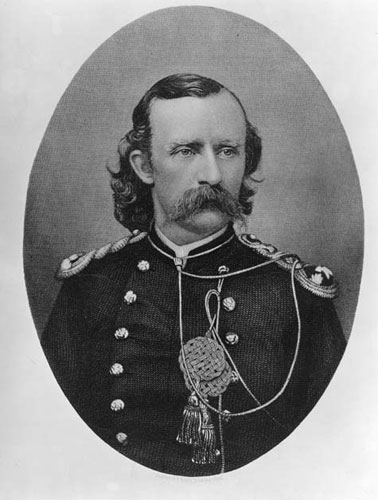
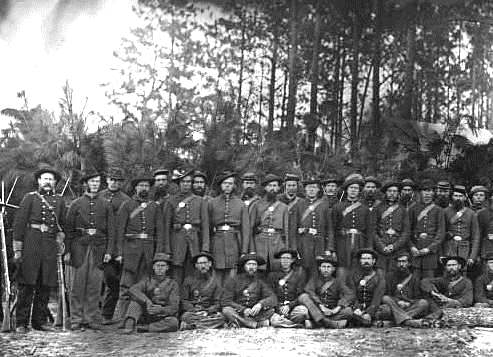
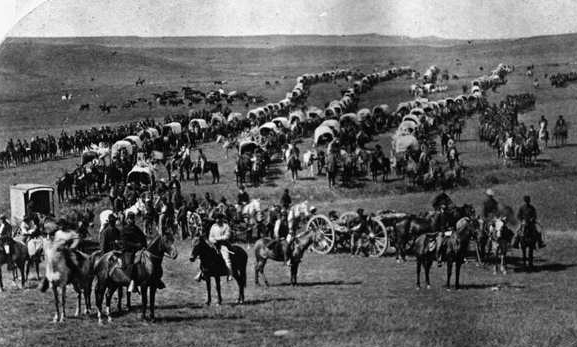
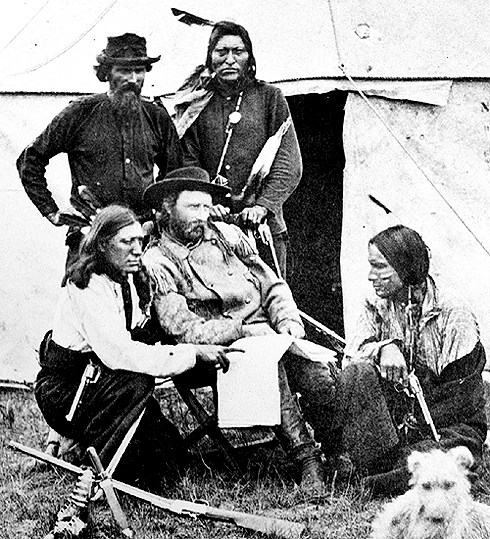
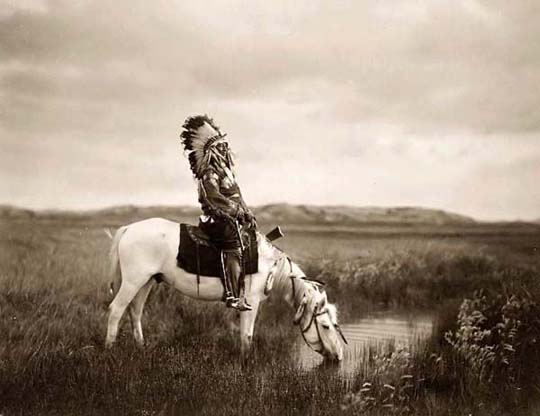
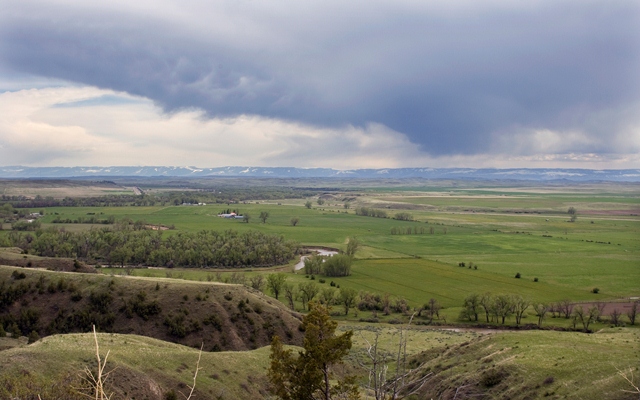


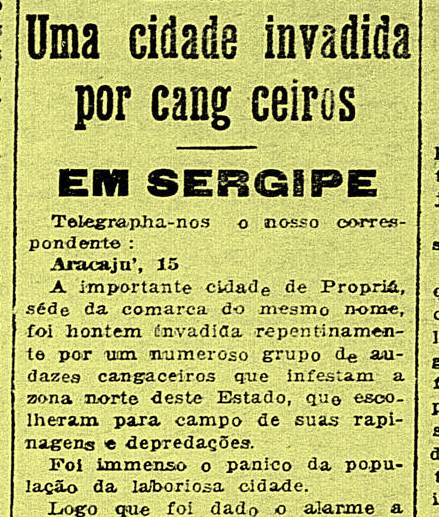
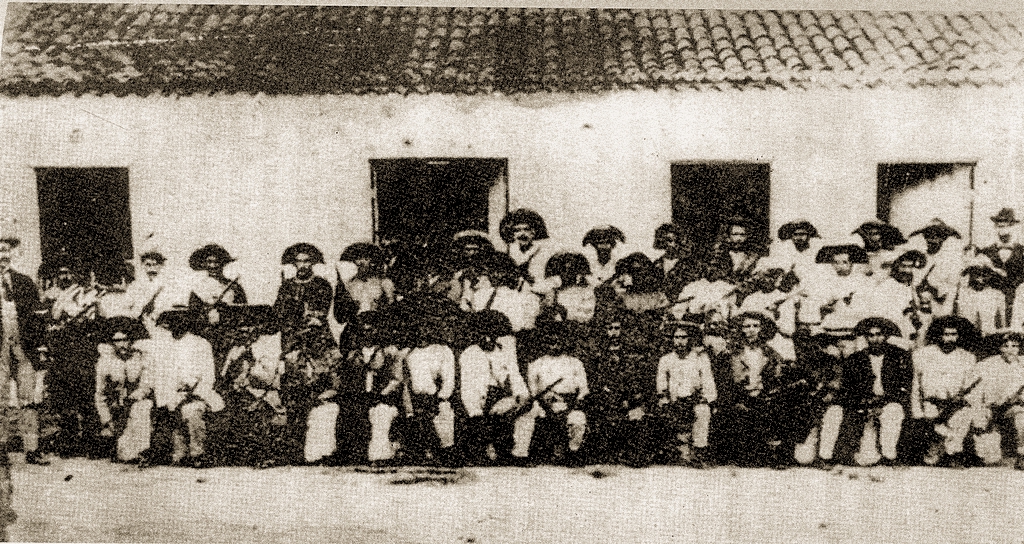
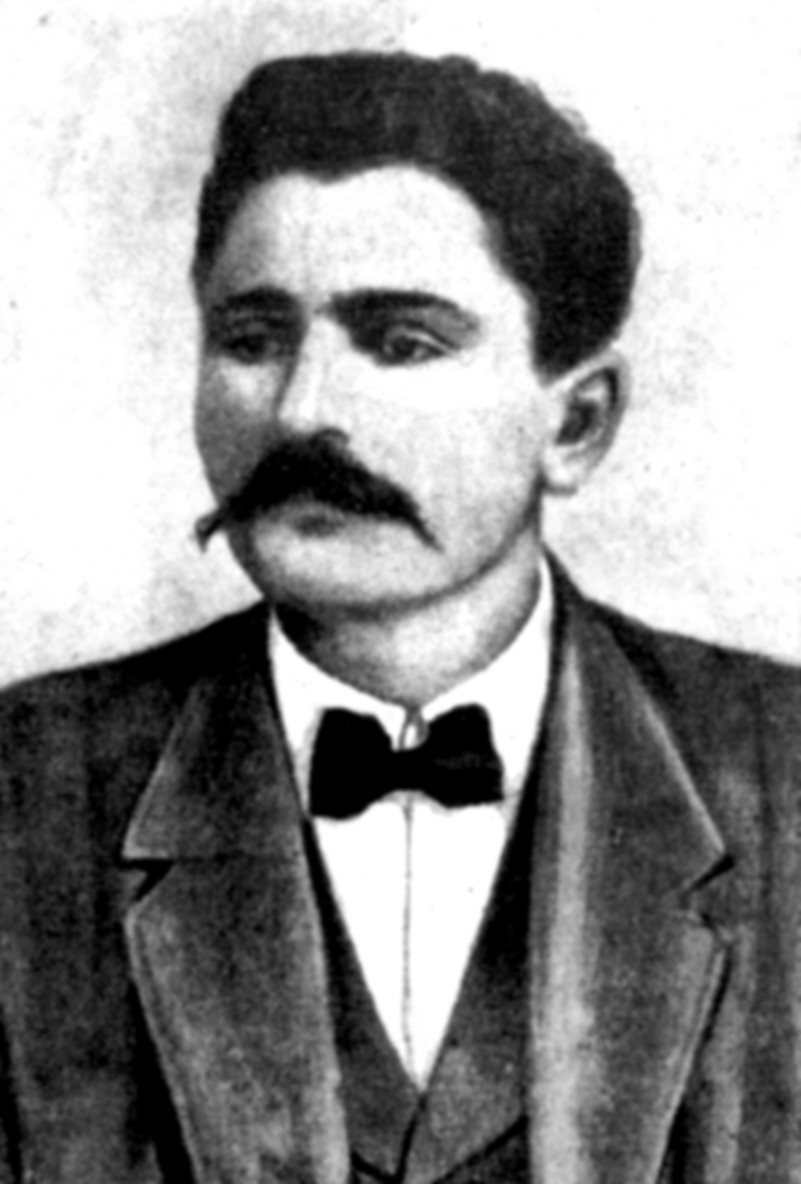


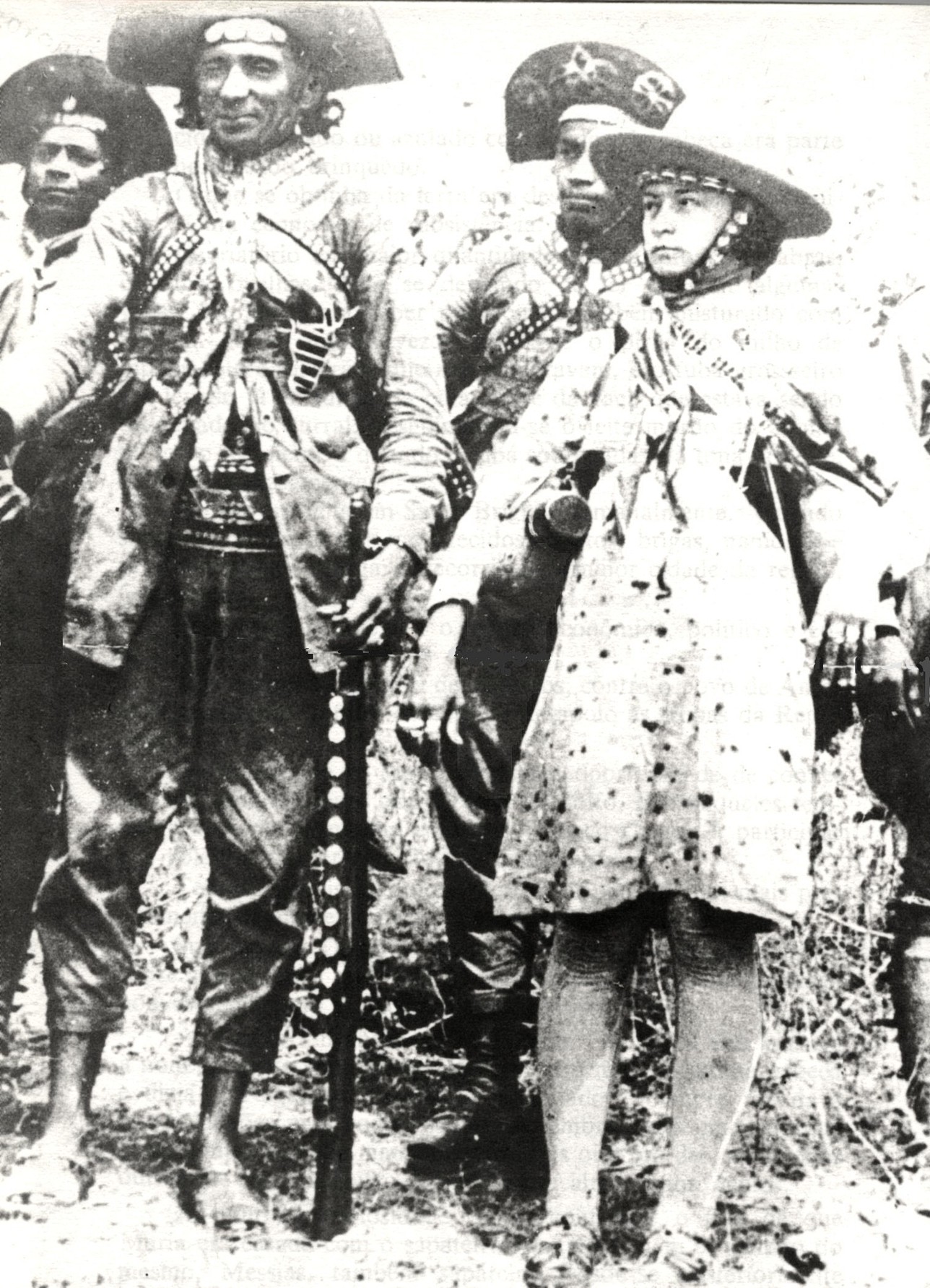
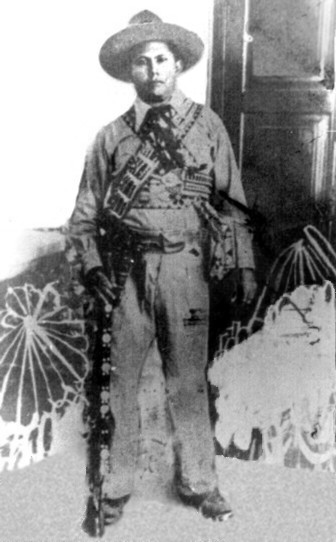


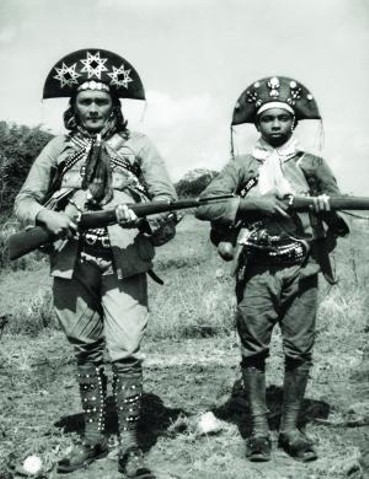
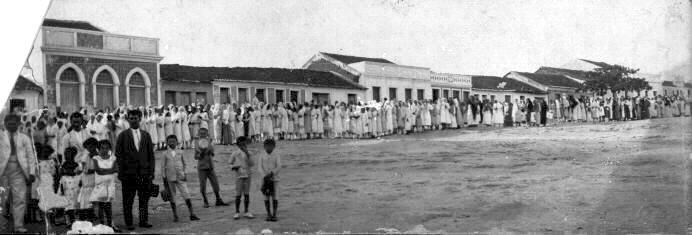
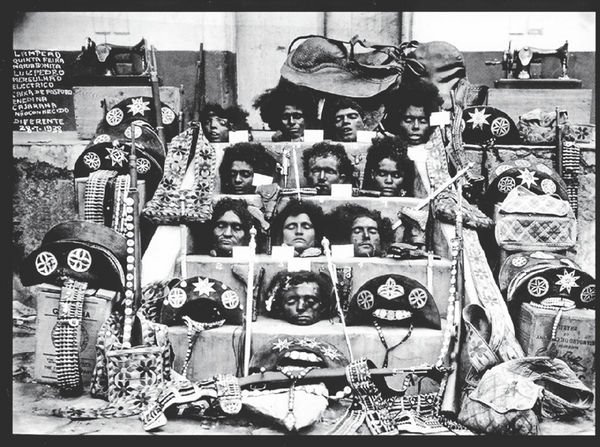
 TOK de HISTÓRIA - ROSTAND MEDEIROS