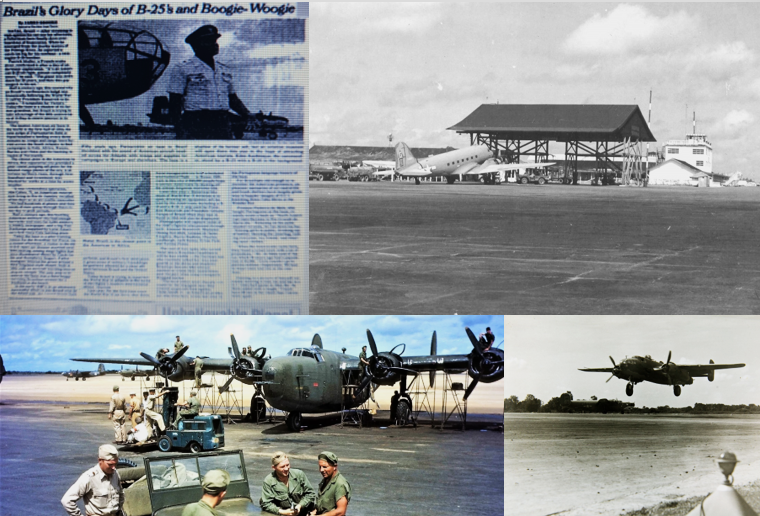
By James Brooke – The New York Times – See the article in its original context from – April 26, 1994, Section A, Page 4
After straining in vain against his net one hot afternoon, a fisherman here finally dove overboard out of frustration. When he emerged from the murky waters of the Potengi River, he reported a catch too big for his rowboat: a twin-engine B-25 bomber.
Patrick Muller, a French scuba diver, confirmed it after a day of underwater exploration. “It’s an American B-25 all right, almost completely intact,” he said. “The plane was down there for 50 years, and then this guy snags it in his net.”
Half a century ago, this coastal city on Brazil’s northeastern bulge was frenetically following the World War II call by President Roosevelt to become a “Trampoline for Victory.” Today the base is a shadow of its former grandeur, but Brazil is trying to take advantage of the 50th anniversary of D-Day to renew interest in its history.
The busiest American air base in the world in the first half of 1944, the twin strips of Parnamirim field at Natal handled a landing every three minutes as troops and cargo were ferried across the South Atlantic to feed campaigns in Italy, Africa, Russia, Burma and China and the looming invasion of Normandy.
The closest point in the Americas to Africa, this equatorial city provided a year-round jumping-off point for the limited-range planes of the era. A alternate northern route, through Newfoundland and Greenland, was blocked for weeks at a time by winter weather.
“It was tremendous operation,” Abe Cohen, 75, an American veteran now living in Rio de Janeiro, recalled of his days as an air-traffic controller. “We had hundreds of planes and thousands of men going through there every day in peak periods.”
Half a century ago, this bustling American military city had enough barracks and tents for 6,600 soldiers, a weekly newspaper, and a big Post Exchange supplied by Latin America’s first Coca-Cola bottling plant.
Today the base is a pilot training center for the Brazilian Air Force. On a recent afternoon, a visitor to the old U.S.O. open-air theater startled swallows nesting among stage lights that once illuminated shows by Clark Gable and Humphrey Bogart. Fallen mangoes littered the grass around a New England-style chapel, built in 1943 with an aircraft warning beacon atop its steeple. The only jeep to be seen on the base was a dune buggy carrying Brazilian airmen for a weekend at the beach.
In the early 1940’s, in an ultimately successful effort to win Brazil over to the Allied side, the United States built airfields and Brazil’s first steel plant. A generation of military friendships forged here allowed for a close alliance between Brazil and the United States.
Today Brazil is trying to resurrect the World War II alliance in the name of the region’s modern international nexus: tourism.
Last year, for the first time since the World War II air ferry shut down, Natal inaugurated its first scheduled international flight — to Rome. Officials in this city of 650,000 people hope to attract Americans by dusting off the almost forgotten wartime link.
Later this year a Historical Museum of World War II Aviation is to open, drawing on equipment left behind by the Americans, including a B-23 and a B-25. A jeep used by President Roosevelt and President Getulio Vargas of Brazil when they met in Natal in 1943 will also be displayed.
Photographs will capture some of the 1940’s figures who passed through here: Eleanor Roosevelt, Madame Chiang Kai-shek, Antoine de Saint-Exupery, Harry Hopkins, Charles Lindbergh, Jack Benny, Ernie Pyle and Tyrone Power.
The cast of Axis spies who turned Natal into a Brazilian Casablanca will be less visible — the German nun who routinely talked her way past guards at the docks and shadowy Brazilian fascists who always seemed to cruise their motorbikes past the port when troop transports dropped anchor.
“The local police were sharply criticized for the negligent way they treated suspected Axis agents,” Clyde Smith Jr., an American professor who lives here, wrote last year in his Portuguese-language history of the base.
For Brazilians old enough to remember the American presence, unpleasant memories of air-raid drills and bomb shelters have largely given way to happier images of G.I.’s knocking down Cuba libres at the Wonder Bar.
“I learned to dance the swing,” Maria Lucia da Costa, now a great-grandmother, recalled as she served homemade cake to an American visitor. “The boogie-woogie was great. The American parties had everything.”
Her husband, Fernando Hippolyto da Costa, a retired Brazilian Air Force colonel, chimed in with a list of American contributions to local culture: “Rayban sunglasses, American cigarettes, canned beer, greased hair, and wearing shorts.”
Protasio Pinheiro de Melo, who taught Portuguese at the base, recently wrote a book on “North American contributions to Rio Grande do Norte life.” Relaxing on his palm-shaded veranda, he ran down his list: “Kissing girls in public, drinking out of bottles, dancing the jitterbug, calling everyone ‘my friend,’ and wearing sport clothes.”
“When the Americans came here, they found a small town with a lot of prejudices,” Mr. de Melo said of Natal, which 50 years ago had a population of 40,000. “Girls couldn’t go to parties without chaperones. We had to wear coats and ties at the cinemas.”
Pointing to a picture of himself solemnly wearing a coat, tie and hat to a G.I. volleyball game in 1943, Mr. de Melo added with a laugh, “I must have 80 ties in the closet that I never wore again.”
A version of this article appears in print on April 26, 1994, Section A, Page 4 of the National edition with the headline: Natal Journal; Brazil’s Glory Days of B-25’s and Boogie-Woogie.
Adventures and epics at sea have always attracted general interest, and this is a very ancient fascination. Narratives about the elements of maritime nature are almost always worth reading. But typically, the protagonists of these incredible feats are men.
And if a woman were the protagonist of a genuine and gripping sea story, would her accomplishments be equally appreciated in today’s society?
It doesn’t seem like it to me!
This would be the image of Mary Ann Brown as a child.
To my surprise, this remarkable woman, with an incredible story of survival at sea, is largely forgotten in her own country. And it is a country known for highly valuing its own history.
And look, at the time the events happened, she was only 19 years old and pregnant with her first child. But that did not prevent her from taking over as the captain of a large sailboat after her husband, the captain, became seriously ill. She did this in the midst of the treacherous storms of Cape Horn and the Drake Passage, which included extremely cold temperatures, giant waves, hurricane-force winds, and many other challenges. She also faced a tyrannical first officer and a crew that attempted to mutiny. However, she overcame fatigue, fear, and pain, and managed to reach her destination.
This is your story!
A Woman of the Sea
In the northeastern United States, in the state of Massachusetts, lies the great city of Boston. Just in front of it is the city of Chelsea, a place that has had a strong connection with the ocean since its early days. In the mid-19th century, Chelsea developed as a significant industrial center for sailboat construction, establishing itself as a powerhouse in this sector in the United States. This led to the city attracting skilled workers from all over the country. And it was in this city where, in the first decades of the 19th century, the English couple George and Elizabeth Brown arrived.
George was a professional sailor, experienced with many years at sea. In the new city, he quickly became involved in maritime activities. Isabel, as was customary in the 19th century, had the sole objective of her life to care for her home and her children. Even more so as the wife of a sailor, she was often away from home, sometimes for years.
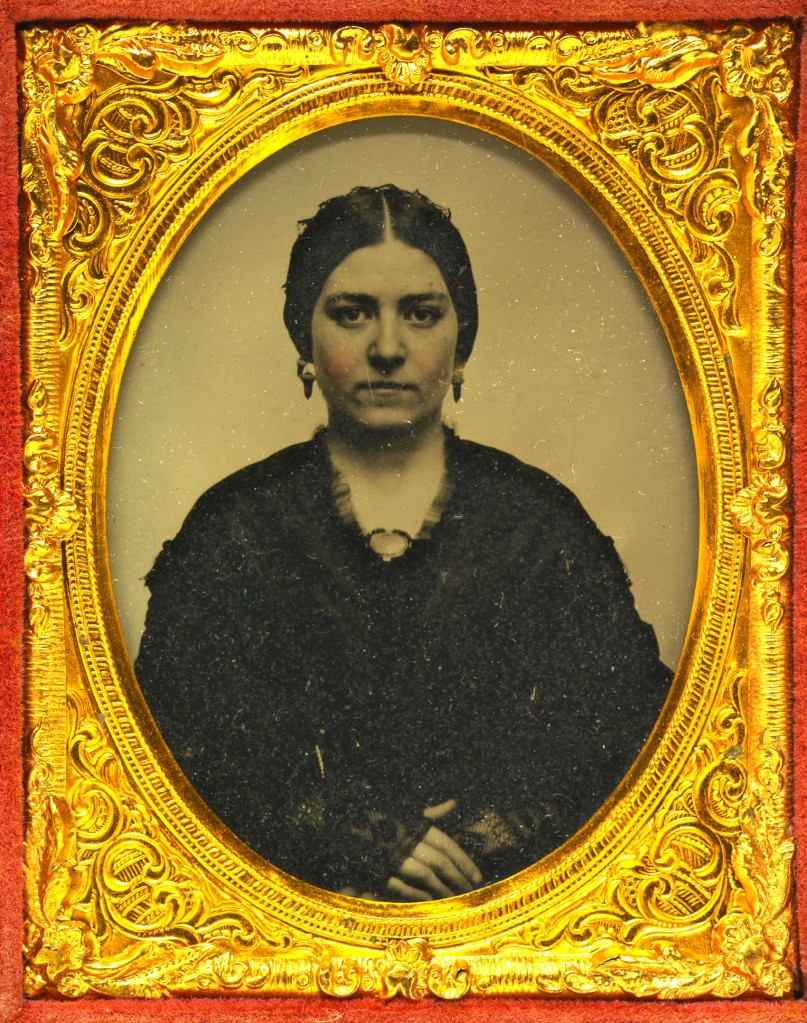
Mary Ann Brown Patten.
But these absences did not prevent George and Elizabeth from creating a large family, whose children were connected to the sea. In this era, it was not surprising that Mary Ann Brown, born in 1837, married at the age of 16 to Joshua Patten, a charming sea captain who was nine years her senior. Mary Ann was described as a beautiful young woman with attractive features, refined and graceful manners, a slim and petite figure, long dark hair, and vibrant brown eyes.
Joshua worked at the helm of sailboats, transporting cargo and passengers from New York to Boston. But he was a rising star among ship captains, so it was no surprise when he was offered the command of a sleek and powerful Clipper.
This type of ship emerged as trade and the global economy expanded. Basically, it was a type of fast-loading sailboat that originated in the United States and had its heyday in the mid-19th century. The most striking features of the ship were its well-cut bow, narrow width in relation to its length, and high achievable speeds. These features resulted in limited cargo space in favor of speed. The masts, posts, and frames were relatively large, and additional downwind sails were often used. This type of vessel requires a large number of experienced and well-prepared crew members and commanders. Joshua Patten was one of them!
A Woman on Board
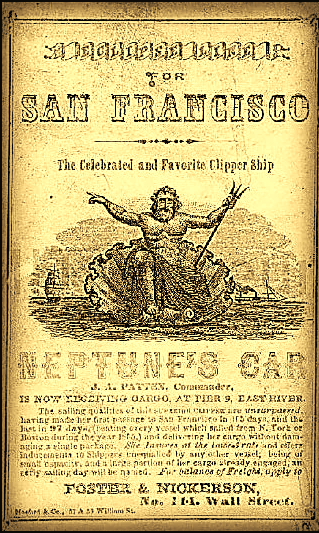
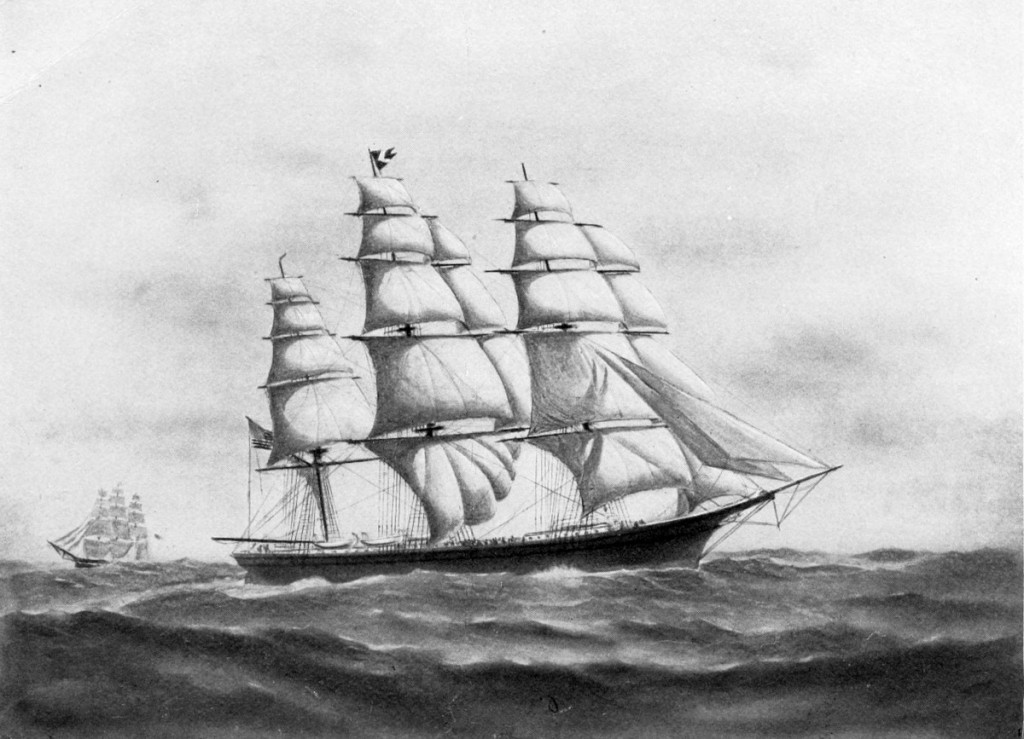
He was assigned a sailboat weighing more than 1,600 tons, with massive sails, and named Neptune’s Car.
Original drawing of the Clipper Neptune’s Car.
This ship was launched on April 16, 1853, at the Page & Allen Company shipyard in the city of Portsmouth, Virginia. It was later acquired by the transport company Foster & Nickerson’s line from New York. In its time, Neptune’s Car was considered a long and elegant boat. It was 68 meters long, had a beam of 12 meters, and could carry 1,616 tons of cargo. She had three tall masts and carried 25 sails, the largest of which was approximately 70 feet in diameter. A true colossus of its time.
Among the main destinations reached by the fast Clippers were the North American city of San Francisco, on the west coast of the United States. The problem was that, before the Panama Canal, the only way to reach there by sea was to depart from a port on the east coast, with New York being the main one, and sail south along the entire coast of North America.
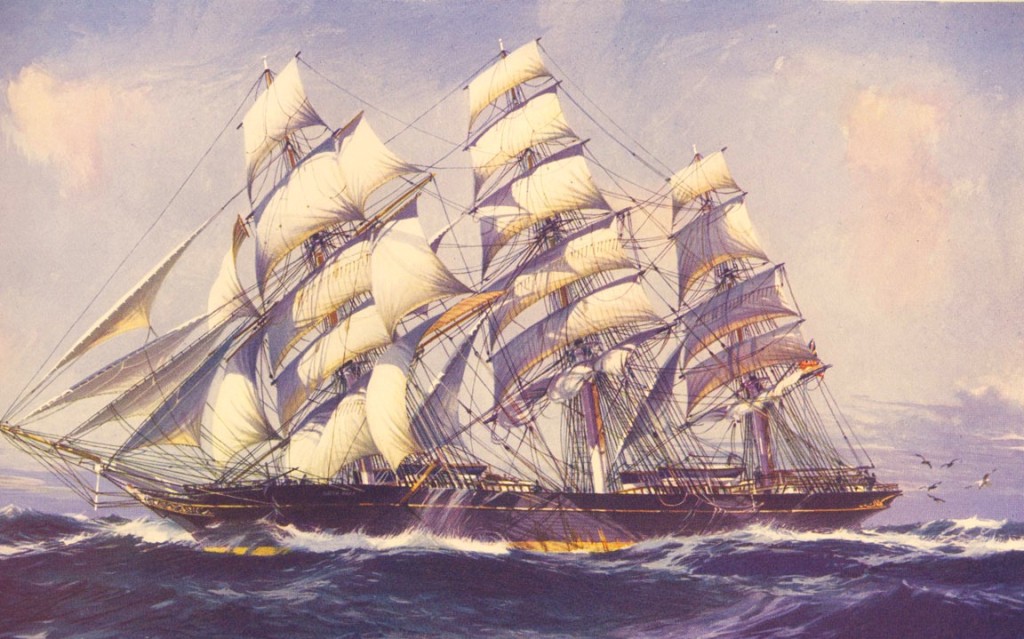
A painting of the famous Clipper Cutty Sark by Jack Spurling. This ship, which also produces a great whiskey, is entirely preserved in England.
And from the south, crossing the treacherous Cape Horn and the Drake Passage, entering the Pacific Ocean, then tracing the entire South American coastline in a northerly direction, passing along the coast of Mexico, and finally reaching San Francisco. A trip lasting four months and covering approximately 24,000 kilometers. Despite the challenges and obstacles, this route played a crucial role in supporting the booming economy driven by gold mining in California. Shipping companies stood to make enormous profits by delivering food and supplies to the area promptly.
Neptune’s Car had successfully completed its first voyage between New York and San Francisco, with navigation proving to be successful. However, the relationship between the crew left something to be desired. Among the problems that occurred with the commander and the crew, there was no shortage of threats of mutiny. The captain warned that he would shoot anyone who dared to carry out such an idea. Evidently, everyone on board went to the street, and Joshua Patten was called to take command.
Original Clipper Neptune’s Car advertisement.
Soon, Lady Mary Ann Brown Patten insisted on joining her husband on his first voyage as the captain of Neptune’s Car. She had an opportunity that few women of her time would get: to see the world aboard a ship.
They traveled to the southernmost part of the American continent and entered the Pacific Ocean before reaching San Francisco. From this city, a new cargo transport job emerged, and they went to Shanghai, China, where they shipped a large quantity of tea destined for London, England. They returned to the Atlantic Ocean by navigating the treacherous Cape Horn on their way to their destination. They spent several months together at sea before returning to New York, Boston, and Chelsea.
Although women crewing ships was very rare at that time, it was not uncommon for the wives of commanding officers to be present on cargo ships. In the 19th century newspapers, it was common to find news articles on the National Library website about ships anchoring in the port of Rio de Janeiro. These articles would mention the ship’s name, tonnage, cargo, captain, crew members, and even highlight the presence of the commander’s wife, which the newspapers often praised.
Normally, during navigation, the wives of these officers would stay in their cabins, engaging in activities such as reading, knitting, or playing a musical instrument befitting of modest ladies. They would occasionally come out to get some fresh air and accompany their husbands on leisurely walks through the ports of destination.. But for Mary Ann Potter, staying on board would be different.
She didn’t want to merely be the “captain’s wife.” She was determined to be useful and learn everything she could to assist her husband on board the Neptune Car.
It is said that Mary Ann spent her time searching the ship’s small library, reading about the rudimentary medicine of her day, and assisting sailors with their ailments. Joshua, in turn, helped his wife in her quest for knowledge by teaching her the basics of navigation, meteorology, ropes, sails, and other duties of sailors. He also taught his wife how to navigate using equipment such as a sextant, compass, astrolabe, and navigation charts. Despite facing certain financial limitations, Mary received the necessary support from her family in Chelsea to receive an excellent education. She demonstrated no difficulties in grasping complex technical concepts.
What no one aboard the Neptune Car had any idea of was the future usefulness of these teachings.
And it would be a very problematic future!
The Greed of the Unclean
In July 1856, Neptune’s Car was preparing for its second voyage with Captain Joshua in command. Mary Ann would accompany her husband, but she was pregnant with her first child. But only she and Joshua shared this secret. They probably believed that there would be enough time to travel from New York to San Francisco, and that the child would be born in Chelsea upon their return. A somewhat risky idea.
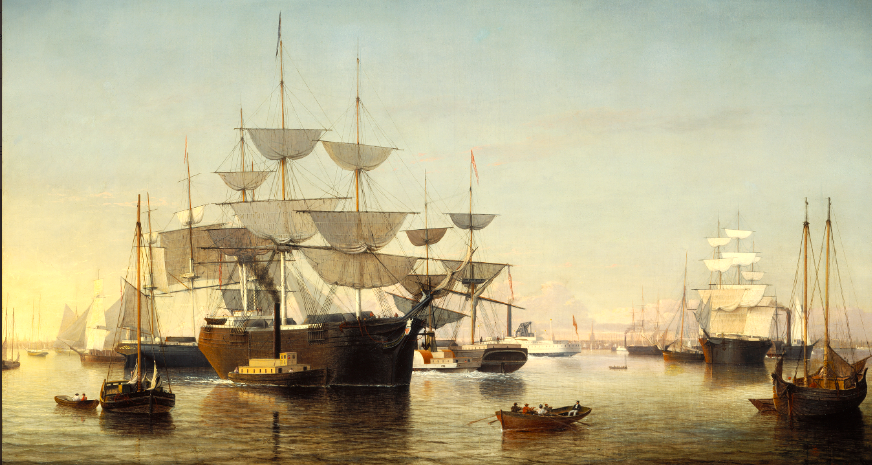
An 1855 painting by Fitz Henry Lane showing New York Harbor.
Well, we know that at that time, women were taught to consider themselves and act as the “weaker sex,” and that they should always protect themselves to avoid problems. But I think Mary Ann missed that class!
The problems soon began.
During the charge, there was an accident, and Joshua’s loyal first officer broke his leg. Financiers Foster & Nickerson, eager to waste no time, placed an inexperienced young man named William Keeler in this delicate position. Something reckless, because after the commander, he was the first officer who made all the decisions on a ship.
The problems continued when Joshua began to feel unwell due to an unknown illness, which would only worsen his condition later. But Foster & Nickerson, a pair of ambitious and heartless capitalists, disregarded their employee’s predicament and cast him into the sea with Keeler.
The main reason for all this rush was that Foster & Nickerson didn’t just want to make a profit from the delivery of cargo. They placed a substantial wager against the owners of three other Clippers ships that were scheduled to travel the same route from New York to San Francisco, all departing simultaneously. Since the Neptune Car was still a relatively new ship, they wanted to demonstrate its capabilities and ensure that it would be the first to reach its destination port. It is true that the winning captain could earn between $1,000 and $3,000, which was considered a fortune at the time, if he completed the voyage first. Despite the encouragement, in fact, the Foster & Nickerson line followed the ancient tradition of wealthy individuals who were willing to risk the lives of their employees in order to outdo other wealthy individuals.
So off they went, and Joshua entrusted Keeler to stay the course while he tried to rest and recover with the assistance of his wife. But Keeler proved himself to be an incompetent idiot in no time at all. His list of infractions is impressive: he slept through half of his shifts, navigated courses through coral reefs, required orders for simple tasks, and ultimately, he outright refused to perform certain tasks with the sailors, such as raising sails. About a month after sailing from New York, Commander Joshua locked himself in his cabin.
The ship was far south and was now facing constant gales of snow and hail. None of the other crew members were able to handle the navigation. The second officer was illiterate, and the third was another idiot who happened to be a friend of Keeler.
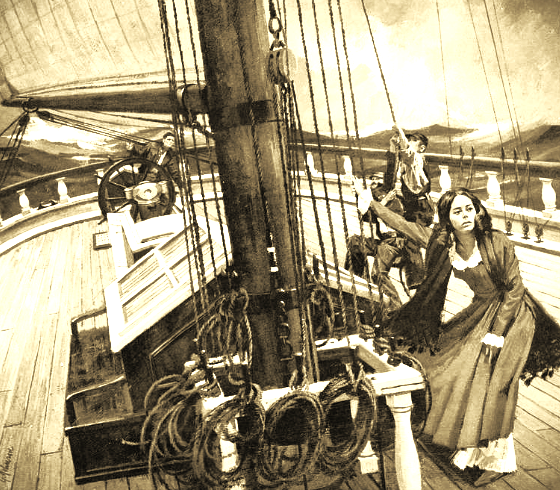
Captain Joshua had to stay awake day and night to maintain the correct course. Because of this, he increasingly relied on Mary Ann to help him confirm her position, course, and speed. He acknowledged that she was a better mathematician than he. When the large ship reached the Strait of Le Maire, a narrow maritime passage between the Island of the States and the easternmost part of Tierra del Fuego, Argentina, the captain’s condition worsened. He developed a fever, became delirious, and eventually became incapacitated in his cabin. Mary Ann then took charge for the first time.
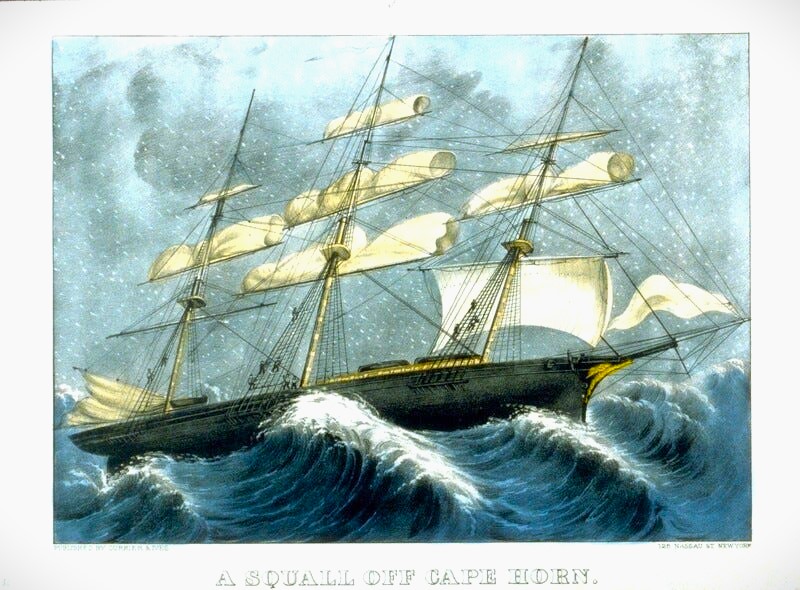
Painting of a Clipper facing the waves of the feared Cape Horn.
If the problems were already enormous, to complicate things even further, Mother Nature seemed determined to attack that sailboat with all her might. At Cape Horn, the Neptune Car was rocked by fifty-foot waves and winds reaching speeds of 100 miles per hour. The sky darkened, transforming into a swirling mass of clouds, wind, and rain. Unsure of her exact location, Mary Patten decided that her only chance of survival was to temporarily deviate from the shortest course and head west, in anticipation of more favorable conditions. She then steered the ship towards the south-southeast, sailing with the wind. Thus, the Neptune Car quickly escaped the dangers of Cape Horn.
But the biggest threat was still that despicable Keeler.
Captain Mary Ann
Upon learning of the captain’s poor health, he sent Mary a letter offering to assume command if she released him. Given the extreme seriousness of her husband’s situation, she initially accepted the offer. Keeler kindly offered to relieve her of the burden and take control himself. But Mary Ann responded that she could not accept this condition since they had many problems as a couple. Keeler then attempted to incite the crew to mutiny, but fortunately, they refused.
The captain’s condition improved somewhat, and he agreed to let Keeler take the helm to relieve his wife of her duties. He may not have believed in Mary Ann’s abilities, but her condition was also complex. Regardless of this issue, it quickly became evident that it was a significant mistake.
First, due to the captain’s illness, Keeler prohibited Mary Ann from going on deck to take navigational measurements. Then, for reasons still unknown to those who investigated the matter, the first officer began secretly steering the ship towards the Chilean port of Valparaíso, despite explicit orders to go directly to San Francisco. However, he did not possess the competence of the sole woman on board.
Mary Ann, despite being largely confined to the dormitories, noticed that they were veering off course. And to prove it, she set up a basic compass in the captain’s quarters and demonstrated the situation to Joshua. Upon confirming the action and with thousands of dollars’ worth of valuable machinery and supplies for the California gold mining fields on board the ship, the captain ordered the first officer to be confined again, following a heated argument with Mary Ann.
But this was too much for Joshua. The captain developed pneumonia, which only complicated the undiagnosed illness he had at the beginning of the trip: tuberculous meningitis.
Mary, who was still in the sixth month of pregnancy, took full control of the ship. Despite her intellectual disabilities, she received support and assistance from the second officer. The Neptune Car continued to move forward through deadly storms that rocked the ship. Meanwhile, Joshua’s situation became increasingly worse. The infection had spread to his brain, causing him to become delirious, blind, and partially deaf.
Meanwhile, given the situation, Keeler attempted to convince the crew to join him in a mutiny against Mary Ann Patten. He heard the terrible rumors about the conspiracy and feared that desperation would make the crew vulnerable to his control. She couldn’t let that happen. The Dayle Tribune of New York later reported, “Mrs.” Patten gathered the sailors on deck and explained to them the dire situation of her husband, while also requesting their support for her and her second mate. Each man responded to her call with a promise to obey all of her orders. The incomparable Mrs. Patten now directed all movements on board.
Now, Captain Mary Ann Patten warned Keeler that she would report him to the San Francisco authorities for attempted rioting, and he would be sent to jail. It is worth noting that at that time, the most common sentence for mutineers was death by hanging.
Mary later commented that she spent 50 days wearing the same clothes, with minimal time for personal hygiene, amidst extreme stress, surrounded by a challenging team and a very ill husband. She felt the need to take charge of the ship and stay informed about everything that was happening at all times.
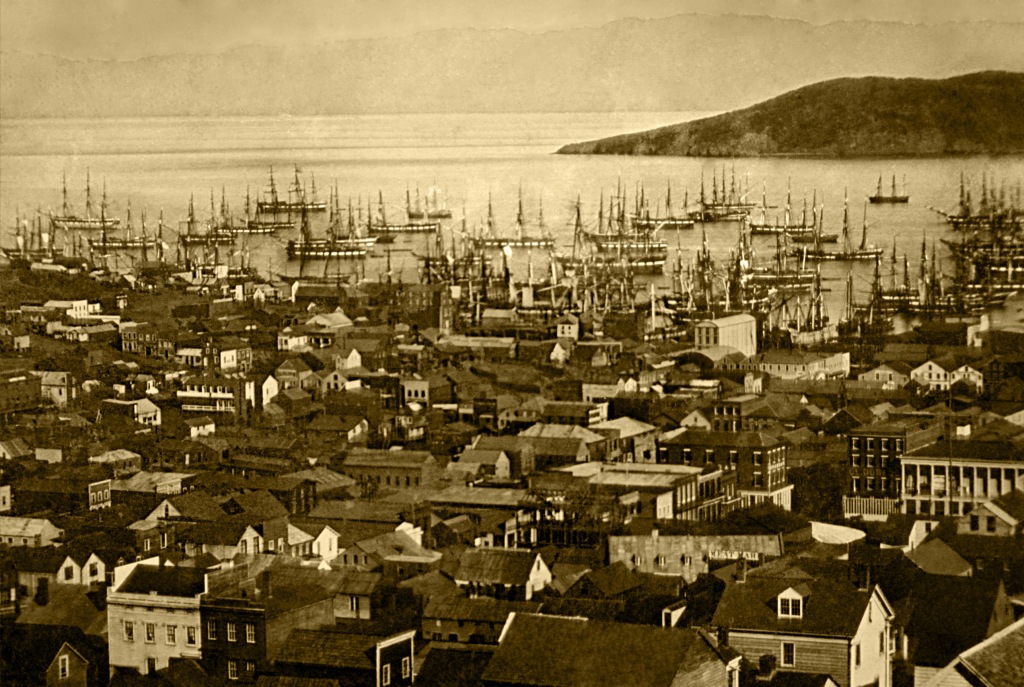
A Photograph of the Port of San Francisco in 1851.
Finally, four months after leaving New York, the ship arrived in San Francisco on November 15, 1856. Mary Ann took command and guided the ship to the dock. In total, she was alone in command of the ship for 56 days.
The spectators at the port were surprised. The ship’s second officer shouted for help to lift Captain Patten onto a stretcher. The proud captain looked thin and frail, with a pallid gray face. The dockworkers were even more curious about the presence of a delicate-looking young woman among the crew of men, giving orders. Judging by the roundness of her belly, it was evident that she was approximately six months pregnant. Despite this, she remained by her husband’s side as he was transported to the hospital. Soon, the news spread by word of mouth throughout San Francisco.
A Virginia state newspaper reporting the heroic deeds of Mary Ann Patten.
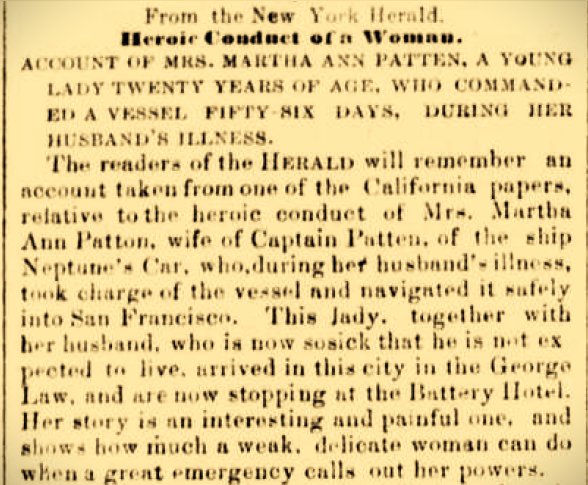
When the press learned how she managed to command a powerful Clipper, take care of her husband, protect the ship and cargo, and control the rogue first officer, all at the age of 19 and while pregnant, Mary Ann Patten became an instant celebrity. Newspaper after newspaper interviewed her.
Newspapers around the world, including those as far away as London, began reporting this news. Eager journalists began piecing together the sad yet inspiring story. Meanwhile, she discovered that her boat had even come in second place in the “Clippers Race of 1856,” something she was not prepared for. Arriving in San Francisco, Ella Mary became a national sensation.
It turns out that Captain Joshua Patten was a Freemason, and to support him during his illness, they received significant assistance from the California Masonic Temple. They also received support from Freemasonry to return aboard a ship, the George Law, which would take them to New York and then to Boston.
In New York, a journalist from the New York Daily Tribune (page 5, 02/18/1857) commented that the couple was staying at the Battery Hotel. It was mentioned that Joshua was carried in a litter from the ship to the hotel by his Mason brothers. And that his condition was “delicate.” So delicate that the journalist, without any sense, stated that Mary Ann “would soon be a widow.” Even in connection with Freemasonry, where Joshua Patten was before coming to Boston, he received the support of the Masonic brothers.
While the couple returned home, William Keeler never went to prison or faced execution. Still aboard the Neptune Car, he escaped with the assistance of a companion and vanished. He must have changed his name and, who knows, become a gigolo in a Wild West tavern, or a horse thief, or a loan shark, etc.
The Early End of a Sea Warrior
After arriving in Boston and Chelsea, despite the media attention, she encountered a problem with her husband’s company. Even though Mary Ann was pregnant and her husband was very ill, Foster & Nickerson adamantly refused to pay Joshua his salary and bonuses. They claimed that he had handed over the ship to someone “without any training or experience.” They remained stubborn until the end and never paid a single cent, despite the fact that the captain clearly deserved it.
Mary wrote a letter to the insurance company, Atlantic Mutual Insurance Company, explaining what had happened during the trip. It was only after a public outcry that the company awarded Joshua a $5,000 bonus and showed its magnanimity by sending Mary Ann $1,000. Prize of the year. Anyway, the cargo he saved was worth $350,000.
Journalists who followed the story were not impressed by the “generosity.” The New York Daily Tribune of April 1, 1857 sarcastically proclaimed, “One thousand dollars for a heroine… from the charitable and grateful hands of eight insurance companies with capitals large enough to insure a navy…”
Being an educated woman of the 19th century, she wrote to them to sincerely thank them and asked them to also acknowledge the crew members of Neptune’s Car who had supported her and her husband. And as a Victorian woman, she downplayed her own role, stating that she was “merely fulfilling her duties as a wife for the sake of her husband.”
A Boston newspaper launched a campaign to cover the expenses of Joshua’s ongoing medical care, as well as the upcoming birth of his first child. Mary Ann received $1,399.
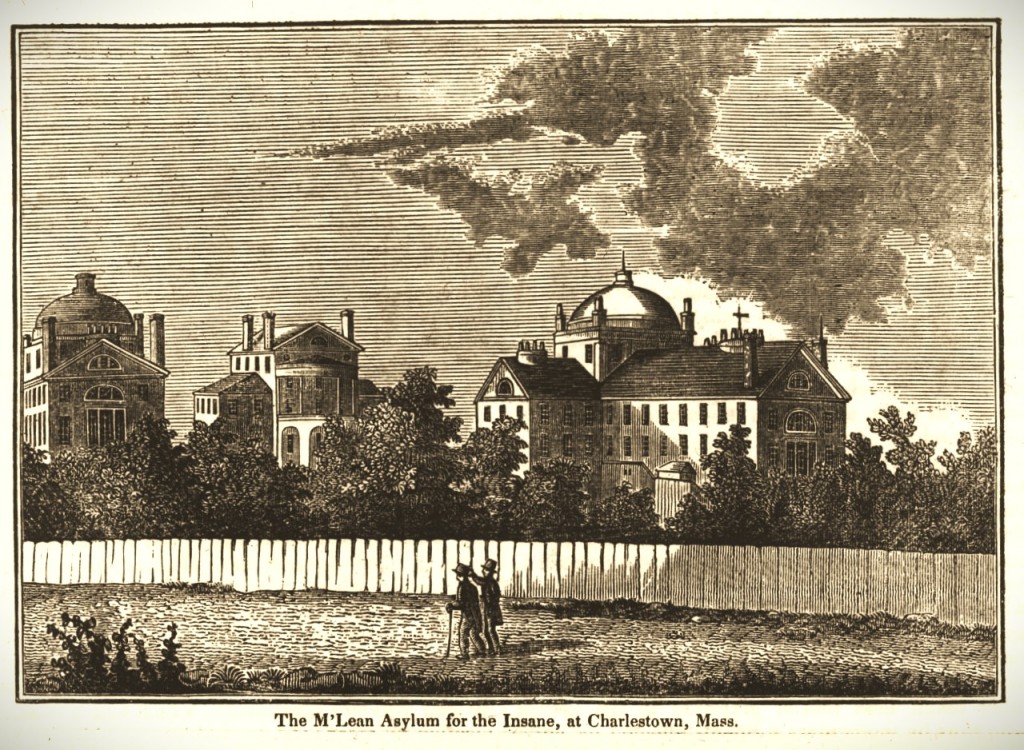
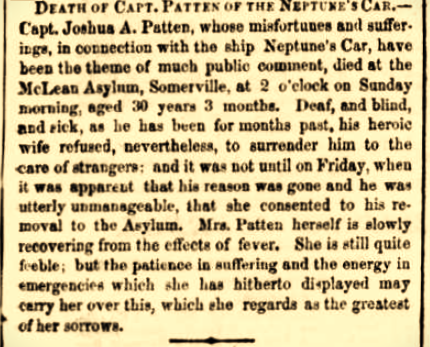
As commented by a journalist from the New York Daily Tribune, Mary Ann was soon widowed. Joshua died on July 26, 1857, at the age of 30, at McLean Asylum in Boston. He died blind, deaf, and completely unconscious. He didn’t even know that Mary Ann had given birth to his son, Joshua Patten Jr. On the day of his death, the port’s maritime flags flew at half-mast, and church bells tolled in his honor.
The New York Daily Tribune – 07-28-1857.
But the problems did not end. Shortly after, Mary’s father, who was also a sailor, was lost at sea.
Unfortunately, Mary Ann Brown Patten never fully recovered from the intense experience. In 1860, she also contracted tuberculosis. On March 17, 1861, at the young age of 23 years, 11 months, and 11 days, she died. She is buried in Boston next to her husband.
Mortuary of Mary Ann Patten, in a Baltimore city newspaper.
Memory
In Brazil, there is an idea that the United States is a nation that “highly values its history,” that the people there “are very patriotic,” and that it “gives a lot of value to its symbols and heroes.” However, in the case of Mary Ann Patten, this is not so!
Today, despite the significance of the events in 1856, this woman is primarily remembered for being recognized as the first woman to command a merchant ship in the United States. As a tribute to her, a hospital called Patten Health Service Clinic, in the Merchant Navy, bears her name. The Academy of that country is located in King’s Point, New York. And this happened more than 100 years after her accomplishment.
As far as I have researched, no American ship is named after her. Even during World War II, when the United States built an immense fleet of cargo ships, known as “Liberty ships,” with an astonishing total of 2,710 completed, none of them were named in honor of this woman. Several of these ships were named after women. I could be wrong, but I found no reference to her life being the subject of a Hollywood movie or documentary. I know she was the inspiration for a novel, but I haven’t found a more comprehensive literary work about her life.
But what happened to her in 1856 is something that should not be forgotten.
No one disputes the importance of Natal in the context of Brazil’s participation in World War II. The existence of an intense traffic of transport planes and bombers, between the air bases on the island of Ascension, Dakar and Accra, was a contributing factor in the Allied victory in this conflict. In addition to support point for air, do not forget that Natal aircraft patrolling the Brazilian coast were destroyed and also some submarines.
But Natal was not just the only Brazilian city that participated in this effort by the Allied victory. Even to a limited extent, other cities also had air bases and helped Brazil in its war effort. Fortaleza, capital of Ceará state, was one of them.
The city of Fortaleza in 1937
The First Air Bases and the Americans arrived
In this city the first airfield was the “Alto da Balança”, which became a point of support of the Brazilian National Air Mail planes.
The site was maintained by a unit of the Brazilian Army since September 21, 1936 and also served for the Brazilian and foreign airlines. In the history of the “Alto da Balança” Field, was stopping point for various foreign aviators who carried out air flights. One of these was the famous American aviatrix Amelia Mary Earhart, that landed in Fortaleza on June 4, 1937.
The researchers Augusto Oliveira and Ivonildo Lavor, authors of “The history of aviation in Ceara”, when the Americans were deploying their bases in the Northeast of Brazil, even before the Brazilian declaration of war against Germany and Italy, they decided that Fortaleza on the air base site would be built on old farm called “Sítio Pécy”, which became known as “Pici Field”, and construction has started in July 1941.
When the track was still in its final construction phase, it was opened prematurely when a B-17 landed, when lost in relation to its original route. According to the two authors of “The history of aviation in Ceará,” the big four-engine plane caused some panic in Fortaleza.
Also according to Augusto Oliveira and Ivonildo Lavor, with the growth of air traffic for Natal, and the fact landing strip in “Pici Field” had completed a limited size, the command of the USAAF in the region decided to build a second landing strip at Fortaleza. The “Pici Field” was then under the responsibility of the U.S. Navy and the new site was given the name “Adjacent Field” and this was near the “Pici Field”.
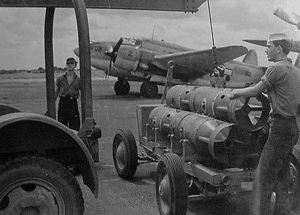
Weapons being transported to Lockheed PV-1 Ventura U. S. Navy in “Pici Field”.
Inaugurated on December 10, 1943, “Adjacent Field” served a great purpose for five months until May 14, 1944, in order to vent the air traffic in Natal, the site was the starting point of large four-engine aircraft, most of them belonging to the 15th Air Force which had bases in southern Italy and moved non-stop directly to Dakar.
The American detachment that operated the base was known as 1155th Army Air Force Base Unit – Fortaleza (AAFBU Fortaleza), which was part of the South Atlantic Division, all subordinate to ATC – Air Transport Command.
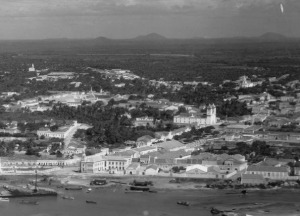
Fortaleza before the Second World War. Source – Book “Ah Fortaleza!”, Gilmar Chaves, Patricia Veloso, Peregrina Capelo, organizers. Fortaleza: Terra da Luz Editora, 2006, pg. 49.
During this period the use of “Adjacent Field” was very intense. 1.778 crossings were made from this base. From May 15, 1944, this type of operation, received only passing airliners or some aircraft that had an emergency.
Taking the “Land of the Sun”
Yet despite this apparent limited use between 1942 and 1945, there was always the presence of U.S. military personnel in the city of Fortaleza. There was even a local branch of the USO.
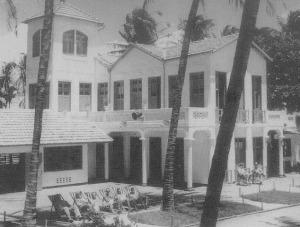
The USO headquarters in Fortaleza, actually known as the notorious “Estoril Restaurant” in Iracema Beach. Source – Book “Ah Fortaleza!”, Gilmar Chaves, Patricia Veloso, Peregrina Capelo, organizers. Fortaleza: Terra da Luz Editora, 2006, pg. 62.
Its USO headquarters in Fortaleza was a sumptuous residence on the seaside on Iracema Beach. The old Fish Beach was a place still so little used by local people, where there were few vacation homes. The residence used by the Americans, a real palace, was built in 1920 by a wealthy city dweller who first called initially “Vila Morena”.
My friends in Fortaleza have commented, that information from their grandparents and parents who lived those days of North American presence in the city, it was thought that these foreign military headquarters USO was a nice place with an inviting breeze, a great swimming place in deliciously warm water under a blazing sun. And then enjoy delicious coconut water.
The U.S. military in a moment of relaxation.
Apart from exploring the nature seaside, the U.S. military took advantage of other good things of Ceará. They maintained cordial relations with the girls in town. These were traditional families, usually beautiful, elegant, educated and did not care for criticism of local society. Soon these young men were derisively dubbed the “Coca-Colas.” It is said that the name in a derogatory way, they appeared to have the privilege of drinking the famous American soft drink, which at the time, was only seen on the big screen. They probably drank Coca-Cola plant from “The Coca-Cola Company” in Natal.
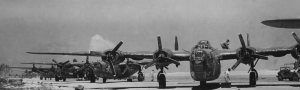
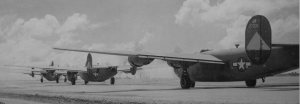
This is B24H, No. 41-28750, named as “The Thunder Mug”, belonging to 789 Squadron, the 467th Bomb Group, commanded by Lieutenant Charles Kagy on the transatlantic route across South America At the bottom of the control tower “Adjacent Field”- http://moraisvinna.blogspot.com
Memoirs
Despite this positive climate, the passage of aircraft by the Northeast of Brazil toward Africa was not without its problems.
In archives of the United States Army Air Force – USAAF, there are three unpublished reports of accidents with aircraft B-24, “Adjacent Field” which has as its point of departure or arrival.
The legendary B-24.
Manufactured by Consolidated Aircraft, the legendary B-24, known as the “Liberator,” was a strategic bomber, with ten machine guns 12.7 mm Browning M2 model defense. He airplane had a total weight of 29,500 kg, could take nearly six tons of high-explosive bombs, at a maximum speed of 470 km / h, at a maximum altitude of 8,500 meters, with a range of 6,000 kilometers. The crew usually consisted of 10 militaries. This was the model airplane seen more in Fortaleza during the busiest time of the aircraft toward Africa.
Group B-24 bombers in the Pacific Island before takeoff.
The Problems with the B-24
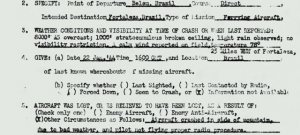
The first accident occurred in the region on January 22, 1944, when the B-24 registered with the numeral 42-100307, led by second lieutenant Henry A. Daum, around one o’clock in the afternoon amid heavy rain, crashed into a mountain 25 miles southwest of Fortaleza. All six people on board died.
Details of the briefing paper from falling B-24 No. 42-100307, commanded by second lieutenant Henry A. Daum in collision with a mountain in Ceará – Source – National Archives, Washington, D. C., United States.
Limited information and few details, the report of the destruction of the B-24 pilot by second lieutenant Daum shows that the accident probably occurred in the mountains between the towns of Caucaia and São Goncalo do Amarante.
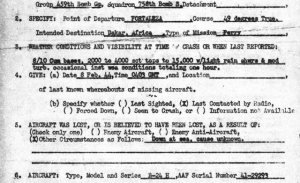
The second accident occurred on the morning of February 8, 1944, when the B-24H, 41-29293 belonging to 758 Squadron, the 459th Bomb Group, commanded under the second lieutenant Daniel B. MacMillin, of Stephenville, Texas, left for Dakar, Senegal’s capital today.
Details of the report on the disappearance of the B-24H, No. 41-29293 – Source – National Archives, Washington, D. C., United States.
At that time, according to the documentation, each plane that took off from Fortaleza was obliged to send a coded message, in periods of pre-determined time, for they knew they were flying and their position. In the first three hours the message arrived, then nothing. The B-24 and his ten crewmen were lost. The documents show that for ten days were accomplished visual search tasks, but never heard what happened to this aircraft, with the lieutenant Daum and his crew.
Group B-24 over the sea. Source -Archive Life Magazine.
But the best documented case was the crash of a B-24 bomber in Fortaleza.
The Tragedy of the B-24 of Lt. Brock
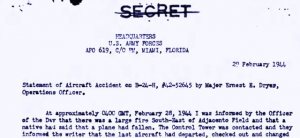
At around midnight and fifty minutes on February 28, 1944, the B-24H, numeral 42-52645, commanded by second lieutenant William M. Brock Jr., took off toward Dakar, but due to problems in one of the engines, made a turn to land and fell.
Part of the report by Major Ernest E. Dryer, classified as “SECRET” – Source – National Archives, Washington, D. C., United States.
The operations officer “Adjacent Field”, major Ernest E. Dryer prepared a brief report about the tragic fact.
Major was called shortly after one o’clock, where he was informed by the officer of the day on 1155th AAFBU who had a major fire southwest of the “Adjacent Field” and that a Brazilian had said that a plane had crashed. For major Dryer this fire was too strong to be just a housing problem in any one local residence, and one of the planes to fly took off from the base site. But the fire covered a large area, the operations officer and a group of men did not even wait the return of the plane and left in car to investigate.
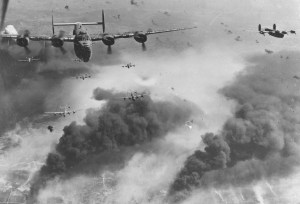
B-24 bombers of the 15th Air Force, attacking the refinery in Ploesti, Romania.
Upon arriving at the scene of the fire, major Dryer found that it actually was an accident with a B-24 model airplane, with the number 42-52645. At the site were already members of the police and fire department of the city of Fortaleza to keep the fire under control.
The operations officer, took command and sent a messenger back to base to inform the medical officer to bring ambulances and military police. Immediately work was started to report the details of the accident. They soon found that all ten crew members had died.
Airplane parts, broken bodies and personal belongings were scattered over a distance of 1000 feet. The body of one crew member was hanging from a tree. American guards were placed to guard the wreck and waited for the medical officer of the base to take over the charge of the bodies.
Checking the number of the plane with the boot record, it was discovered that one B-24 was the last to leave the base that night and crashed three minutes after takeoff.
B-24 burning.
The plane was so damaged that a check of the controls was not possible. It was noted that the right wing had hit a tree and was broken. For this reason the path of the plane was close to the ground and had shifted about 90 degrees to the right. Then hit the ground, and was dragged in a straight line for about 1000 feet, disintegrating along the way.
Finally, the B-24 hit a tree, stopped in a ditch and exploded, throwing debris over a wide area. In the fall the aircraft destroyed an empty shack and an oil tank was thrown through the roof of another hut, but no one on the ground died.
Highlights of the testimony of the Brazilian woman about the fall of the B-24.
The documentation by the main witness, the Brazilian, Laura Ramos Barreto, who lived about a mile away from the base, which today is probably in the neighborhood of Montese.
In her report delivered at the premises of the 1155th AAFBU, Laura said she always listened at night the planes taking off from “Adjacent Field” and heard that on this occasion an aircraft whose engines stopped suddenly near her residence. She was surprised, when looking at the plane she saw three explosions on the ground, followed by heavy fire.
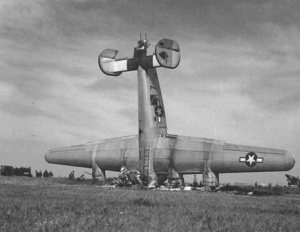
An accident of an unusual B-24 in Italy.
To Major Ernest E. Dryer, examination of the propellers showed that at least three of the engines had operational capacity, but that could not be given a conclusive opinion, due to the extent of damage.
The investigations showed that the cause of the accident was a failure in one engine, which was certainly the most destroyed immediately after takeoff. Probably the pilot retracted the flaps at a very low altitude, thus making the B-24 fly too close to the ground, hitting a tree, tearing the plane’s right wing and causing the explosion.
The bodies were buried in Fortaleza and transferred to the United States in 1947.
They were part of the following crew of the B-24H, 42-52645;
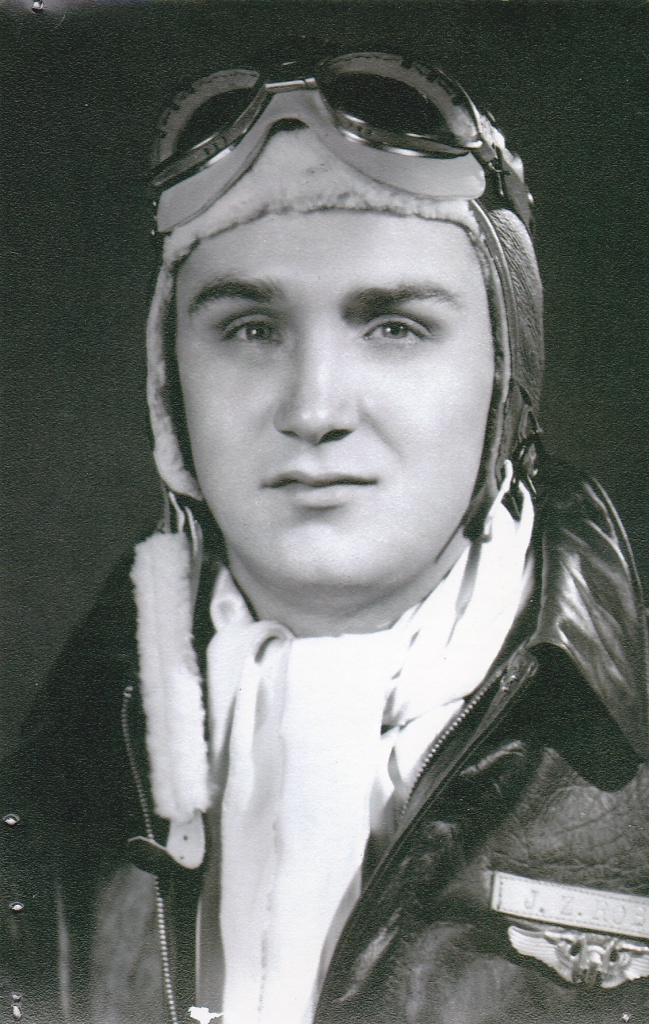
-Second Lieutenant William M. Brock Jr., pilot -Second Lieutenant Robert D. Wear, co-pilot -Second Lieutenant James H. Beatty, navigator -Second Lieutenant William D. Davies, bomber -Sergeant Kelley L. Epley, flight engineer -Sergeant Homer E. Hill, radio operator -Sergeant William C. Ship, gunner -Sergeant Thomas M. Bassett, gunner -Sergeant Leo P. Desjardins, gunner -Sergeant Jack Z. Roby, gunner
Second Lieutenant Robert D. Wear, co-pilot.
Sergeant Jack Z. Roby, gunner.
The participation of air bases in Brazil was not only restricted to Natal, these reports show that there are certainly many stories to be told.
P.S. – I would like to thank the researcher Ângelo Osmiro, for your support in this work.
Brazil’s participation in World War II was the culmination of a foreign policy emphasis that began in 1902. That year, Foreign Minister Rio Branco set Brazil on a course of close relations with the United States. He believed that ties with the United States, a growing world power, would promote Brazil’s aims at leadership in the Latin American region and provide international prestige.
Geopolitical Situation
After the 1930 revolution and 1937 coup that brought Getúlio Dornelles Vargas to power, Brazil’s political priorities were industrialization and the build up of military power. The country balanced its relationship with the United States through closer ties with the Axis powers of Nazi Germany, Italy and Japan.
Germany became the biggest buyer of Brazil’s cotton and its main supplier of weapons. Brazil’s leading politicians were divided between “Pro-USA” and “Pro-Axis” factions. Concern that the Latin American region could shift away from the United States politically prompted the administration of President Franklin D. Roosevelt to launch its “Good Neighbor” policy of cultural and economic assistance in place of an earlier policy of direct intervention in Latin American affairs.
Military Bases
Brazil and the United States adopted neutral positions in September 1939 on the outbreak of war in Europe. However, the United States became concerned about a potential German attack on the Western Hemisphere should Britain fall, figuring the most likely route for this to be from North Africa to northeastern Brazil. In 1941, Brazil agreed to the construction and enlargement of American air bases in northern and northeastern Brazil.
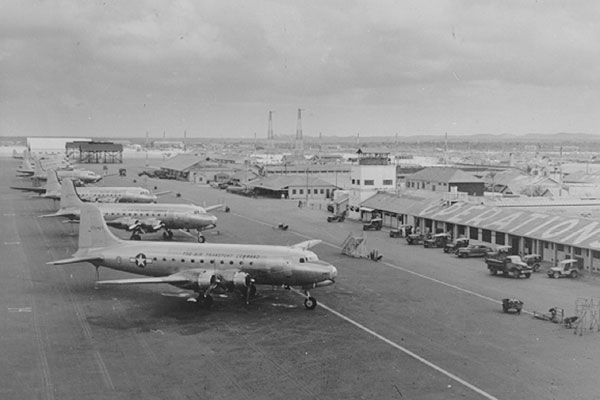
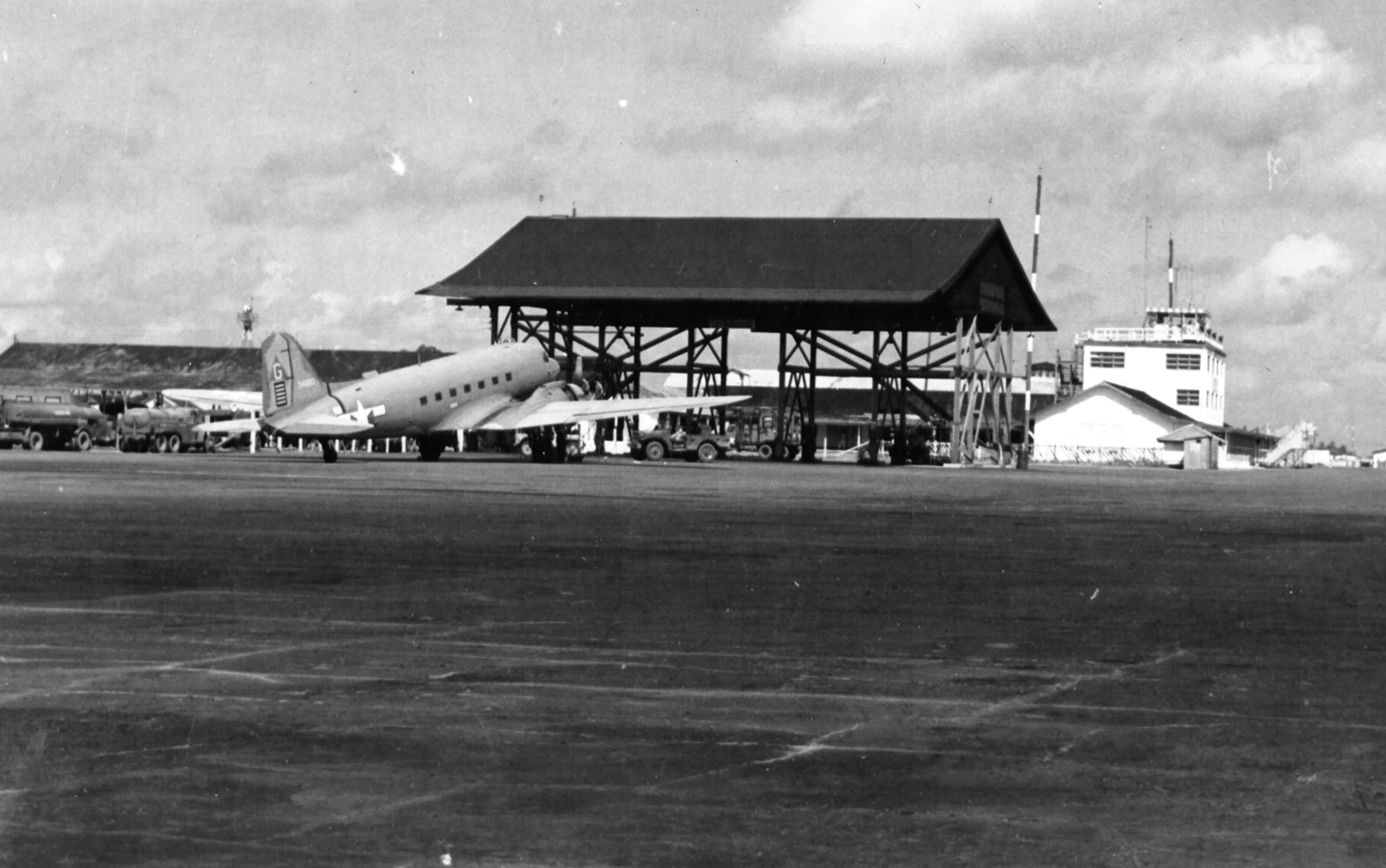
Parnamirim Field in Natal, Northeastern Brazil, the most important air base in the southern hemisphere
When the United States entered the war in 1941, the U.S. Navy was allowed to use Brazilian ports in its anti-submarine campaign. The air bases became an essential part of the Allied air transport system, a stopover for planes heading to Africa, the Mediterranean and points beyond.
Natal, the largest and most important air base in Brazil
The World War II gave an impulse to the growth of Natal and surroundings.
Seaplane at Potengi River. For the US government to Natal region is particularly important for its strategic position in the South Atlantic
It is estimated that, before the War, Natal had 40,000 inhabitants; after the war, not only the population doubled to nearly 80,000 inhabitants, but the city also had improvements in the infrastructure and one airport (the airport of Parnamirim).
The Americans only entered the War on December 7th 1941, when the Japanese attacked Pearl Harbour; however, since the eclosion of the conflict, in 1939, the Americans were watching with preoccupation the expansion of the Axis powers.
American strategists were concerned with an eventual movement from the Axis towards the American continent; since 1940, Italians and Germans were occupying positions in North Africa; the next step could be the invasion of South America.
In 1939, the Major Delos C. Emmons, commander of the US Air Force, overflew the coast of Brazilian Northeast, and concluded that Natal was the most strategic point, both for a German invasion and for the Allies to use as a supporting site to the operations in Africa.
The US were not at war yet, and, to not create diplomatic tensions, decided to create a Program for Development of Airfields; to avoid the direct envolvement of the US government, the airline company PanAm was the co-signer of the agreement.
The first airplane to land in Parnamirim was the “Numgesser-et-Coli”, a monomotor Breguet-19, piloted by Dieu Coster et Le Brix, on October 14th 1927; before then, only aquaplanes arrived in Natal, on the waters of the Potengi River. According to Clyde Smith Junior, this was itself a Historic flight, because it was the first inter-Atlantic flight in the East-West direction. There was not an airport, however; instead, there was little more than the runway.
Hangar nose in Parnamirim Field
With fundings of the US government, the “Parnamirim Field” was constructed. It became the largest US basis outside American territory. Not only the airport, but also the infrastructure (roads, housing, etc) was built from ground.
Thousands of Brazilians migrated to Natal, looking for work. Also, Brazilian soldiers were sent to the Army and Navy bases. These movements explain the growth in population during the period.
After US entered the war, there was no more need for diplomatic actings. On December 11th 1941, a US Navy fleet composed by 9 aircrafts PB4 Catalina and one Clemson arrived in Natal; two weeks later, 50 marines arrived, to patrol the basis.
A maritime patrol aircraft PV-1 take off from Parnamirim Base
It is estimated that, during the War, between 3,000 and 5,000 Americans were located in Parnamirim. Also, tens of thousands of Americans and British passed by Natal, in transit. Parnamirim was the busiest airport in the world; flights were taking off and landing every three minutes.
Raw Materials and War Declaration
Brazil supplied iron ore, manganese, bauxite, tungsten, industrial diamonds and especially rubber to the United States during World War II. The Japanese occupation of Southeast Asia had halted 90 percent of world rubber supplies. Brazil received $100 million in arms and military equipment under the Lend-Lease Program, through which the United States supplied its allies.
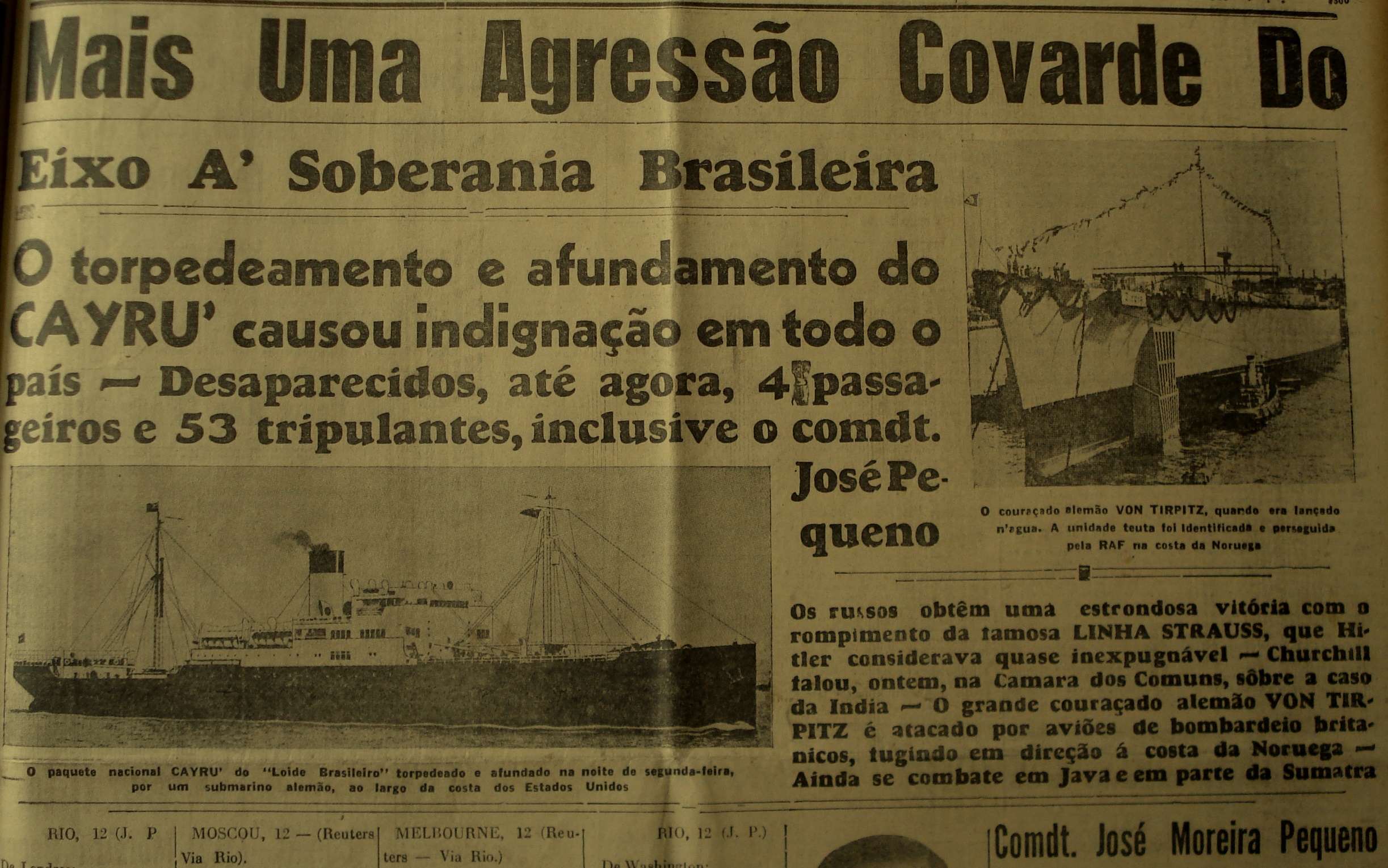
Natal newspaper announcing the sinking of a Brazilian boat in March 1942
Brazil’s close cooperation attracted attacks on its merchant shipping by Axis submarines. Italian and German submarines sank a total of 36 Brazilian merchant ships by August 1942 when Brazil declared war on the Axis powers.
Expeditionary Force
After an initial reluctance to commit troops to the war effort, Brazilian politicians decided that their country’s direct participation would achieve it a special status after the war. The Brazilian Expeditionary Force started as a political project to make Brazil a “special ally” of the United States.
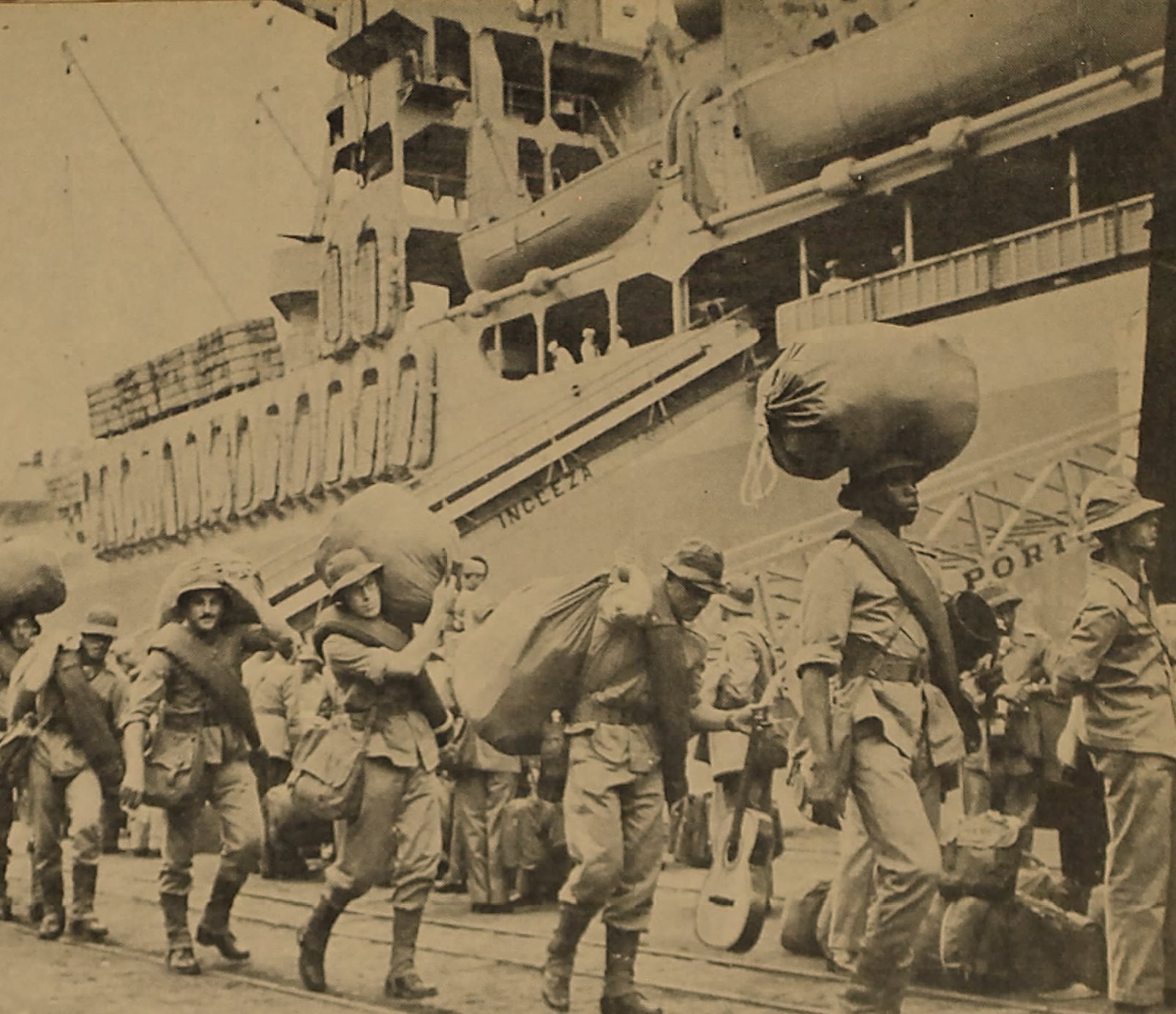
Brazilian Expeditionary Force shipping in Rio de Janeiro. Destiny – The Italian front.
Britain opposed the involvement of Brazilian troops partly because of perceived pro-Axis sympathies of some Brazilian politicians, and partly because of troops of too many nationalities in the Mediterranean Theater. Doubts that the BEF would be deployed in combat at all led to its nickname “the Smoking Cobras.” This referred to a Brazilian saying, equivalent to “pigs might fly,” stating that it would be more likely for a snake to smoke than for the BEF to be deployed. As a result, the BEF insignia was a coiled cobra with head upright and smoking a pipe.
Deployment in Europe
The U.S. government considered deploying the BEF in southern Brazil on the Argentine frontier following coups in Argentina in 1943 and 1944, and a 1943 Argentina-inspired coup in Bolivia. However, the Americans conceded to BEF deployment in Italy because of Brazilian wartime cooperation. A total of 25,335 Brazilian troops came under the command of the U.S. Fifth Army. They fought in battles at Castelnuovo, Monte Castello and Montese in the Apennines south of Bologna. Brazilian military and political leaders rejected Allied offers to remain as an occupying force in postwar Europe. In late 1945, the FEB returned home and was disbanded.





















 TOK de HISTÓRIA - ROSTAND MEDEIROS